When a Gallery Sells Consigned Art but Does Not Pay the Artist: The Hole Lawsuit and New York’s Trust-Fund Rules
An artwork consignment is not simply an informal arrangement in which a gallery agrees to sell a work and pay the artist later. Depending on the governing law, the gallery may hold both the artwork and the artist’s share of the sale proceeds in trust. That distinction becomes critical when a gallery experiences financial pressure or uses money received from collectors to pay its own operating expenses.
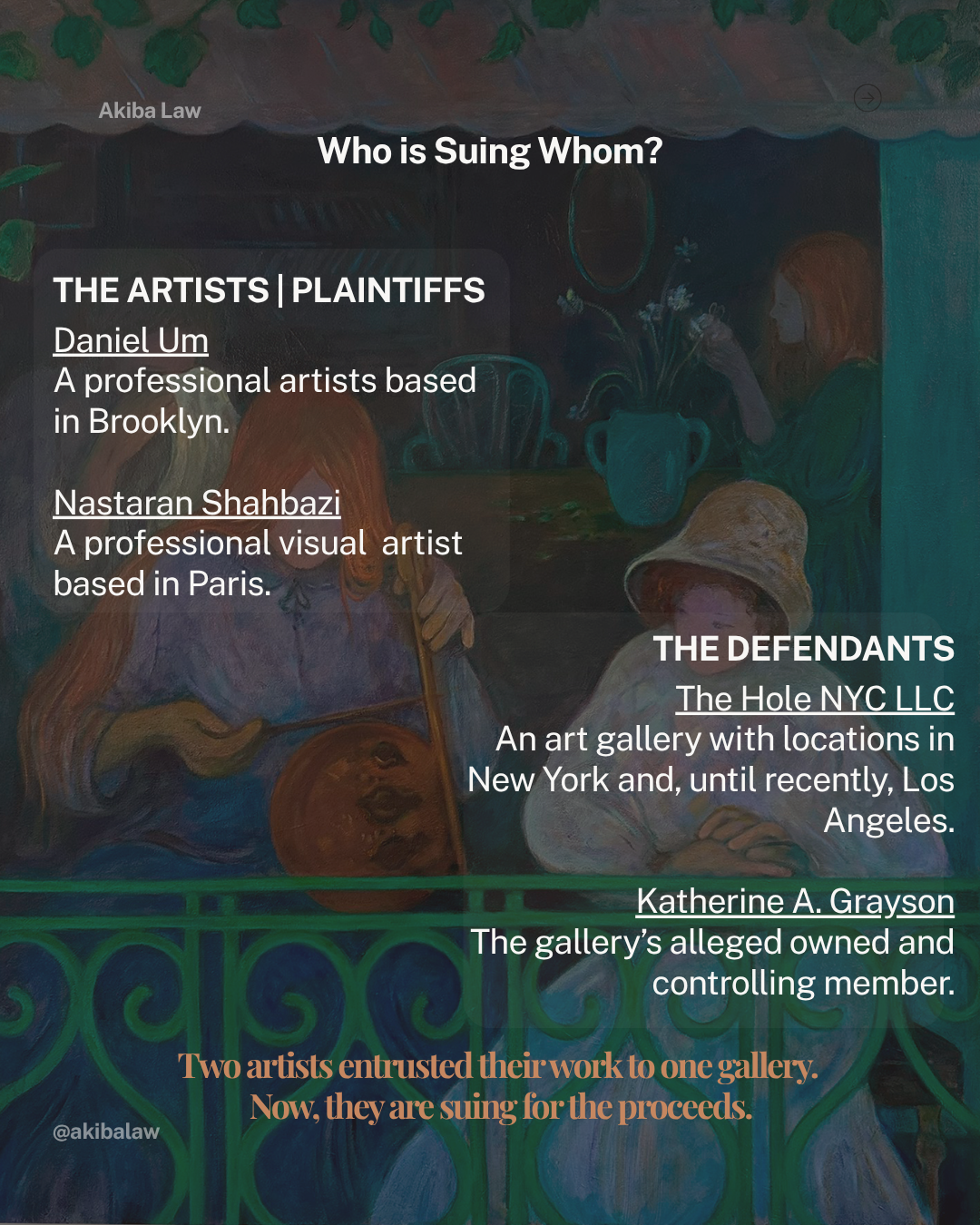
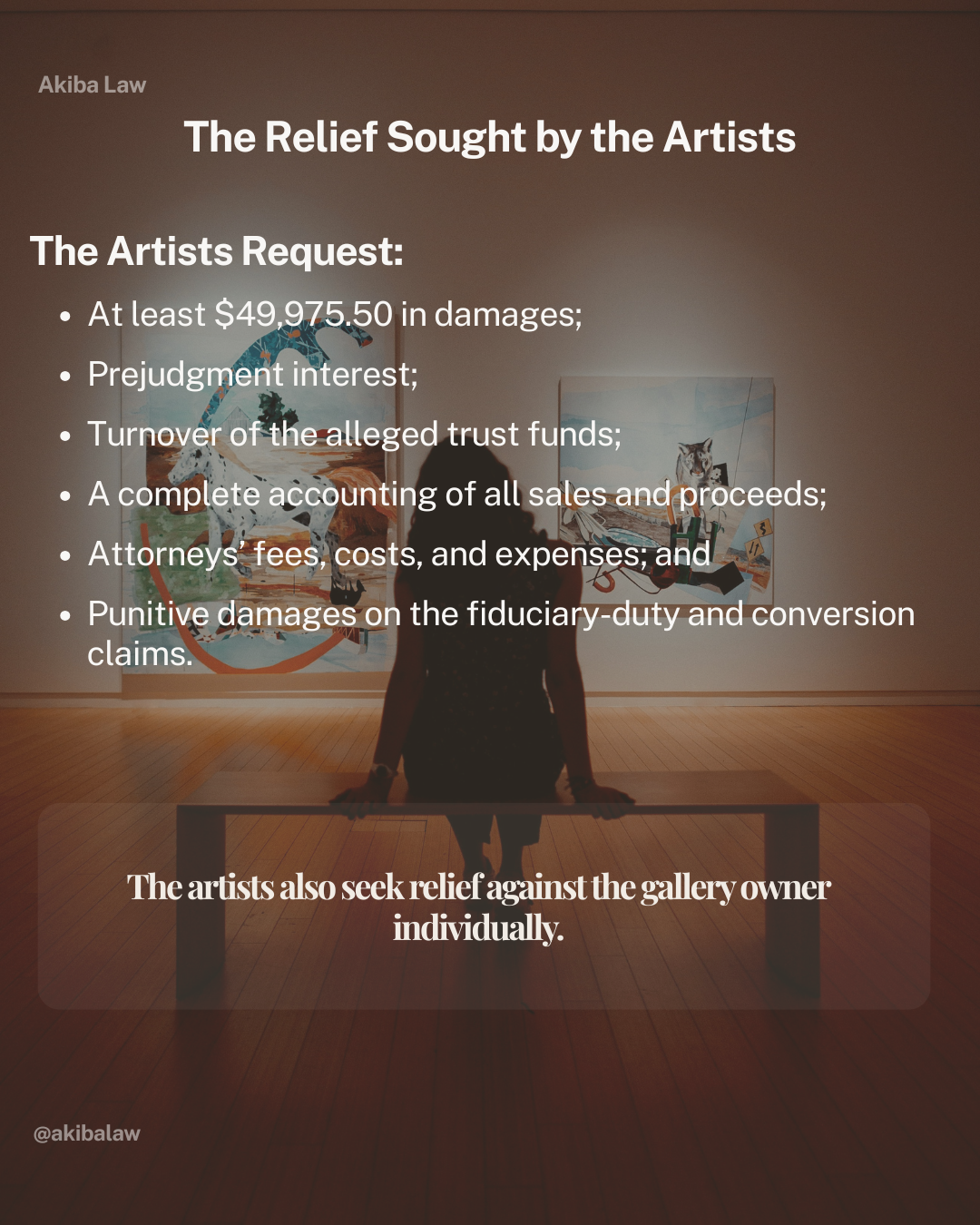
A recently filed New York lawsuit raises that issue directly. Artists Daniel Um and Nastaran Shahbazi sued The Hole NYC LLC and its founder, Katherine Grayson, alleging that the gallery sold their consigned artwork, collected payment from buyers, and failed to remit $49,975.50 in proceeds allegedly owed to the artists. The case was filed in New York County Supreme Court on July 16, 2026.
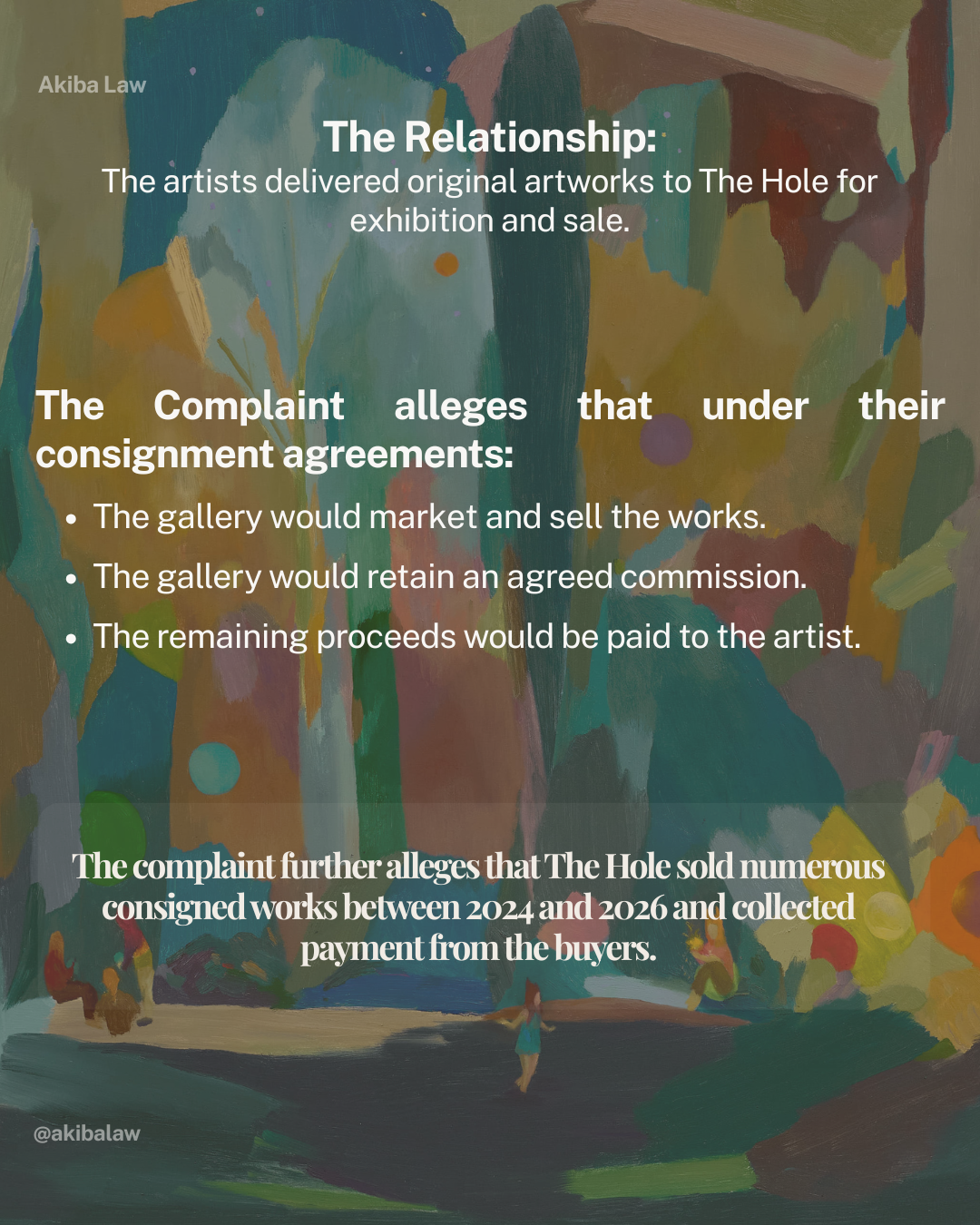
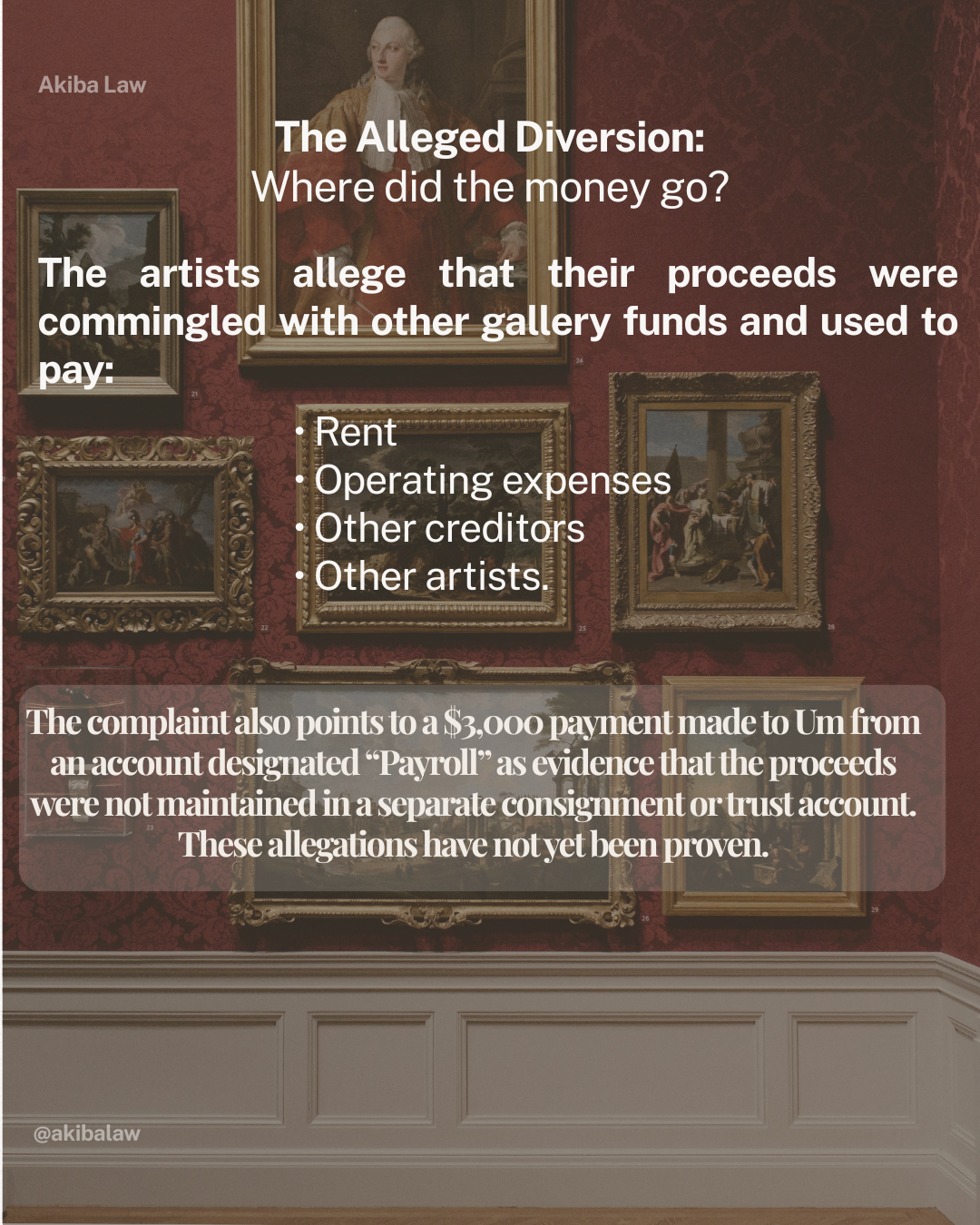
According to the complaint, the gallery sold works consigned by the artists between 2024 and 2026. The artists allege that the gallery acknowledged the outstanding balances but used available funds to pay rent, operating expenses, other creditors, and other artists. The complaint also points to a $3,000 payment made to Um from an account identified as “Payroll,” which the artists cite as evidence that their proceeds were not maintained in a separate trust or consignment account. These remain allegations and have not been proven.
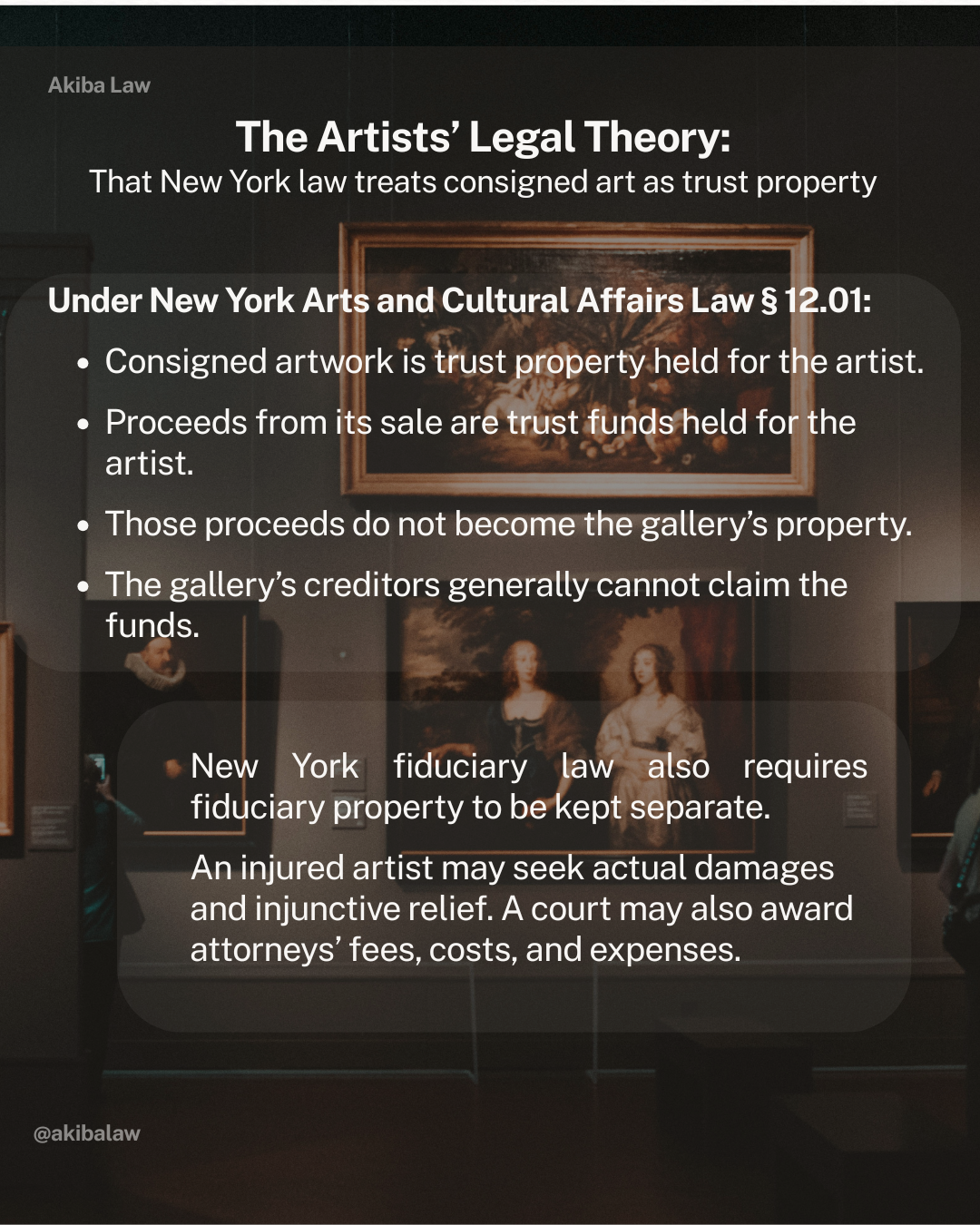
New York law provides artists with protections tailored to the consignment relationship. When an artist delivers the artist’s own work to an art merchant for exhibition or sale, the statute generally treats the artwork as trust property and the sale proceeds as trust funds held for the artist. Those funds do not ordinarily become the gallery’s property or become available to satisfy claims by the gallery’s creditors.
The statute also incorporates New York’s fiduciary rules, which require fiduciary property to be maintained separately. An injured artist may seek injunctive relief, actual damages, or both, and a prevailing plaintiff may receive reasonable attorneys’ fees, costs, and expenses.
The following slides summarize the artists’ allegations, the trust-fund theory underlying their claims, and the practical lessons for galleries and artists entering consignment relationships.

Consigned Proceeds May Not Be Ordinary Gallery Revenue
A gallery typically receives payment from the collector and deducts its agreed commission before paying the balance to the artist. The fact that money first enters an account controlled by the gallery does not necessarily mean the gallery owns all of it.
Under New York Arts and Cultural Affairs Law § 12.01, an artist’s consigned work is generally treated as trust property, and the proceeds from its sale are treated as trust funds held for the artist. The statute further provides that those assets do not become the gallery’s property or become subordinate to the gallery’s creditors.
This structure can place the artist in a materially different position from an ordinary unsecured vendor. The artist’s claim is not necessarily limited to a contractual promise that the gallery will eventually pay an invoice. The artist may contend that the gallery possessed identifiable funds belonging to the artist and was required to handle them as a fiduciary.
The Gallery’s Financial Condition Does Not Change the Character of the Funds
A gallery may experience legitimate cash-flow problems caused by slow sales, late collector payments, high rent, art-fair expenses, expansion costs, payroll, or other operating obligations. Those pressures do not necessarily permit the gallery to use artist proceeds as temporary working capital.
New York’s statute treats the consigned artwork and covered proceeds as statutory trust property. It also makes the gallery the artist’s agent with respect to the consigned work. A gallery’s creditors generally cannot reach the artist’s trust property or trust funds to satisfy the gallery’s debts.
Using one artist’s proceeds to pay rent, another artist, an employee, or an unrelated creditor may therefore create issues extending beyond late payment. Depending on the facts and governing law, the conduct may support statutory, fiduciary-duty, conversion, contract, unjust-enrichment, or accounting claims.
Consignment Funds Should Be Separated from Operating Funds
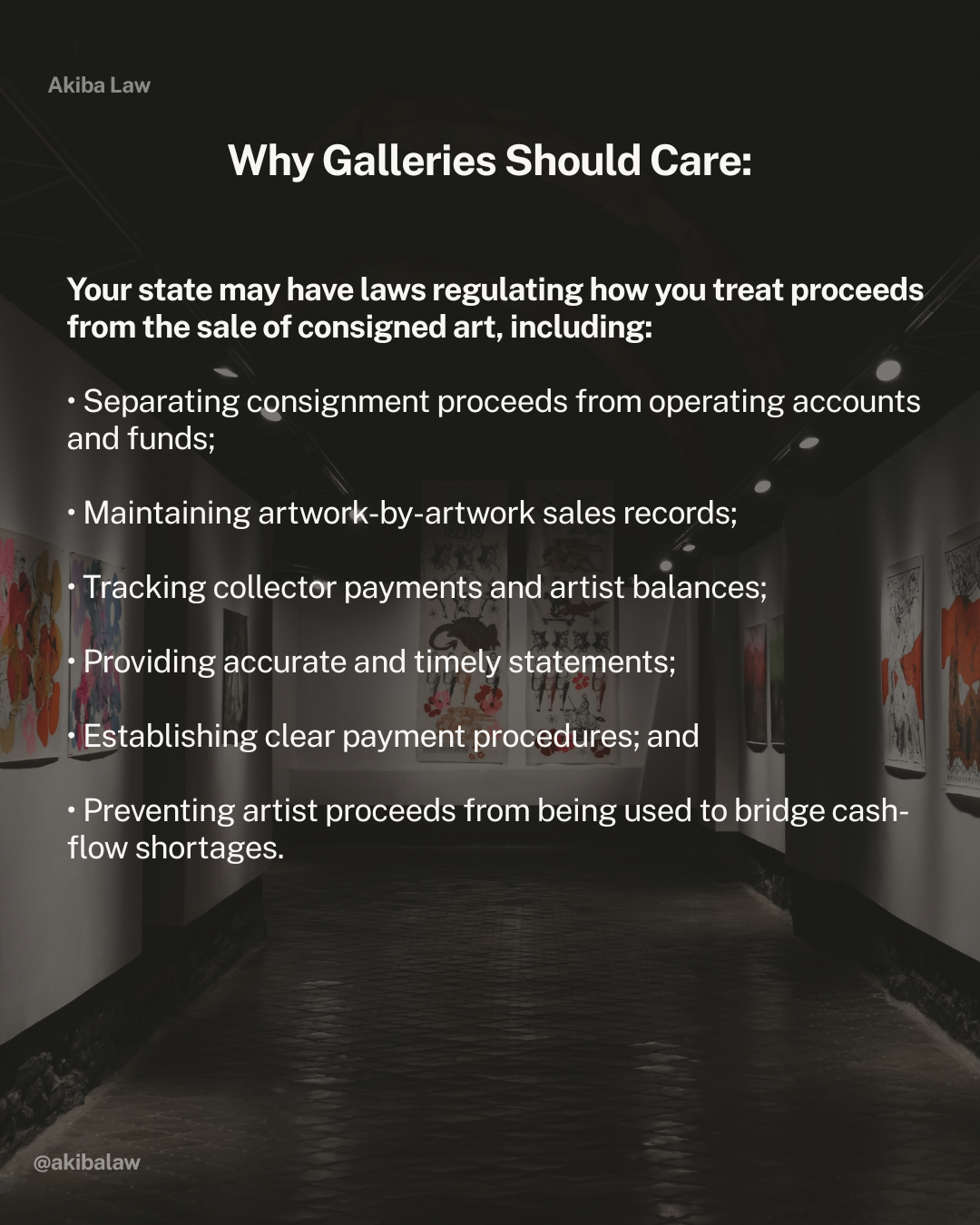
Good accounting practices are especially important when the gallery collects the entire purchase price from the collector. The gallery should be able to identify:
- The artwork sold
- The collector and invoice
- The total purchase price
- Any discount or negotiated adjustment
- The date and amount of each collector payment
- The gallery’s commission
- The artist’s resulting balance
- Any taxes, shipping costs, framing expenses, or other authorized deductions
- The date on which the artist was paid
The law in your state may subject covered consignment property and proceeds to fiduciary requirements, including the obligation to keep fiduciary property separate.
A separate trust or consignment account can help prevent artist proceeds from being mixed with rent, payroll, taxes, fair expenses, and other operating funds. Separate accounts are not a substitute for accurate artwork-by-artwork records, but they make it easier to determine what belongs to the gallery and what remains payable to each artist.
The Consignment Agreement Should Define the Payment Process
The agreement should state more than the commission percentage. It should explain the entire path from delivery of the artwork through final payment to the artist.
The agreement should address when the gallery may accept a discount, whether the artist’s approval is required, when a sale is considered final, and when the artist must be paid. It should also explain how installment sales, deposits, returns, chargebacks, shipping costs, taxes, framing costs, and credit-card fees will be treated.
A provision stating that payment is due within a specified number of days after the gallery receives cleared funds is generally more useful than an open-ended promise to pay after a sale. The parties should also decide whether the gallery must remit partial payments when a collector pays in installments.
Artists Should Receive Notice When a Work Is Sold
An artist may not know that a consigned work has been sold unless the gallery provides notice. That information gap can allow unpaid balances to remain undiscovered for months.
A consignment agreement can require prompt written notice identifying:
- The work sold
- The sale date
- The gross price
- Any approved discount
- The collector’s payment status
- The gallery’s commission
- The artist’s net proceeds
- The payment deadline
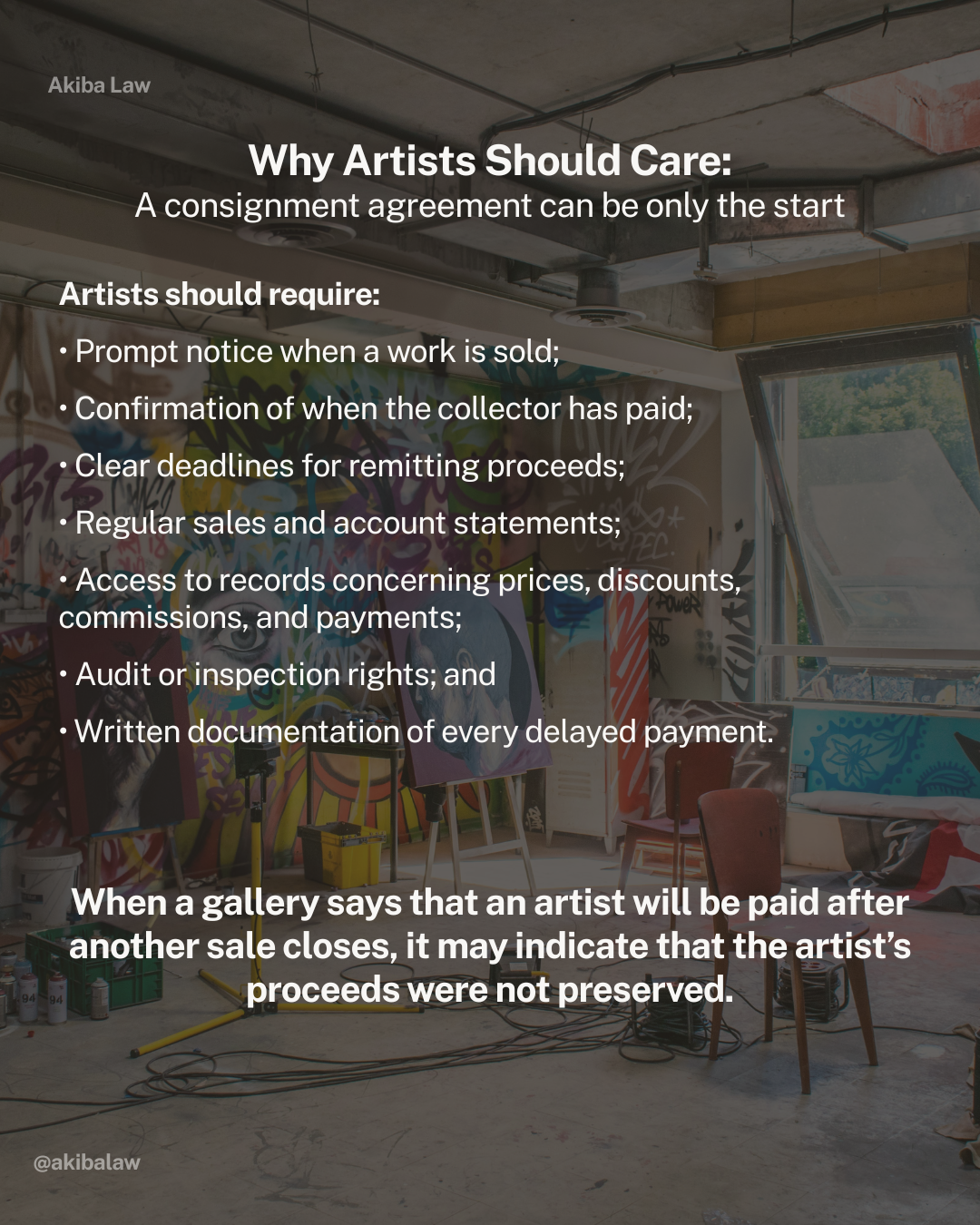
The artist should also receive regular statements listing all works held, sold, returned, reserved, or subject to outstanding collector payments. Statements should reconcile with actual payments rather than merely show the gallery’s internal sales entries.
Accounting and Inspection Rights Matter
An artist should not have to rely exclusively on verbal assurances that payment is forthcoming. The agreement may provide the artist with access to records reasonably necessary to verify sales and calculate the amount owed.
Depending on the relationship, those rights may include copies of invoices, confirmation of collector payments, commission calculations, documentation of discounts, current inventory lists, and periodic account statements. An agreement may also provide targeted inspection or audit rights when the gallery’s records do not reconcile with the artist’s information.
The purpose is not to give the artist unlimited access to confidential collector information or the gallery’s entire business. The provision can protect legitimate confidentiality interests while still allowing the artist to verify transactions involving the artist’s own work.
Delayed-Payment Explanations Can Reveal a Larger Problem
A gallery may occasionally delay payment because of an administrative error or because a collector has not completed payment. Repeated explanations tying one artist’s payment to unrelated future sales present a different concern.
Statements such as “we will pay you when another collector pays,” “we are waiting for a large sale to close,” or “we need the next fair to generate cash” may suggest that the proceeds from the artist’s completed sale are no longer being preserved.
The complaint against The Hole allegedly includes communications stating that payment would be made when other overdue sales generated funds. The artists rely on those communications as part of their contention that their proceeds were used as general operating cash rather than maintained for them.
An artist receiving that type of explanation should document each communication, request a written accounting, identify which collector payments have been received, and review the applicable agreement and state law.
Galleries Need Internal Controls Before Problems Develop
A gallery’s compliance system should not depend entirely on one owner, director, or bookkeeper remembering which funds belong to which artist. Written procedures can reduce the risk of commingling, inconsistent statements, and payments being made from the wrong account.
Those procedures may include:
- A separate account for consignment proceeds
- Individual ledgers for each artwork and artist
- A required reconciliation whenever collector funds arrive
- Written approval before applying discounts or deductions
- Automatic notice to the artist when a work is sold
- A calendar for contractual payment deadlines
- Regular review of unpaid artist balances
- Restrictions on transferring artist proceeds into operating accounts
A gallery should identify a cash-flow shortage before it begins relying on money payable to artists. Once those funds are used to cover operating expenses, later sales may be needed to satisfy earlier obligations, creating an increasingly difficult cycle.
Individual Owners and Managers May Face Claims
Operating through an LLC does not mean that every claim will automatically be limited to the entity. In the current lawsuit, the artists also named the gallery’s founder and seek relief against her individually based on allegations concerning her control over the funds and participation in the challenged conduct.
Whether an owner or manager can ultimately be held personally liable depends on the asserted causes of action, the person’s conduct, the entity structure, and the governing law. Naming an individual defendant does not establish liability.
The practical point is that owners and managers should treat artist proceeds consistently with the gallery’s contractual and statutory obligations. Direct participation in decisions concerning trust funds may create issues distinct from ordinary limited-liability protection.
The Agreement Is Only the Beginning
A well-drafted consignment agreement creates clear expectations, but compliance must continue throughout the relationship. Even a strong contract cannot protect an artist when sales are not reported, records are incomplete, or proceeds are no longer available.
Artists should reconcile gallery statements against their own inventory, preserve delivery and condition records, request documentation of every sale, and follow up promptly when payment deadlines pass. Galleries should provide timely information rather than allowing uncertainty to grow.
Consignment relationships depend heavily on trust. Clear documents, separate accounts, current records, and consistent payment procedures provide the evidence needed to support that trust.
State Law Can Change the Analysis
Art-consignment rules vary by jurisdiction. Some states expressly treat consigned artwork and sale proceeds as trust property, while others rely more heavily on the contract, the Uniform Commercial Code, agency principles, fiduciary law, or general creditor rules.
The parties should identify the governing law before the artwork is delivered. A gallery operating in several states may also need to consider where the artist resides, where the gallery accepted the work, where the sale occurred, and where the artwork or proceeds were located.
Florida has a similar legislation, which I summarized in this post. If you are interested in other Florida laws affecting how the art market is conducted in the State of Florida, please refer to Akiba Law’s Art Law in Florida: A Practitioner’s Handbook.
Akiba Law assists artists, galleries, collectors, advisors, and other art-market participants with consignment agreements, sales disputes, payment and accounting issues, ownership questions, and other matters involving the possession and sale of artwork.
warning Disclaimer
This article is for general educational and informational purposes only and does not constitute legal advice. Reading this article does not create an attorney-client relationship with Akiba Law PLLC or any attorney. Florida law may apply differently depending on the specific facts, legal issues, and parties involved. Individuals and businesses should consult qualified legal counsel about their specific circumstances. For questions, concerns, or additional information, please contact Akiba Law PLLC to speak with a qualified attorney.

Case Update: Solar Drops Second Gang Starr Lawsuit After Judge Questions Prospect of Duplicative Litigation
When I first wrote about the latest chapter in the legal battle surrounding Gang Starr in September 2025, producer John…

Art Law in Florida: A Practitioner’s Handbook
Akiba Law PLLC is a Miami-based law firm advising artists, collectors, galleries, dealers, auction businesses, museums, and creative entrepreneurs on…

2 Live Crew Tried to Take Back Its Copyrights. A Decades-Old Bankruptcy Got in the Way.
Copyright ownership can last for decades, and the Copyright Act gives many creators an unusual second chance to revisit deals…
When Does a Sculpture Become a Building? East Hampton’s Lawsuit Over Matt Johnson’s Meditating Figure
Large-scale public and private art installations can raise issues well beyond copyright, contracts, and exhibition agreements. Once an artwork reaches…
Eden Gallery Sues Collector Over Alleged $822,390 Unpaid Balance: Lessons for Art Sales on Credit
High-value art transactions are often built on relationships. A collector may purchase repeatedly from the same gallery, payments may be…
MoMA v. MOMACHA: Trademark Strength, Brand Similarity, and Consumer Confusion
A trademark dispute does not always begin with two businesses offering the same product. Confusion can arise when a newer…

When a $2.5 Million Art Loan Ends in Litigation: Lessons for Galleries, Curators, and Property Owners
Long-term art placements can benefit everyone involved. Galleries gain access to potential collectors, property owners enhance their spaces, and residents…
Your Logo Is on the Shirt. Does That Count as Trademark Use?
Launching a clothing brand involves more than creating a name, designing a logo, and placing it on a garment. How…

45 Antiquities Seized from the Metropolitan Museum of Art: Provenance, Repatriation, and the Importance of Due Diligence
On July 8, 2026, the Manhattan District Attorney’s Office announced the return of 59 antiquities, collectively valued at more than…

Florida Interior Designers and Decorators: Are You Regulated? Do You Need a License?
Interior designers and decorators in Florida often face a practical question: am I subject to Florida regulation, and do I…
Jacques Goudstikker’s Stolen Collection Is Still Being Found and Returned
Restitution can’t undo the Holocaust but it can return what was taken and every returned work matters. A Nazi-looted painting…
Van Gogh’s “Sunflowers” Returns to Federal Court: Why Personal Jurisdiction May Bar the Claims Again
The Facts. The heirs of German-Jewish banker and art collector Paul von Mendelssohn-Bartholdy have filed a new lawsuit in the…