Your Logo Is on the Shirt. Does That Count as Trademark Use?
Launching a clothing brand involves more than creating a name, designing a logo, and placing it on a garment. How the mark appears, where it appears, and how customers encounter it can affect whether the United States Patent and Trademark Office (USPTO) views it as a trademark or simply part of the product’s decoration.
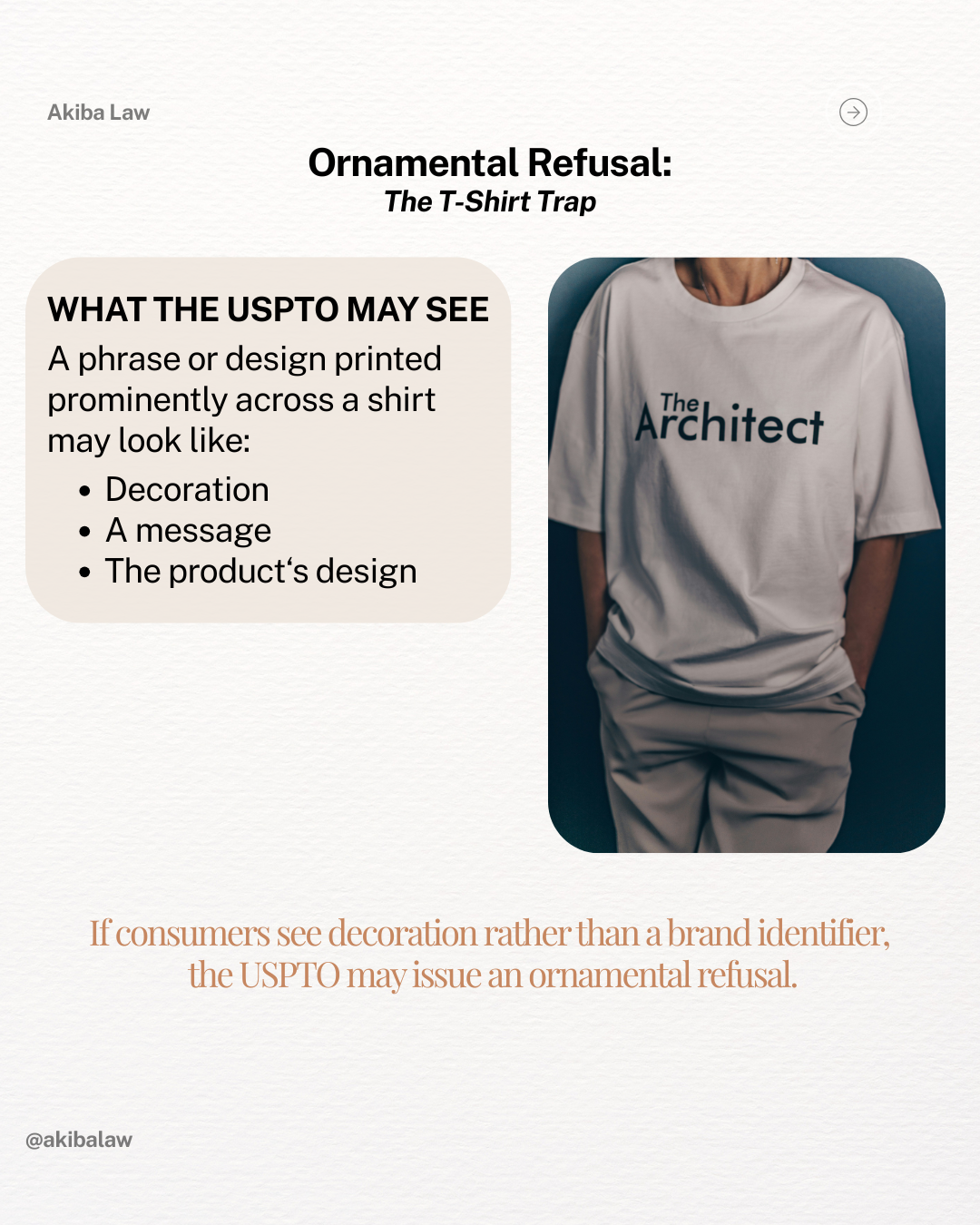
This issue commonly arises when a brand submits a photograph of a shirt, sweatshirt, or other garment as evidence of trademark use. A large phrase or graphic printed prominently across the garment may look like the product’s design rather than an indication of who made or sells it. That distinction can lead to an ornamental refusal, even when the applicant considers the design to be its primary logo.
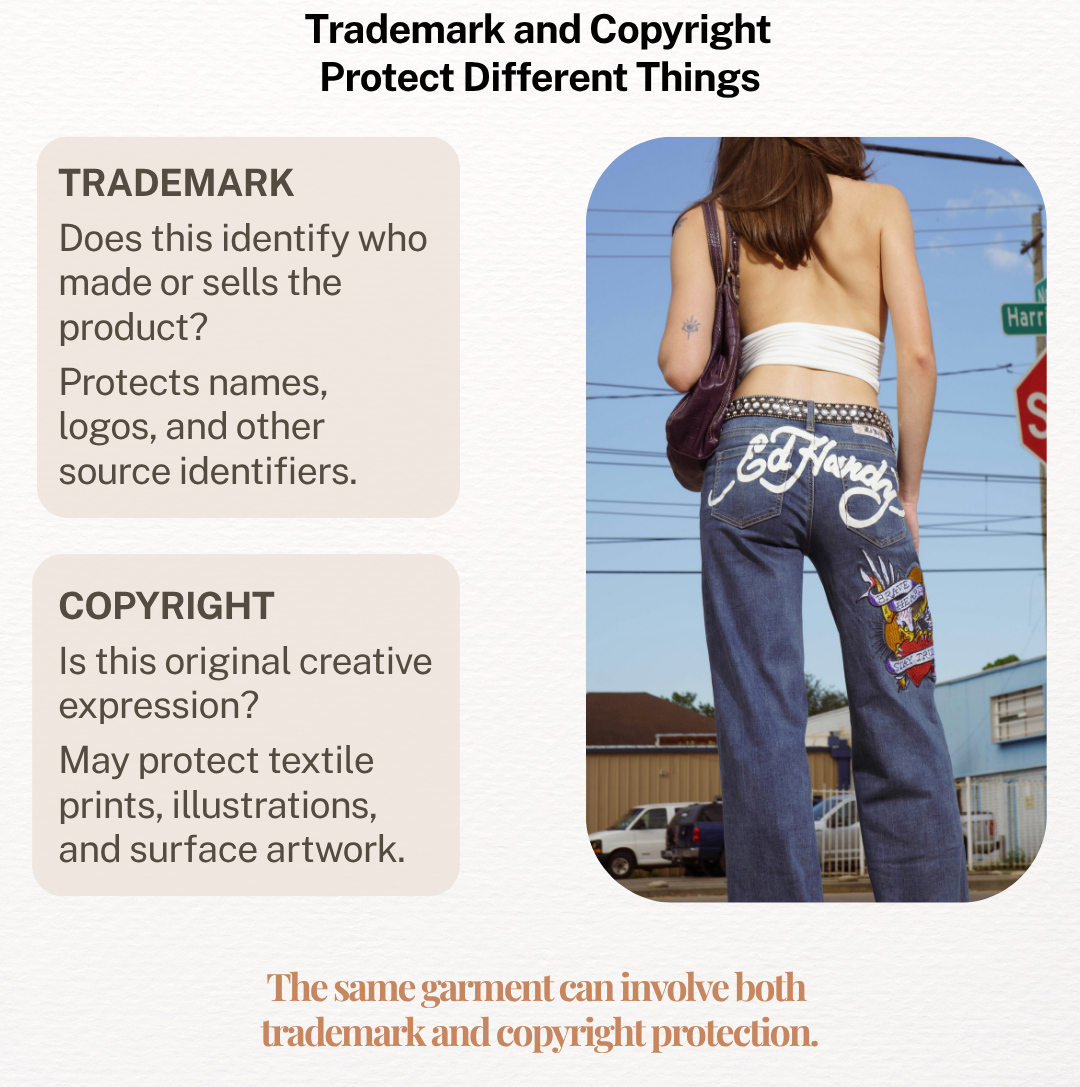
Clothing may also involve overlapping forms of intellectual property protection. Trademark law may protect the brand name, logo, or other source identifier, while copyright law may protect original prints, illustrations, embroidery, and surface artwork. Understanding what each area of law protects can help fashion brands make better decisions before producing inventory, launching a collection, or filing an application.
The following slides explain ornamental refusals, acceptable trademark specimens, copyright protection for garment artwork, and practical steps brands can take before their next release.
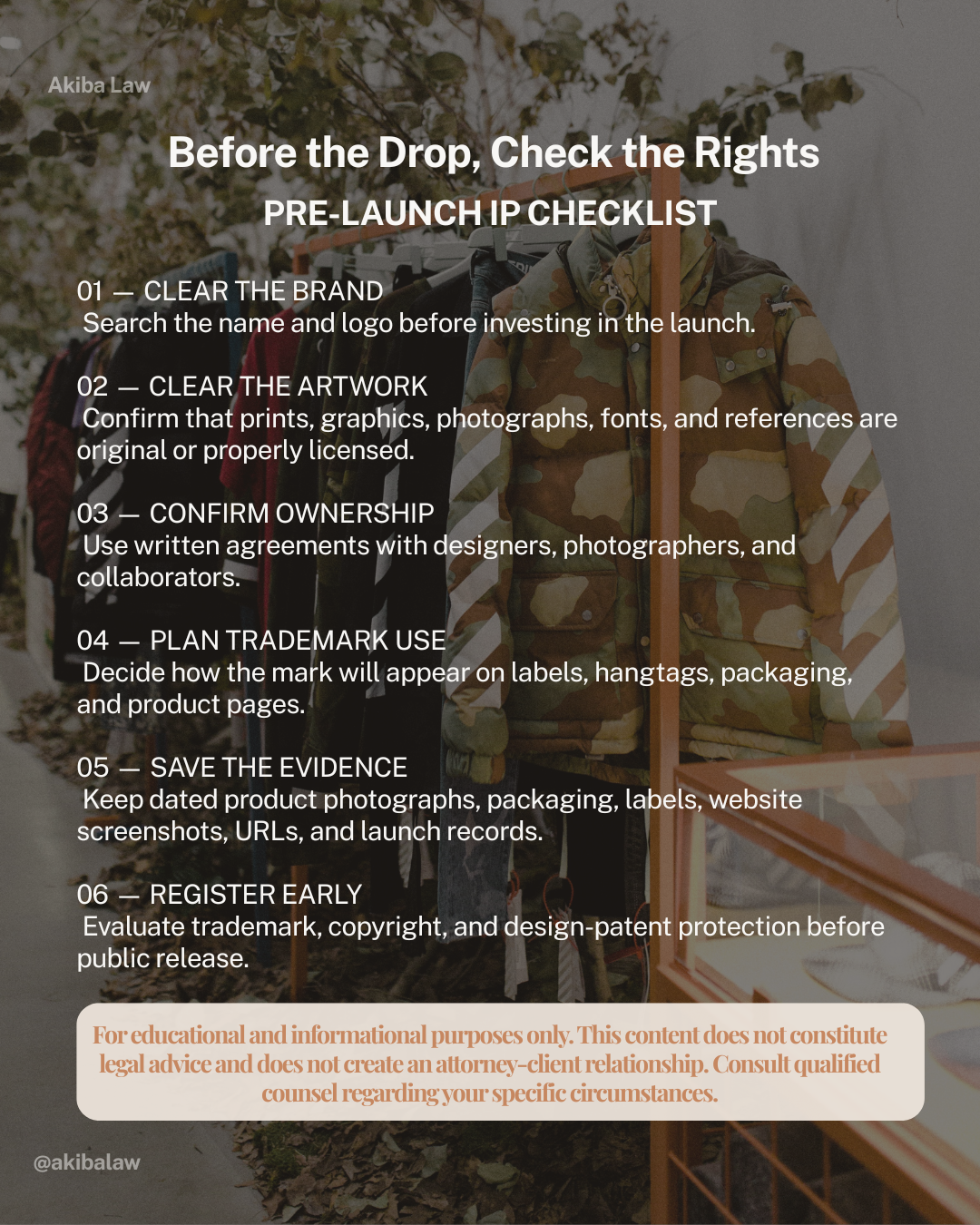
Trademark Placement Should Be Planned Before Launch
Trademark use should be part of the product-development process. A brand that waits until after launching may discover that its existing photographs, website pages, or product presentation do not provide strong evidence of trademark use.
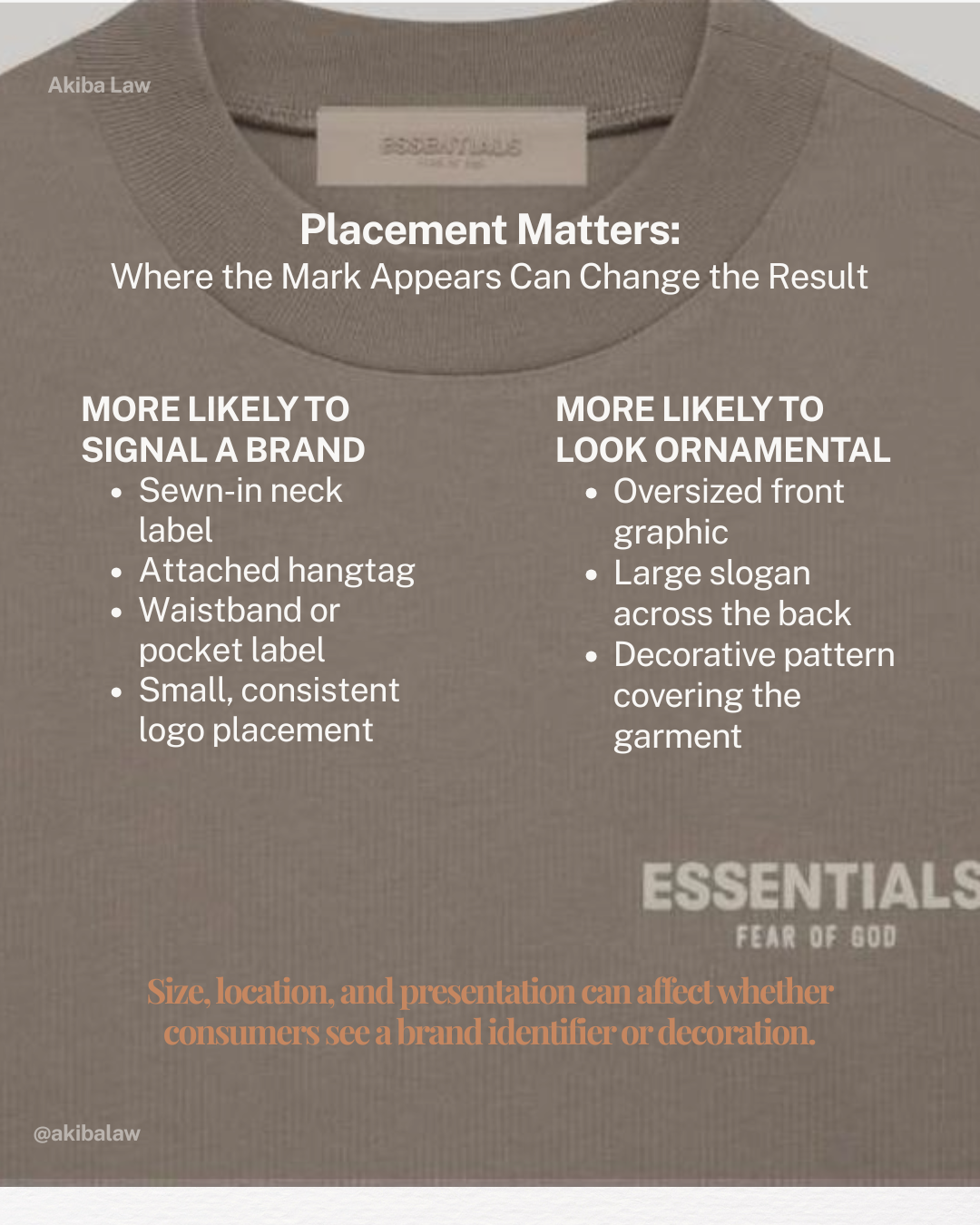
Labels, hangtags, product packaging, and properly designed point-of-sale webpages can help customers understand that a name or logo identifies the source of the clothing. Consistent use across products and sales materials can also reinforce that perception.
This does not mean that a logo displayed on the front or back of a garment can never function as a trademark. The USPTO considers the overall commercial impression, including the mark’s size, location, dominance, surrounding wording, and manner of presentation. A prominent design, however, may face closer scrutiny when consumers are likely to view it as decoration or as the garment’s expressive content.
The Specimen Must Show Real Marketplace Use
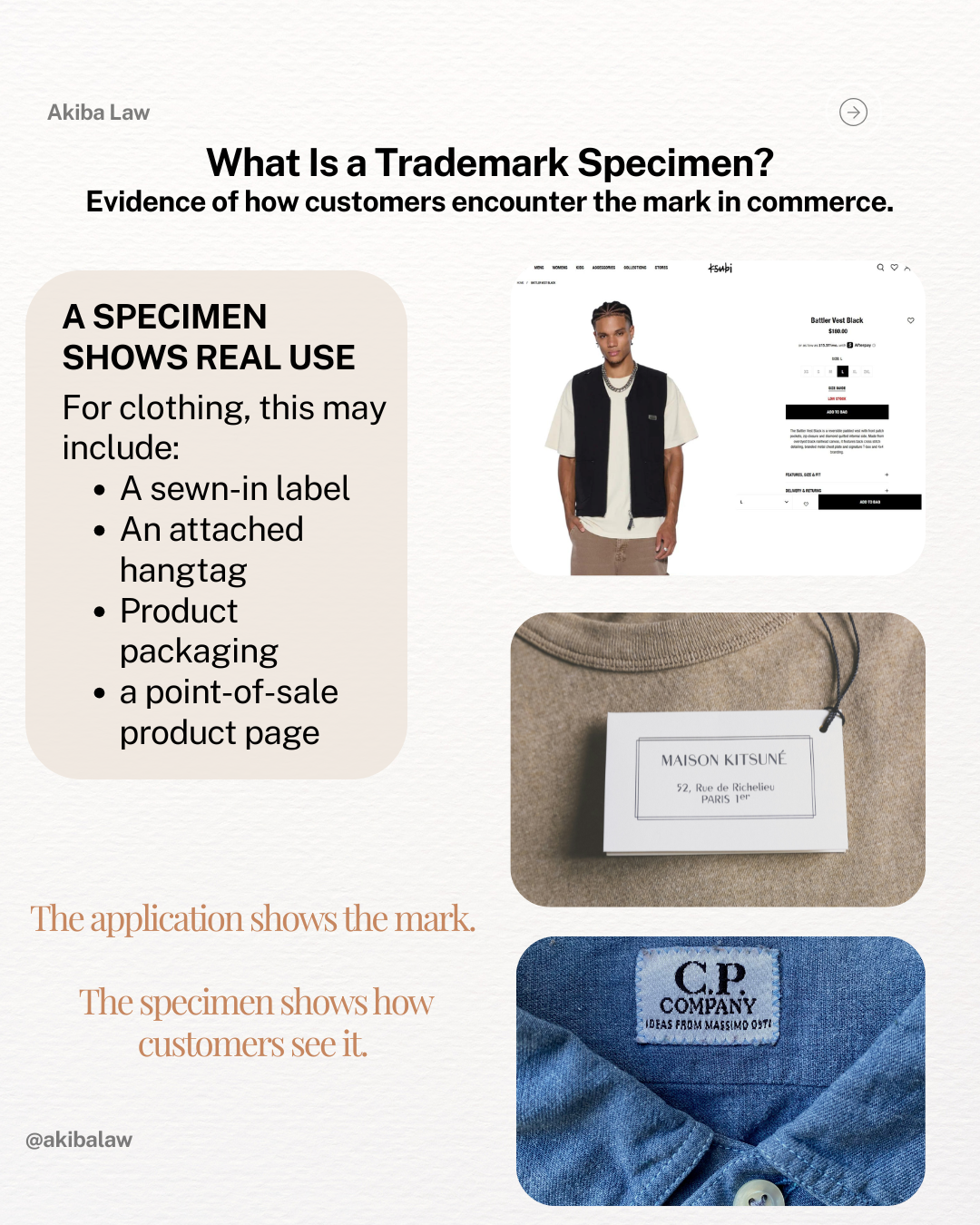
A trademark application identifies the mark the applicant wants to register. The specimen serves a different purpose. It shows how customers actually encounter that mark in commerce.
For clothing, a useful specimen may include a photograph of the mark on a sewn-in label or attached hangtag. A product page may also qualify when it clearly associates the mark with the clothing and provides information that allows customers to purchase the product.
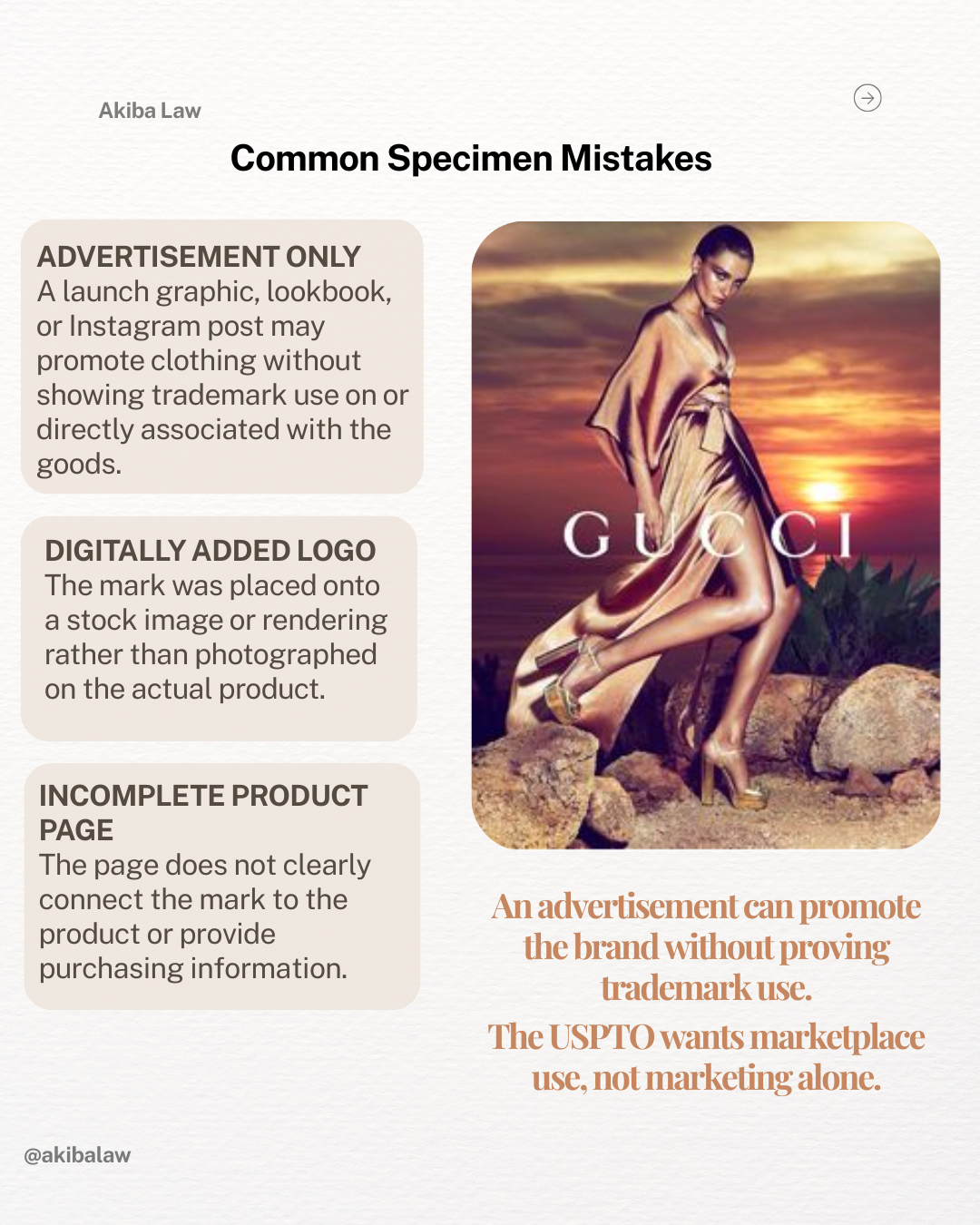
Advertisements, social-media announcements, lookbooks, and promotional campaigns may help market a collection, but they do not always establish trademark use for the goods themselves. Applicants should also avoid mockups or digitally altered images that do not accurately show the product as sold.
Copyright May Protect the Garment’s Artwork
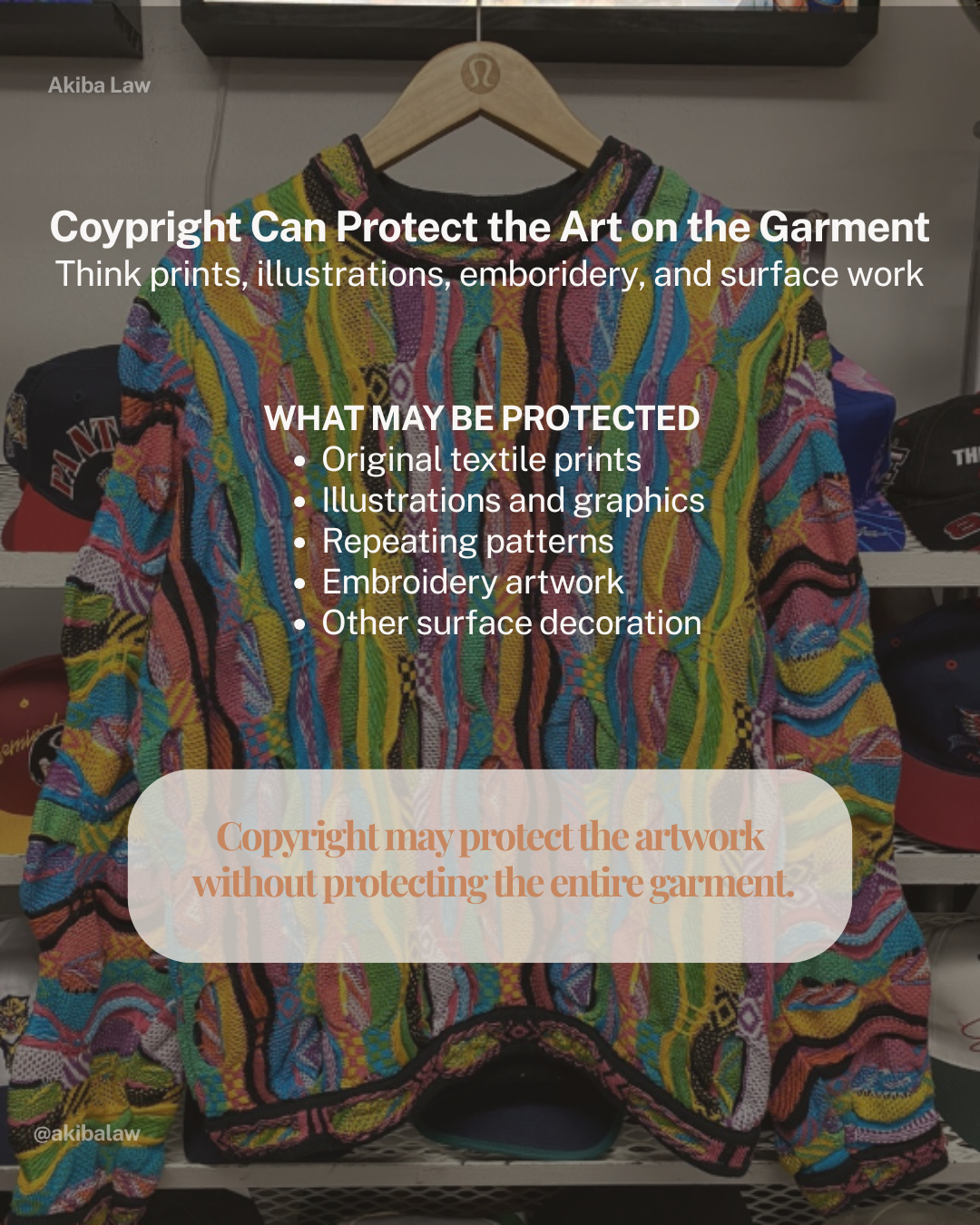
Original artwork incorporated into clothing may qualify for copyright protection. Examples include illustrations, textile prints, repeating patterns, embroidery designs, and other independently recognizable surface artwork.
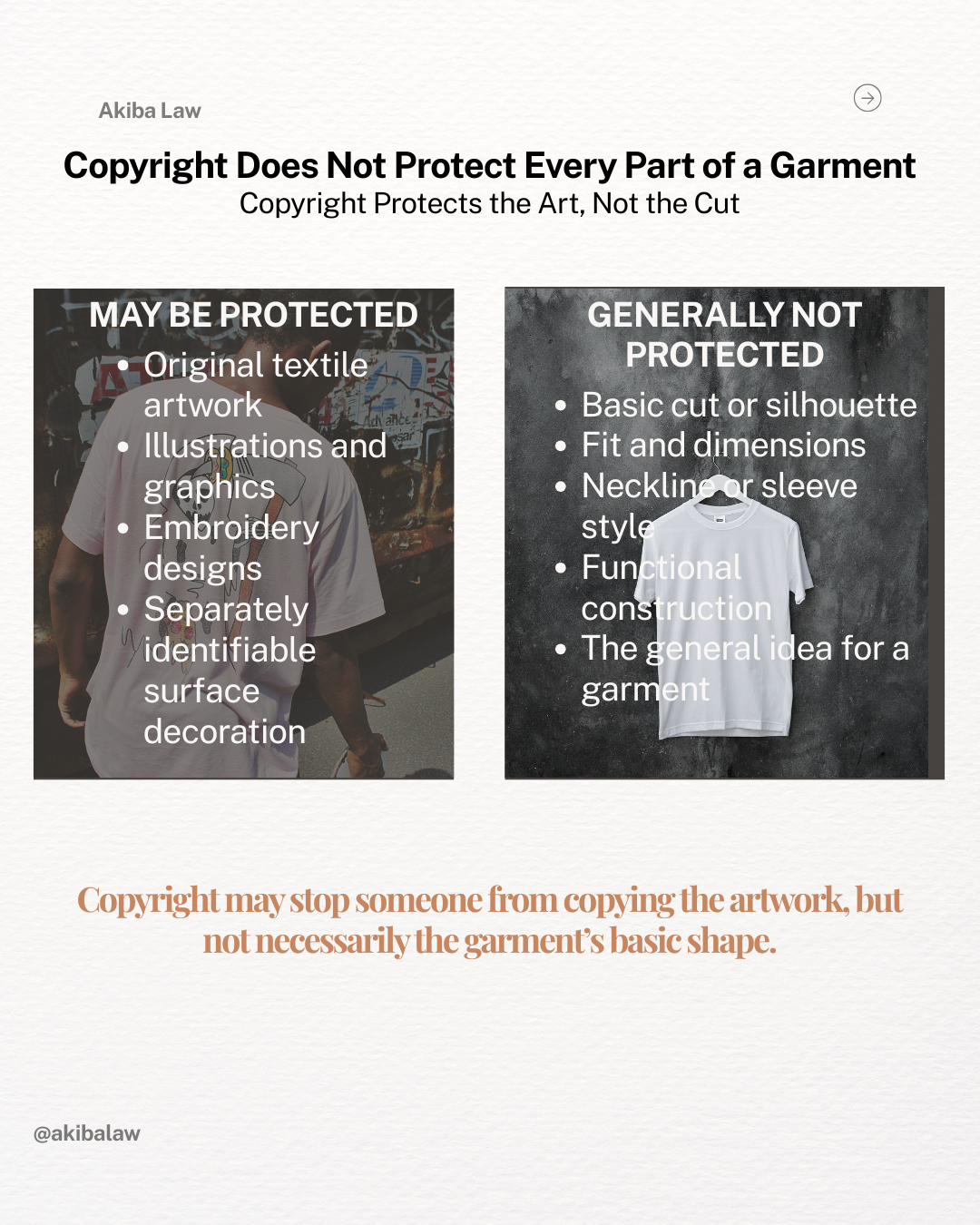
Copyright protection generally does not extend to the basic cut, dimensions, fit, or functional construction of an ordinary garment. A brand may therefore have rights in the artwork printed on a shirt without owning exclusive rights in the shirt’s underlying shape.
Written agreements are particularly important when outside designers, photographers, illustrators, or collaborators contribute to a collection. Paying someone to create material does not automatically resolve every ownership issue. The agreement should address ownership, permitted uses, revisions, licensing, and the right to register or enforce the work.
Build the Evidence as the Brand Develops
Fashion brands should preserve dated photographs of products, labels, packaging, hangtags, and retail displays. They should also retain website screenshots, URLs, launch materials, invoices, and sales records. This evidence may become important during registration, enforcement, licensing, or a later ownership dispute.
A coordinated pre-launch strategy can include clearing the brand name, confirming ownership of creative material, planning how trademarks will appear, and evaluating trademark, copyright, and design-patent protection. Addressing these issues early is usually easier than attempting to reconstruct the record after a collection has already launched.
Akiba Law is a law firm based in Miami, Florida, which assists fashion brands, designers, artists, and creative businesses with trademark applications, copyright matters, licensing, brand protection, and intellectual property disputes.
warning Disclaimer
This article is for general educational and informational purposes only and does not constitute legal advice. Reading this article does not create an attorney-client relationship with Akiba Law PLLC or any attorney. Florida law may apply differently depending on the specific facts, legal issues, and parties involved. Individuals and businesses should consult qualified legal counsel about their specific circumstances. For questions, concerns, or additional information, please contact Akiba Law PLLC to speak with a qualified attorney.

From a Real Estate Listing to Restitution: Argentina Orders Return of Nazi-Looted Old Master to Sole Remaining Heir of Jacques Goudstikker
More than eighty years after an Old Master painting disappeared during the Nazi era, an Argentine court has ordered its…

Case Update: Solar Drops Second Gang Starr Lawsuit After Judge Questions Prospect of Duplicative Litigation
When I first wrote about the latest chapter in the legal battle surrounding Gang Starr in September 2025, producer John…

Art Law in Florida: A Practitioner’s Handbook
Akiba Law PLLC is a Miami-based law firm advising artists, collectors, galleries, dealers, auction businesses, museums, and creative entrepreneurs on…

2 Live Crew Tried to Take Back Its Copyrights. A Decades-Old Bankruptcy Got in the Way.
Copyright ownership can last for decades, and the Copyright Act gives many creators an unusual second chance to revisit deals…
When Does a Sculpture Become a Building? East Hampton’s Lawsuit Over Matt Johnson’s Meditating Figure
Large-scale public and private art installations can raise issues well beyond copyright, contracts, and exhibition agreements. Once an artwork reaches…
Eden Gallery Sues Collector Over Alleged $822,390 Unpaid Balance: Lessons for Art Sales on Credit
High-value art transactions are often built on relationships. A collector may purchase repeatedly from the same gallery, payments may be…
MoMA v. MOMACHA: Trademark Strength, Brand Similarity, and Consumer Confusion
A trademark dispute does not always begin with two businesses offering the same product. Confusion can arise when a newer…

When a $2.5 Million Art Loan Ends in Litigation: Lessons for Galleries, Curators, and Property Owners
Long-term art placements can benefit everyone involved. Galleries gain access to potential collectors, property owners enhance their spaces, and residents…

When a Gallery Sells Consigned Art but Does Not Pay the Artist: The Hole Lawsuit and New York’s Trust-Fund Rules
An artwork consignment is not simply an informal arrangement in which a gallery agrees to sell a work and pay…

45 Antiquities Seized from the Metropolitan Museum of Art: Provenance, Repatriation, and the Importance of Due Diligence
On July 8, 2026, the Manhattan District Attorney’s Office announced the return of 59 antiquities, collectively valued at more than…

Florida Interior Designers and Decorators: Are You Regulated? Do You Need a License?
Interior designers and decorators in Florida often face a practical question: am I subject to Florida regulation, and do I…
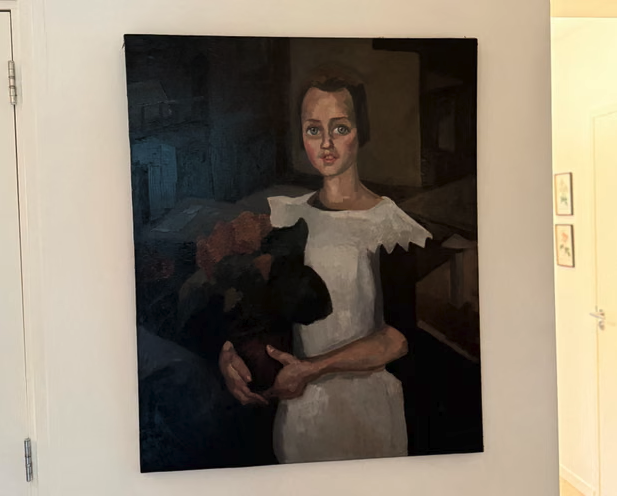
Jacques Goudstikker’s Stolen Collection Is Still Being Found and Returned
Restitution can’t undo the Holocaust but it can return what was taken and every returned work matters. A Nazi-looted painting…