When a $2.5 Million Art Loan Ends in Litigation: Lessons for Galleries, Curators, and Property Owners
Long-term art placements can benefit everyone involved. Galleries gain access to potential collectors, property owners enhance their spaces, and residents or guests experience artwork outside a traditional gallery setting. Those arrangements can also create significant legal and practical risks when responsibilities for promotion, handling, insurance, documentation, and return are not carefully managed.
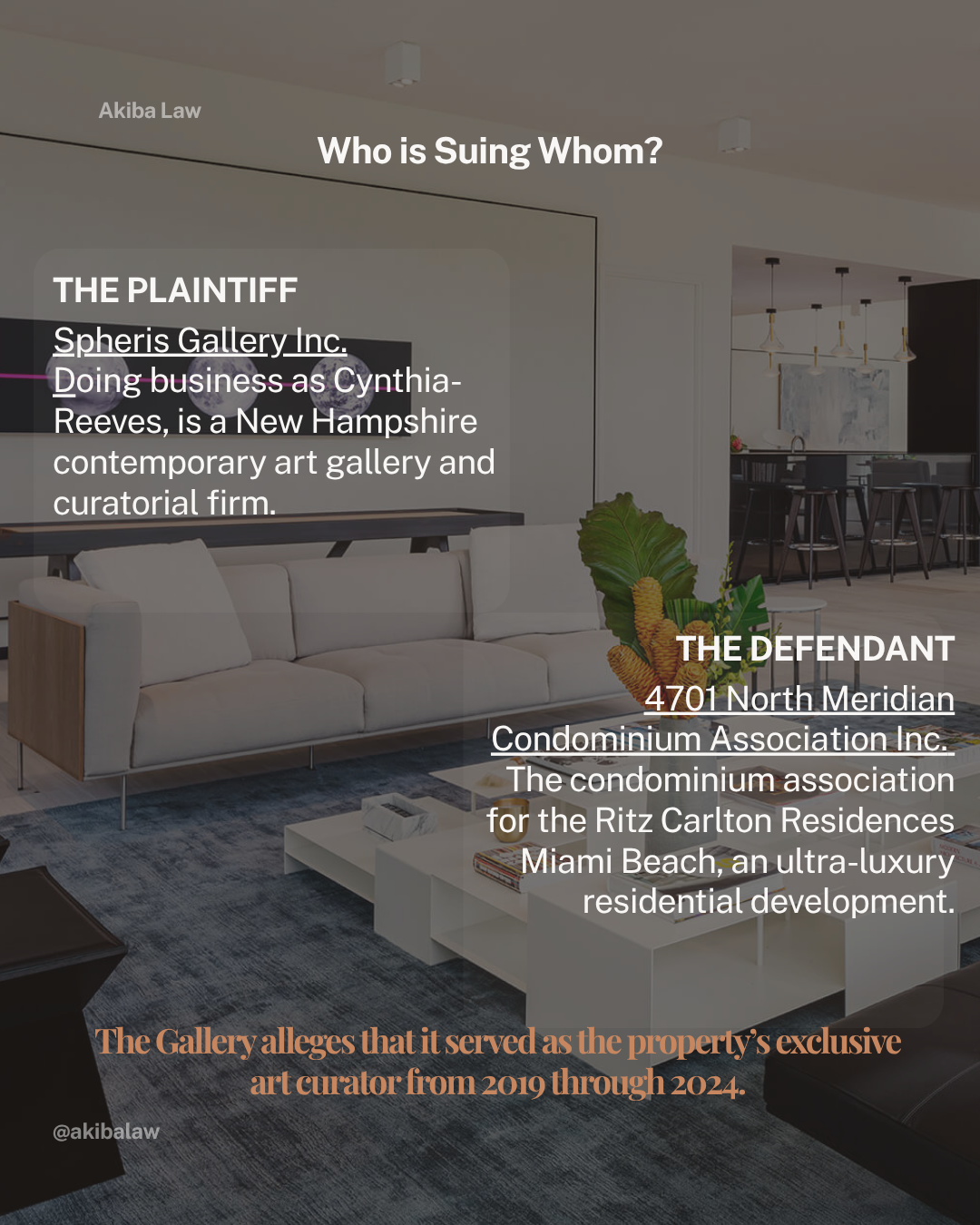
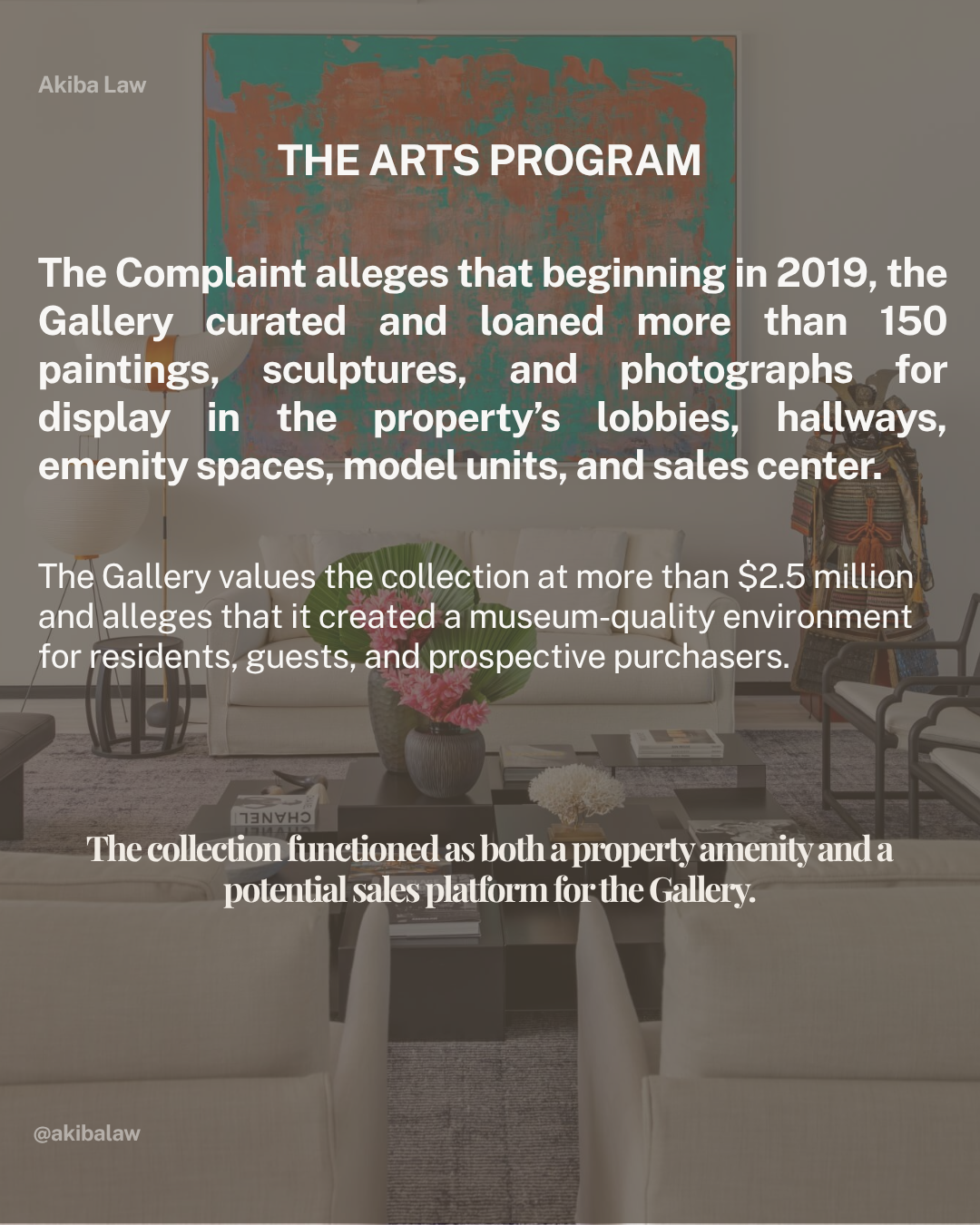
In Spheris Gallery, Inc. et al. v. 4701 N. Meridian Condo. Ass’n Inc., Spheris Gallery sued the condominium association for the Ritz-Carlton Residences Miami Beach, which illustrates how those risks may develop over time. According to the complaint, the New Hampshire gallery loaned and curated more than 150 paintings, sculptures, and photographs for display throughout the property between 2019 and 2024. The gallery values the collection at more than $2.5 million.
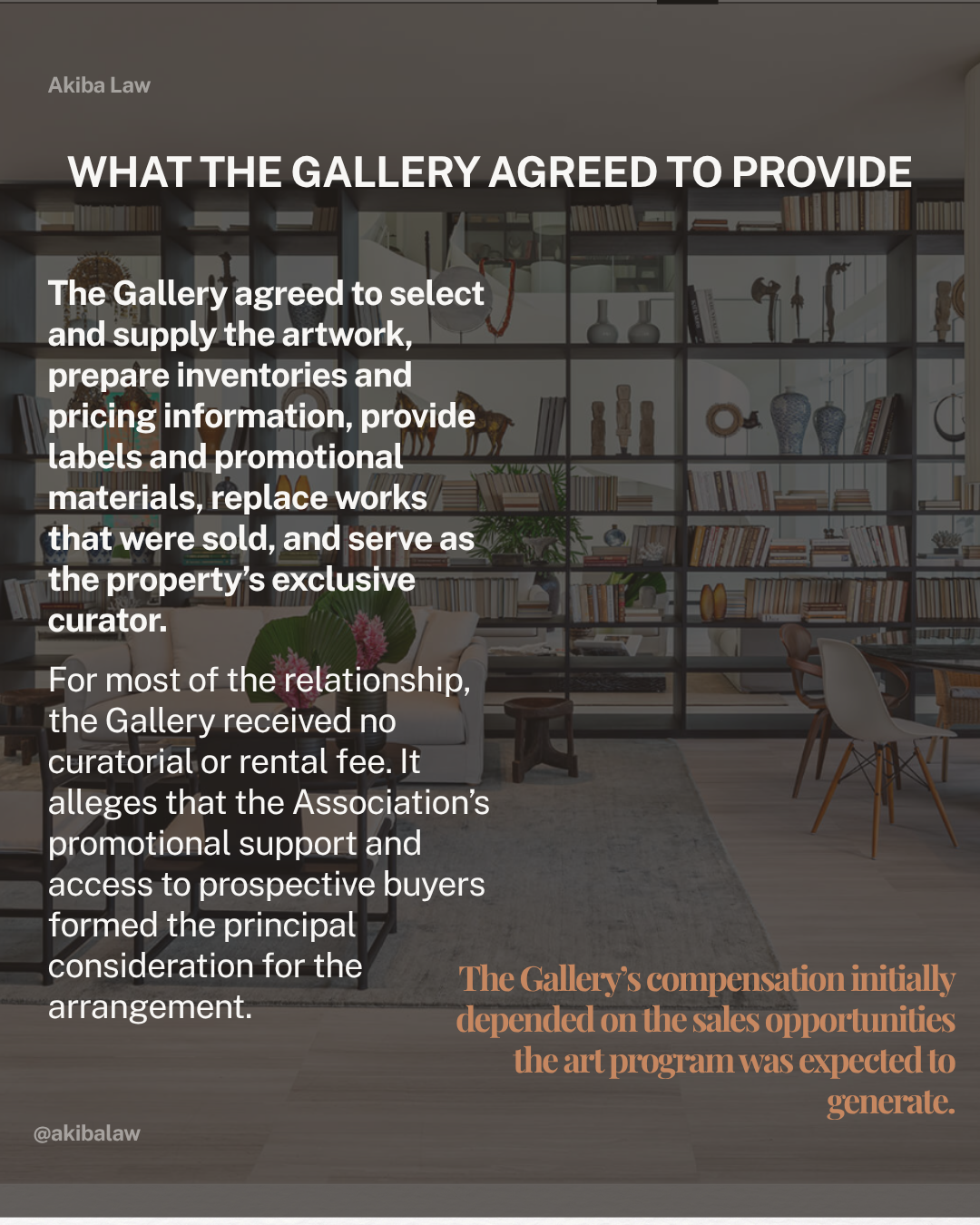
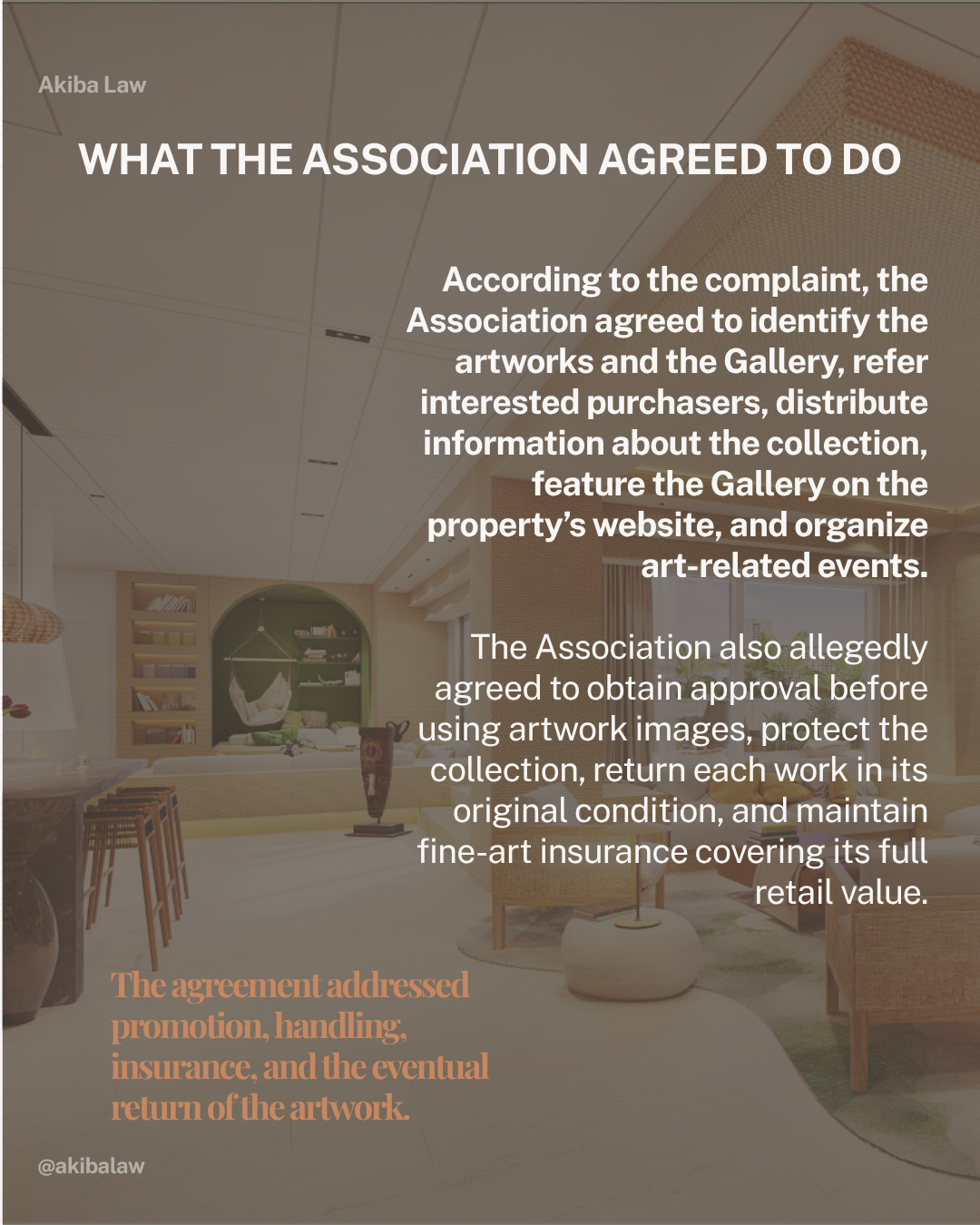
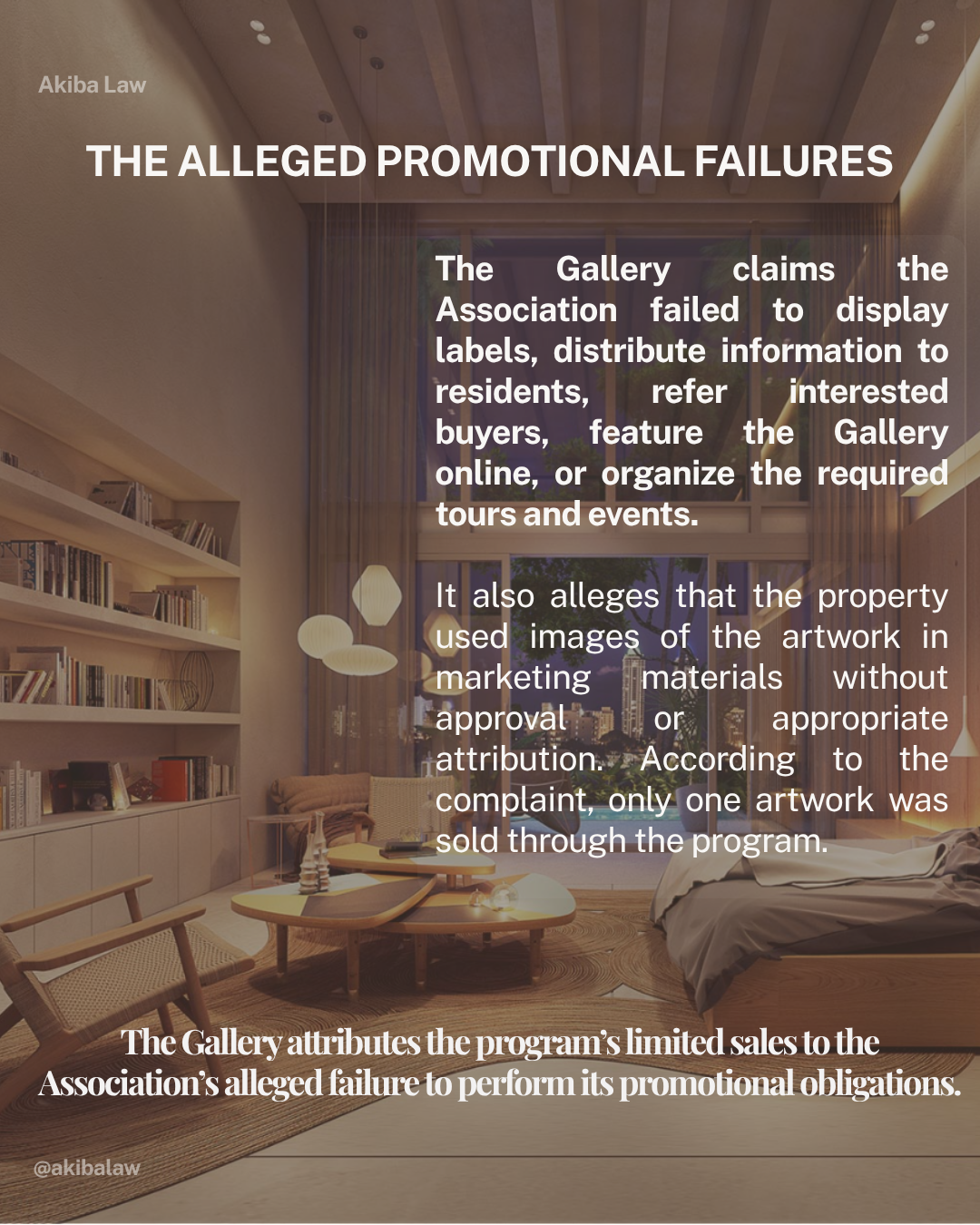
The gallery alleges that it initially received no curatorial or rental fee and expected to benefit from sales opportunities generated through the program. It claims that the condominium association agreed to identify the artwork and gallery, refer interested purchasers, organize art-related events, protect the collection, maintain insurance, and return each work in its original condition.
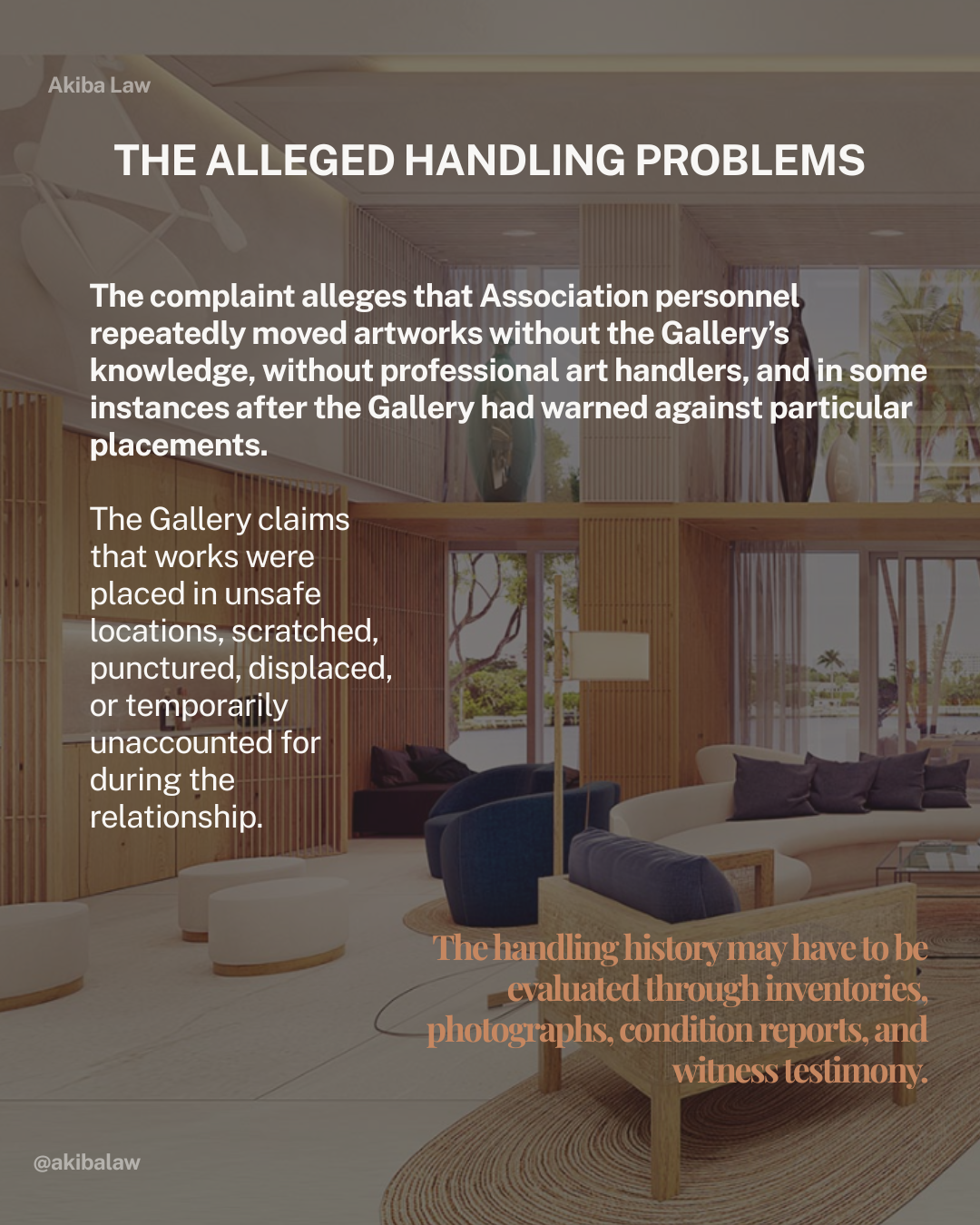
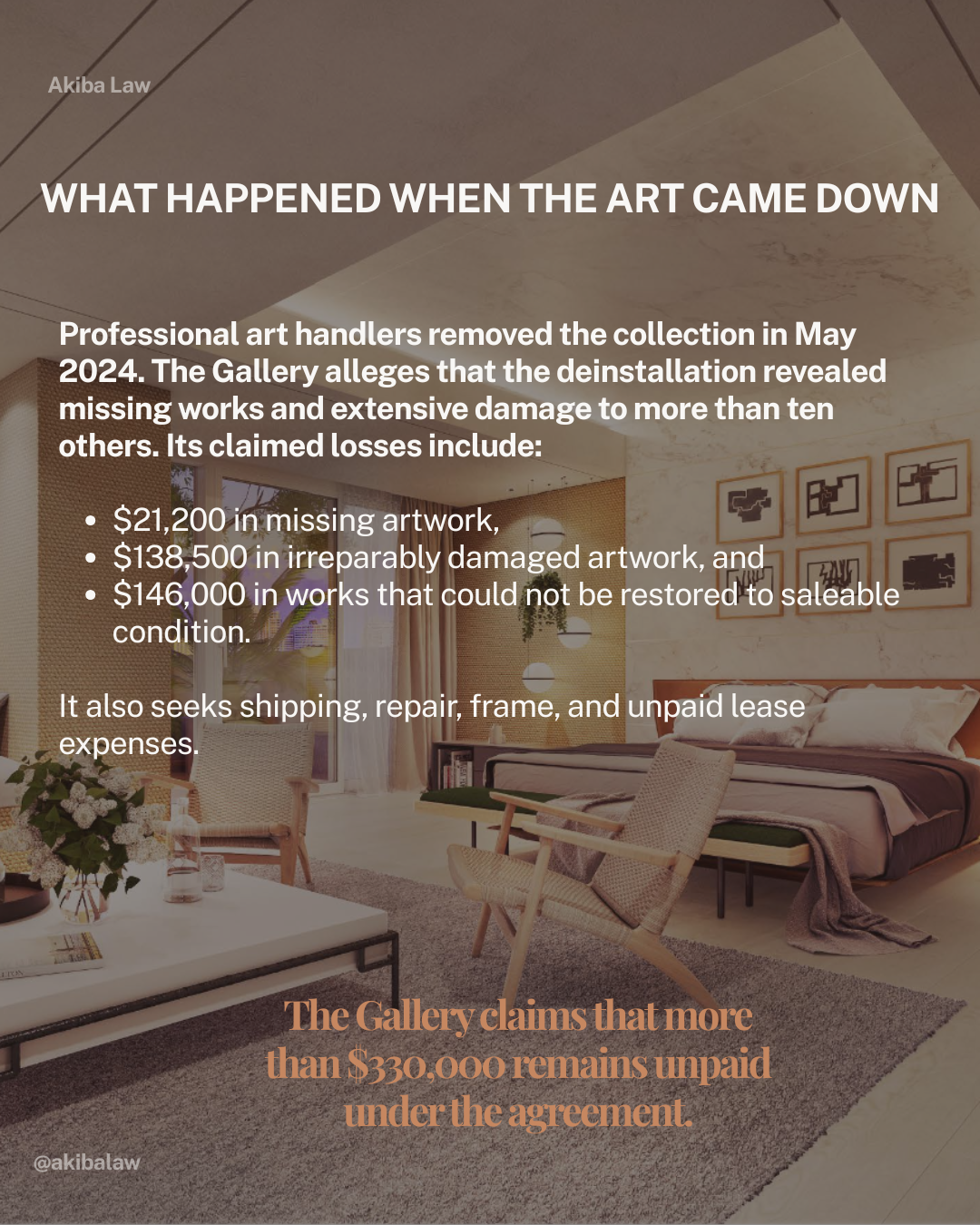
The complaint alleges that the arrangement ultimately resulted in limited sales, unauthorized movement of artwork, missing pieces, physical damage, restoration expenses, and unpaid contractual amounts. The association has not yet had an opportunity to establish its defenses, and the allegations remain to be proven.
The following slides summarize the allegations, the parties’ asserted responsibilities, and the legal claims arising from the five-year relationship.

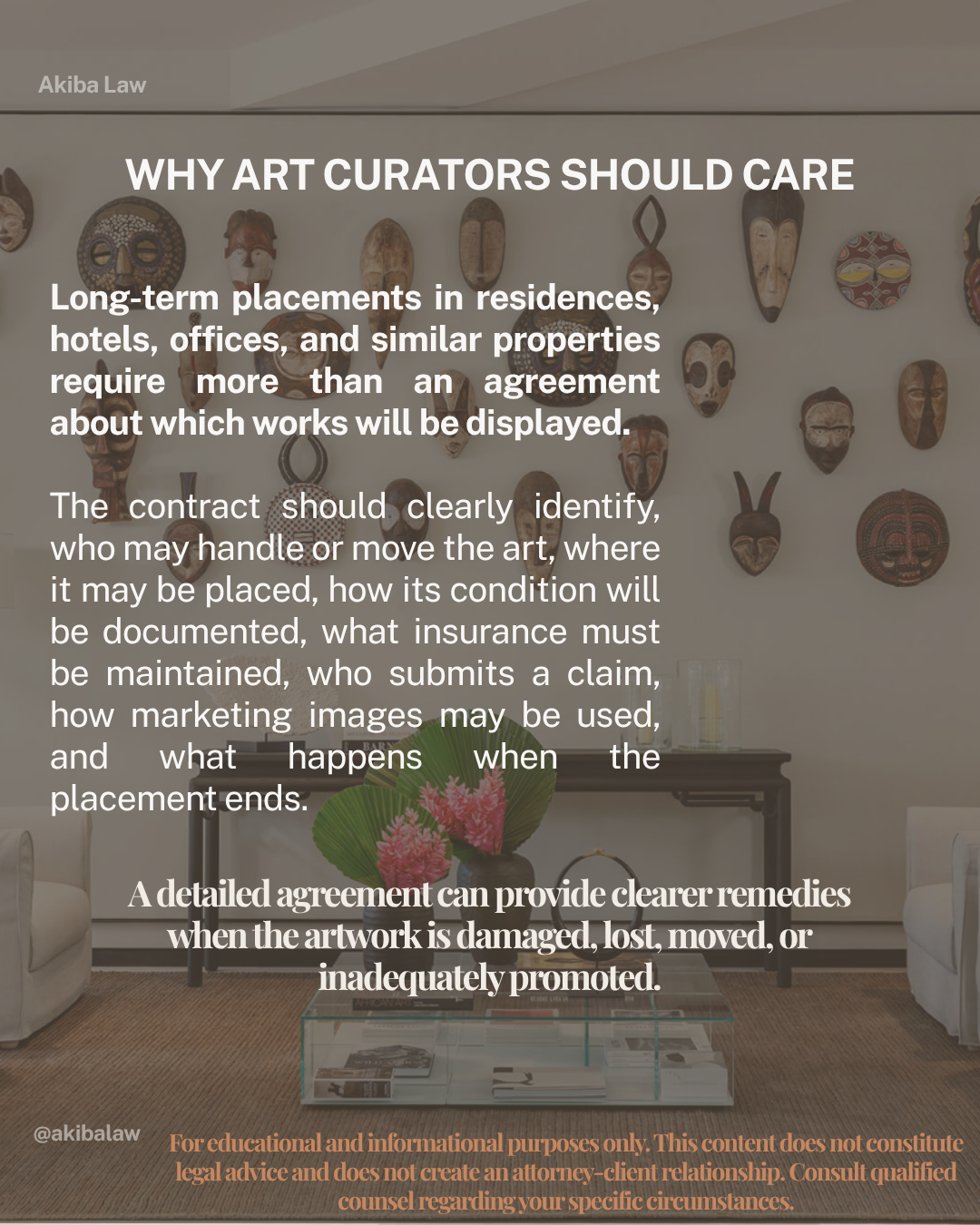
Art Placement Agreements Must Address More Than the Artwork
An agreement identifying which pieces will be displayed is only the starting point. Long-term placements require detailed procedures governing possession, promotion, handling, insurance, condition reporting, sales inquiries, payment of sale proceeds, and the eventual return of the collection.
These issues become especially important when artwork is displayed throughout an occupied residential development, hotel, office, restaurant, or other property. Unlike a controlled gallery environment, artwork in these locations may be exposed to residents, guests, employees, contractors, maintenance personnel, events, construction, and periodic changes in interior design.
The agreement should allocate responsibility for each stage of the relationship and establish a clear process when something goes wrong.
Define the Commercial Arrangement
The economics of the placement should be stated directly. Where a gallery provides artwork without a traditional rental or curatorial fee, the agreement should explain what the gallery will receive in exchange.
Compensation may include commissions from sales, promotional exposure, access to prospective collectors, event opportunities, referral obligations, or a fixed placement fee. Those benefits should be described through objective requirements whenever possible.
For example, an agreement can specify the number of events to be held, how artwork will be identified, where gallery information will appear, how sales inquiries will be transmitted, and how frequently promotional materials will be distributed. General promises to “promote” a collection may leave substantial room for disagreement.
Control Who May Move or Handle the Artwork
The agreement should identify who may install, remove, relocate, clean, pack, or otherwise handle each piece. It should also address whether professional art handlers are required and whether the gallery’s written approval must be obtained before a work is moved.
Property personnel may view relocating artwork as an ordinary operational decision. From the gallery’s perspective, movement may create risks involving improper hardware, unsuitable environmental conditions, physical impact, theft, loss, or damage to frames and surfaces.
A written handling protocol can reduce uncertainty and create a documented approval process. It may also specify what happens during renovations, maintenance, private events, emergencies, or changes to the property’s furnishings.
Document Condition Throughout the Placement
Condition documentation should begin before delivery and continue throughout the relationship. Each work should be photographed, inventoried, and matched to a written condition report.
The parties should update those records after installation, relocation, reported damage, temporary removal, restoration, and deinstallation. The inventory should include identifying information such as the artist, title, dimensions, medium, value, location, ownership, and any existing condition concerns.
For a collection displayed over several years, relying solely on the original installation records may make it difficult to determine when damage occurred, who had custody, or whether an item was moved without authorization.
Establish Insurance and Claims Procedures
An agreement requiring insurance should identify the type and amount of coverage, the insured value of each work, any applicable deductibles, and the parties who must be named as insureds or loss payees.
The agreement should also address:
- Who must obtain proof of coverage
- Who pays the deductible
- Who reports a loss
- Who communicates with the insurer
- Who selects conservators or repair professionals
- How diminished value will be evaluated
- What happens when a work cannot be restored to saleable condition
- A general statement that the property will maintain insurance may not resolve these practical questions once a claim arises.
Address Image Use and Attribution
Properties frequently photograph interiors for websites, brochures, social media, press coverage, and real estate marketing. When artwork appears in those images, the parties should determine whether approval is required and what attribution must be provided.
The agreement should identify who owns or controls the relevant image rights, whether commercial photography is permitted, how artists and galleries will be credited, and whether the property may continue using photographs after the placement ends.
Permission to possess or display a physical artwork does not necessarily provide unlimited permission to reproduce it in advertising.
Plan for Deinstallation Before the Relationship Ends
The return process should be negotiated at the beginning of the arrangement. The agreement should establish who will inventory, inspect, pack, ship, insure, and pay for the removal of the collection.
A joint condition inspection should occur before the artwork leaves the property. Any missing or damaged works should be documented immediately, along with photographs, witness information, proposed repairs, and notice to the insurer.
The agreement should also address the deadline for return, storage costs, abandoned property issues, restoration expenses, and responsibility for works that cannot be returned in their prior condition.
Bailment May Create Duties Beyond the Contract
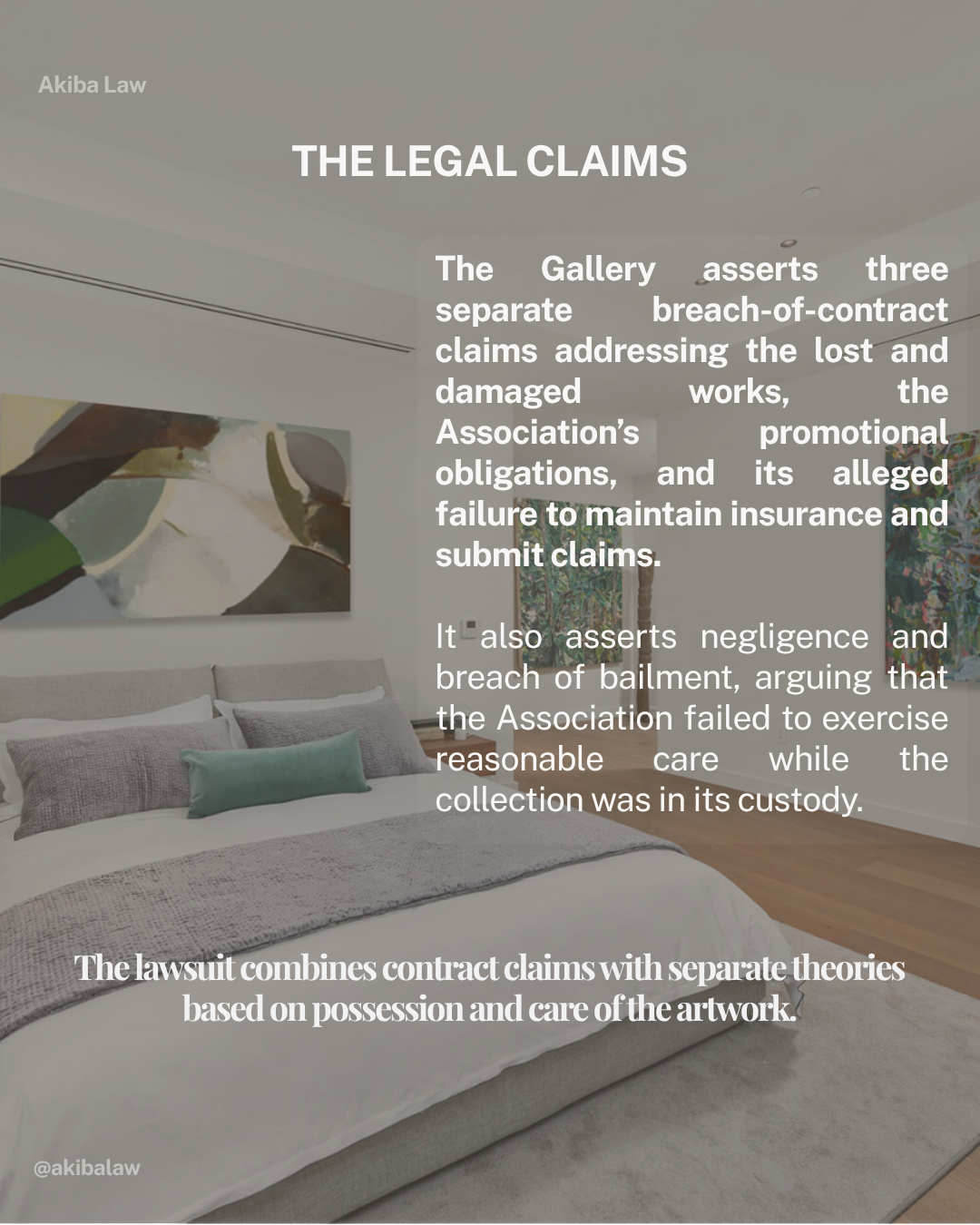
When one party delivers personal property to another for a particular purpose, the arrangement may create a bailment. In an art placement, that theory may become relevant when the receiving party has possession or control of the artwork and is expected to return it.
A bailment claim may focus on custody, reasonable care, damage, loss, and the failure to return property. The particular duties and available claims will depend on the agreement, the parties’ conduct, and the governing law.
For that reason, possession and control should be clearly documented. The parties should know who had authority over each work, where it was located, and when custody changed.
The Practical Lesson
Long-term art programs should be treated as continuing custodial and commercial relationships. The agreement should provide procedures that remain workable after the opening event, initial installation, or first round of promotional activity.
Clear inventories, condition reports, handling restrictions, insurance requirements, marketing obligations, image-use provisions, and return procedures can help prevent a disagreement from becoming a dispute over missing artwork, physical damage, unpaid compensation, or unfulfilled expectations.
Akiba Law is a law firm based in Miami, Florida, and assists galleries, artists, curators, collectors, and creative businesses with art loans, consignment agreements, licensing, intellectual property matters, and disputes involving the ownership, possession, handling, and sale of artwork.
warning Disclaimer
This article is for general educational and informational purposes only and does not constitute legal advice. Reading this article does not create an attorney-client relationship with Akiba Law PLLC or any attorney. Florida law may apply differently depending on the specific facts, legal issues, and parties involved. Individuals and businesses should consult qualified legal counsel about their specific circumstances. For questions, concerns, or additional information, please contact Akiba Law PLLC to speak with a qualified attorney.
From a Real Estate Listing to Restitution: Argentina Orders Return of Nazi-Looted Old Master to Sole Remaining Heir of Jacques Goudstikker
More than eighty years after an Old Master painting disappeared during the Nazi era, an Argentine court has ordered its…

Case Update: Solar Drops Second Gang Starr Lawsuit After Judge Questions Prospect of Duplicative Litigation
When I first wrote about the latest chapter in the legal battle surrounding Gang Starr in September 2025, producer John…

Art Law in Florida: A Practitioner’s Handbook
Akiba Law PLLC is a Miami-based law firm advising artists, collectors, galleries, dealers, auction businesses, museums, and creative entrepreneurs on…

2 Live Crew Tried to Take Back Its Copyrights. A Decades-Old Bankruptcy Got in the Way.
Copyright ownership can last for decades, and the Copyright Act gives many creators an unusual second chance to revisit deals…
When Does a Sculpture Become a Building? East Hampton’s Lawsuit Over Matt Johnson’s Meditating Figure
Large-scale public and private art installations can raise issues well beyond copyright, contracts, and exhibition agreements. Once an artwork reaches…
Eden Gallery Sues Collector Over Alleged $822,390 Unpaid Balance: Lessons for Art Sales on Credit
High-value art transactions are often built on relationships. A collector may purchase repeatedly from the same gallery, payments may be…
MoMA v. MOMACHA: Trademark Strength, Brand Similarity, and Consumer Confusion
A trademark dispute does not always begin with two businesses offering the same product. Confusion can arise when a newer…
When a Gallery Sells Consigned Art but Does Not Pay the Artist: The Hole Lawsuit and New York’s Trust-Fund Rules
An artwork consignment is not simply an informal arrangement in which a gallery agrees to sell a work and pay…
Your Logo Is on the Shirt. Does That Count as Trademark Use?
Launching a clothing brand involves more than creating a name, designing a logo, and placing it on a garment. How…
45 Antiquities Seized from the Metropolitan Museum of Art: Provenance, Repatriation, and the Importance of Due Diligence
On July 8, 2026, the Manhattan District Attorney’s Office announced the return of 59 antiquities, collectively valued at more than…

Florida Interior Designers and Decorators: Are You Regulated? Do You Need a License?
Interior designers and decorators in Florida often face a practical question: am I subject to Florida regulation, and do I…
Jacques Goudstikker’s Stolen Collection Is Still Being Found and Returned
Restitution can’t undo the Holocaust but it can return what was taken and every returned work matters. A Nazi-looted painting…