Jacques Goudstikker’s Stolen Collection Is Still Being Found and Returned
Restitution can’t undo the Holocaust but it can return what was taken and every returned work matters.
A Nazi-looted painting tied to Jacques Goudstikker’s collection recently resurfaced in the Netherlands.
The work is Portrait of a Young Girl by Dutch artist Toon Kelder.
According to reports, the painting had been hanging for decades in the home of descendants of Hendrik Seyffardt, a high-ranking Dutch Nazi collaborator who commanded a Waffen-SS unit during World War II.
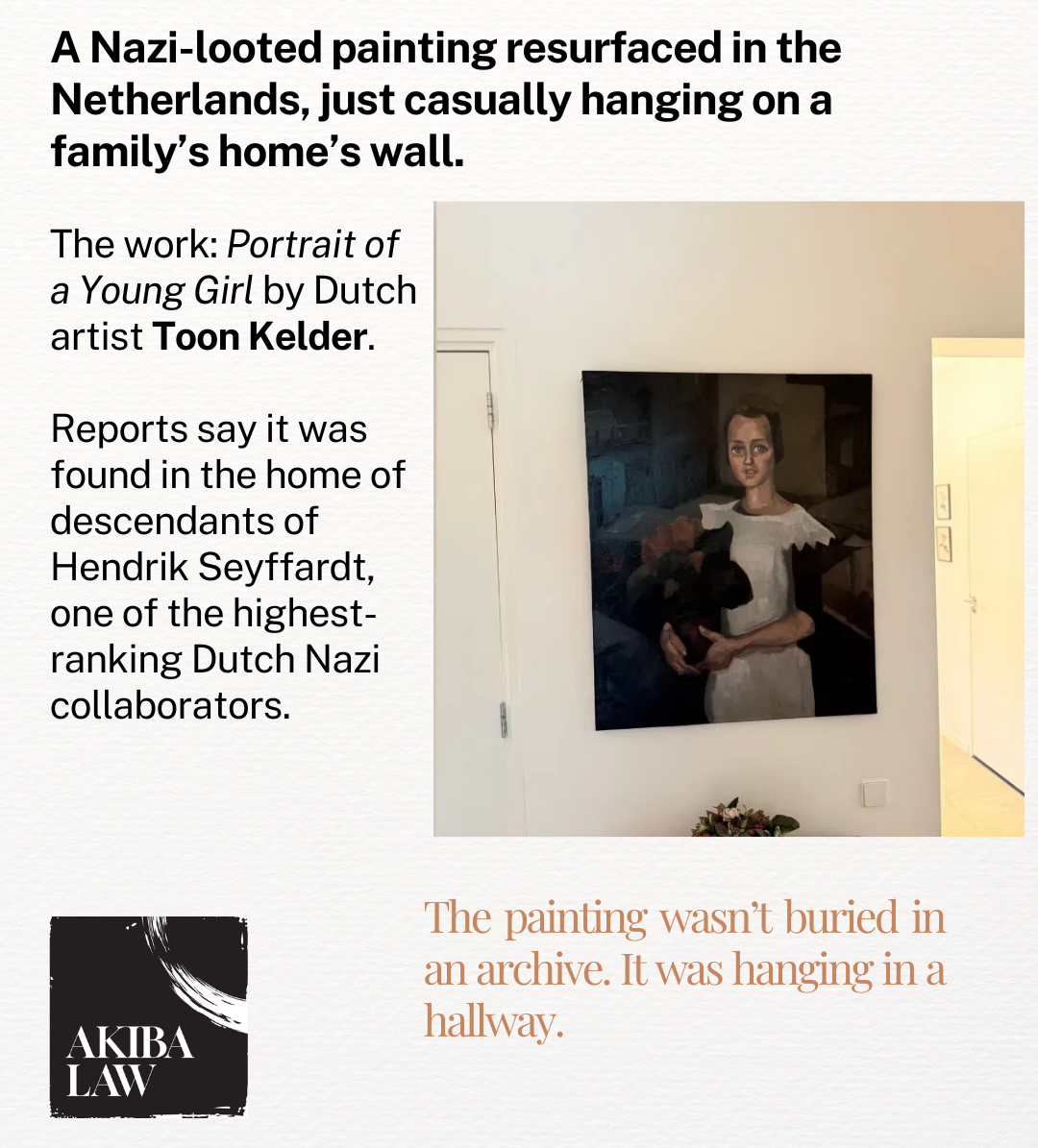
The painting wasn’t found in a museum archive. It was hanging in a family hallway.
That fact captures one of the hardest truths in Nazi-looted art recovery: stolen works often don’t disappear. They move into private homes. They pass through families. They become background objects. They sit on walls while the record of their theft waits to be found.
Who Was Jacques Goudstikker?
Jacques Goudstikker was a Jewish-Dutch art dealer in Amsterdam. He fled the Nazis in 1940 after Germany invaded the Netherlands. He died while trying to escape by ship. After his death, the Nazis looted his collection. Hermann Göring acquired a major portion of it.
Goudstikker’s heirs have spent decades trying to trace and recover the works. Some have been returned. Others are still out there.
How the Painting Resurfaced
The Netherlands discovery started when a relative of Seyffardt contacted art detective Arthur Brand.
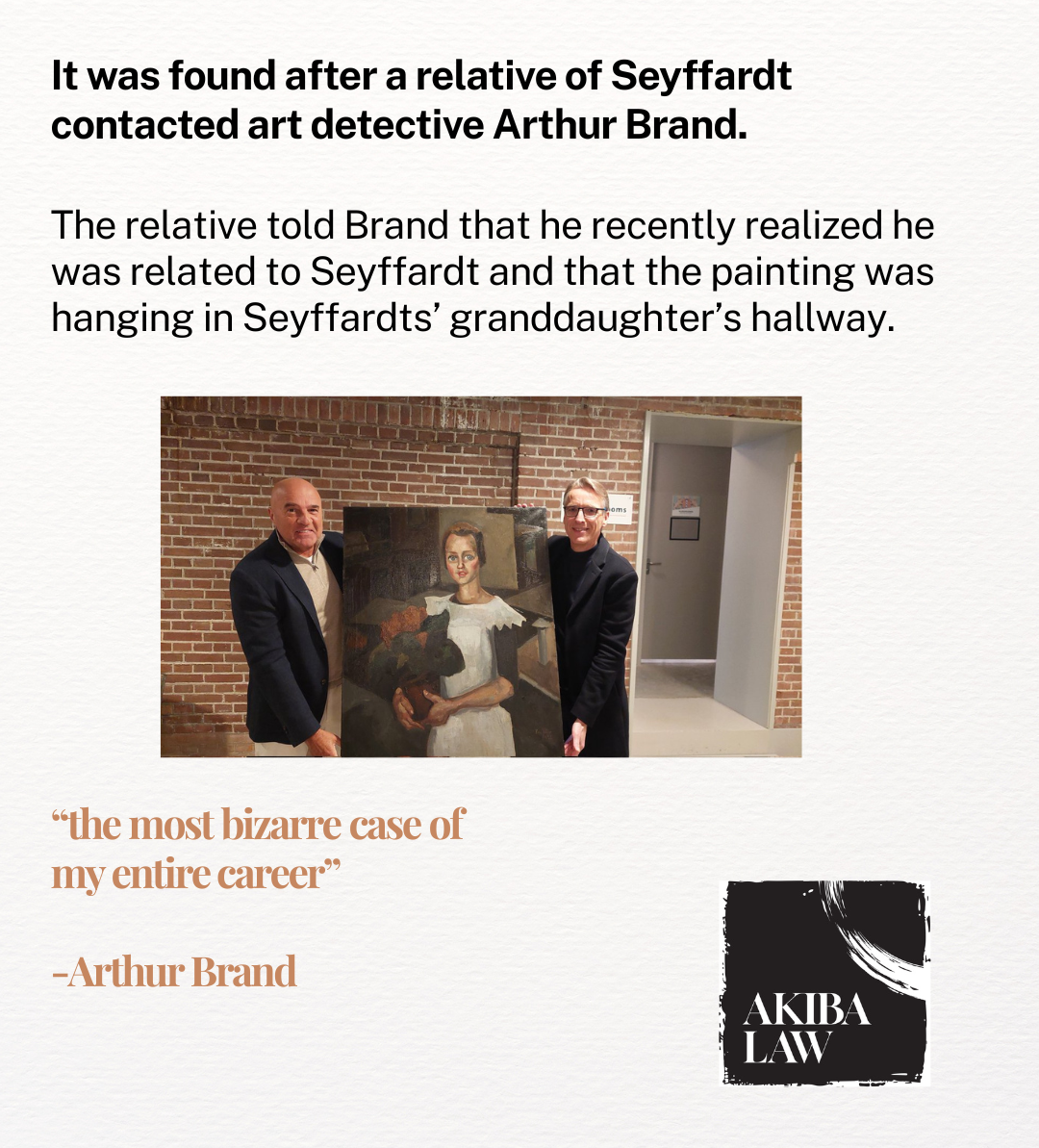
According to reports, the relative had recently learned two things: he was related to Seyffardt, and his family had been displaying looted art for years.
The painting was allegedly hanging in the hallway of Seyffardt’s granddaughter’s home.
Seyffardt’s granddaughter allegedly confirmed that the work was Jewish looted art stolen from Goudstikker. She also allegedly called it unsellable and told the relative not to tell anyone.
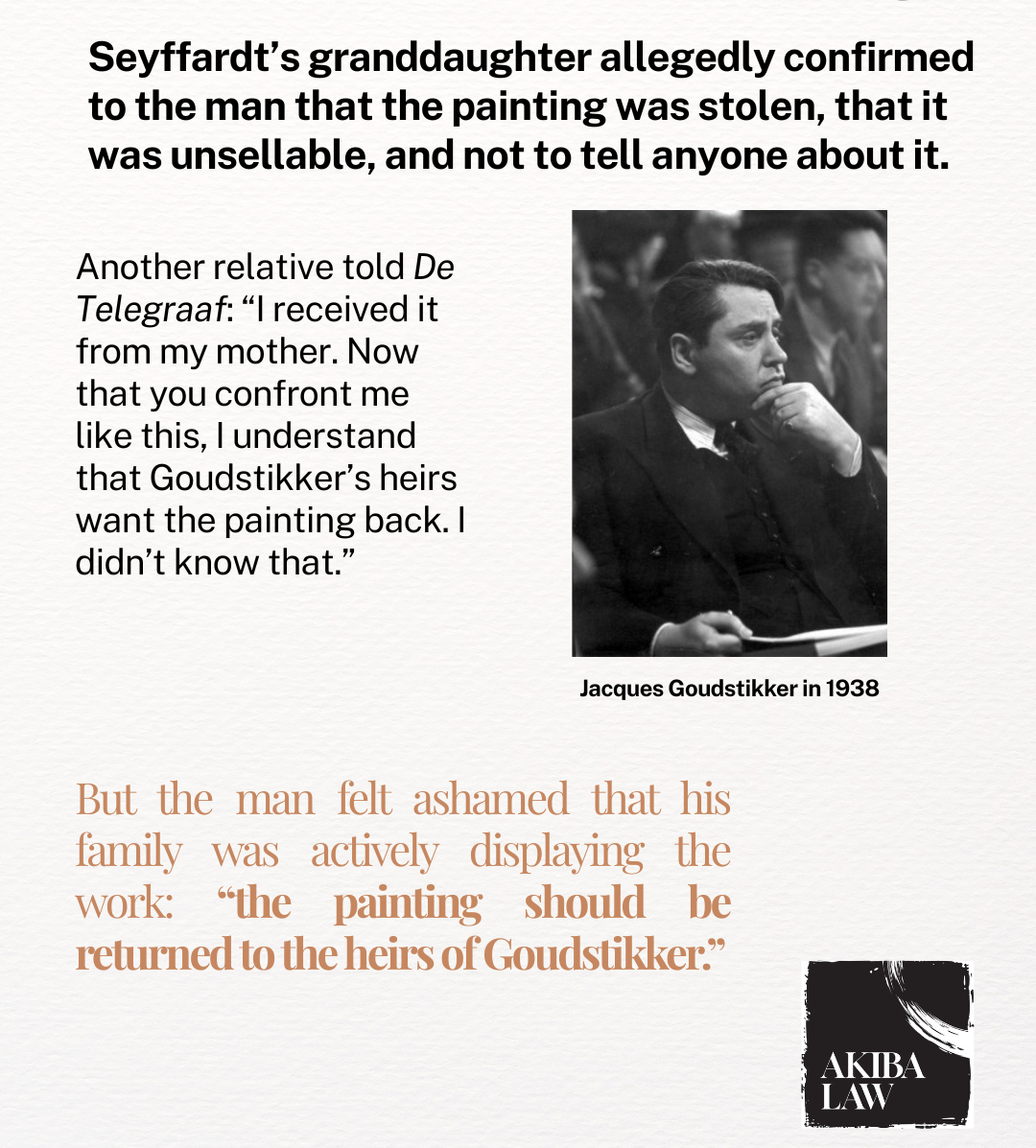
That word, “unsellable,” says a lot. The painting may have been physically possessed by the family but the market problem was title.
A buyer, auction house, gallery, museum, or serious collector cannot look only at possession. Provenance can change the entire legal and commercial value of a work.
The Painting Carried Its Own Trail
Brand investigated the work and found that the painting had a Goudstikker label on the back. It also had the number “92” carved into the frame. Brand then searched records from a 1940 auction involving part of the looted Goudstikker collection.
Item 92 matched Portrait of a Young Girl.
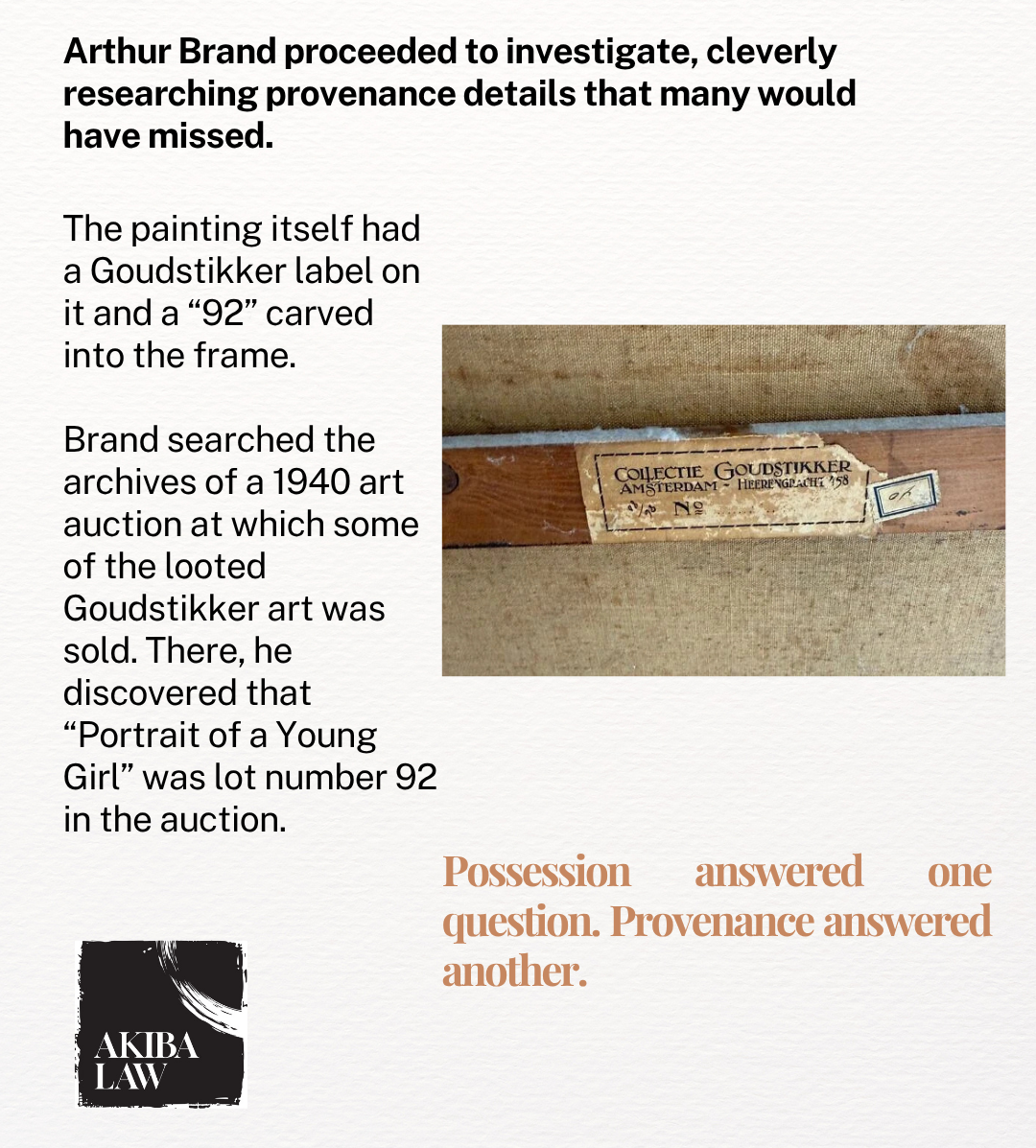
That is how provenance often works in practice. A label, number, archive entry, inventory record, photograph, or catalogue reference can connect a work to a prior owner and to a specific moment in history.
For art lawyers, collectors, dealers, and advisors, this is the point: provenance is not decoration. It is evidence.
The Argentina Parallel
This discovery follows another recent Goudstikker case.
In 2025, an 18th-century painting, Portrait of a Lady, attributed in reports to Giuseppe Ghislandi, surfaced in Argentina.
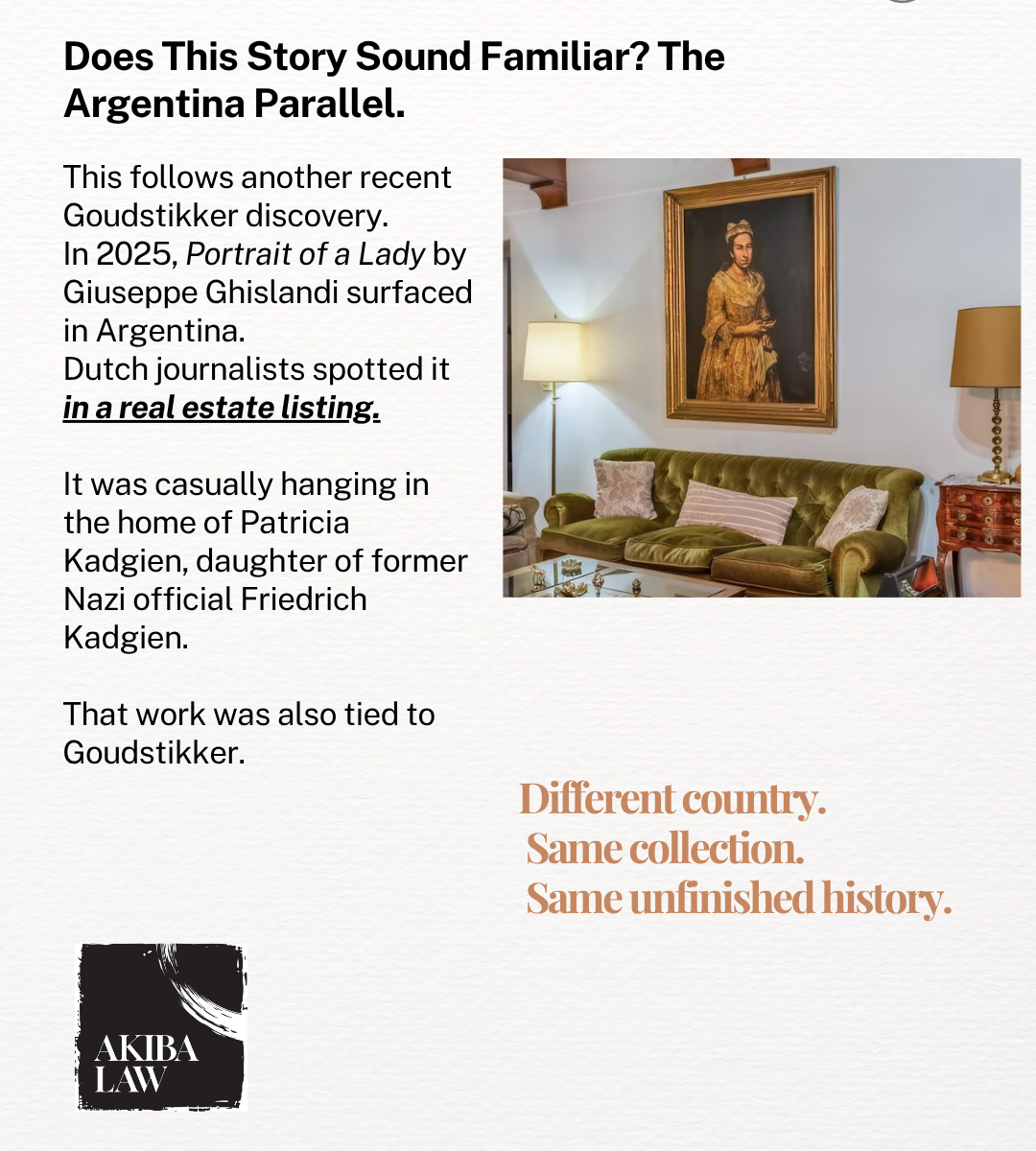
Dutch journalists spotted the painting in a real estate listing. It was hanging above a sofa in the home of Patricia Kadgien, daughter of former Nazi official Friedrich Kadgien.
That work was also tied to Jacques Goudstikker.
Authorities later recovered the painting. Goudstikker’s heirs reportedly planned to reclaim it.
Different country. Same collection. Same unfinished history.
Finding the Work Is Only Part of the Fight
A recovered trail does not always mean quick recovery.
In the Netherlands case, reports stated that police could not act because the theft was too old. The Dutch Restitutions Committee also cannot force private owners to return works.
That creates a difficult reality for heirs.
The records may be strong. The legal path may still be hard.
Restitution claims can involve statutes of limitations, laches, adverse possession, sovereign immunity, act of state arguments, forum issues, evidentiary gaps, and the practical cost of litigation.
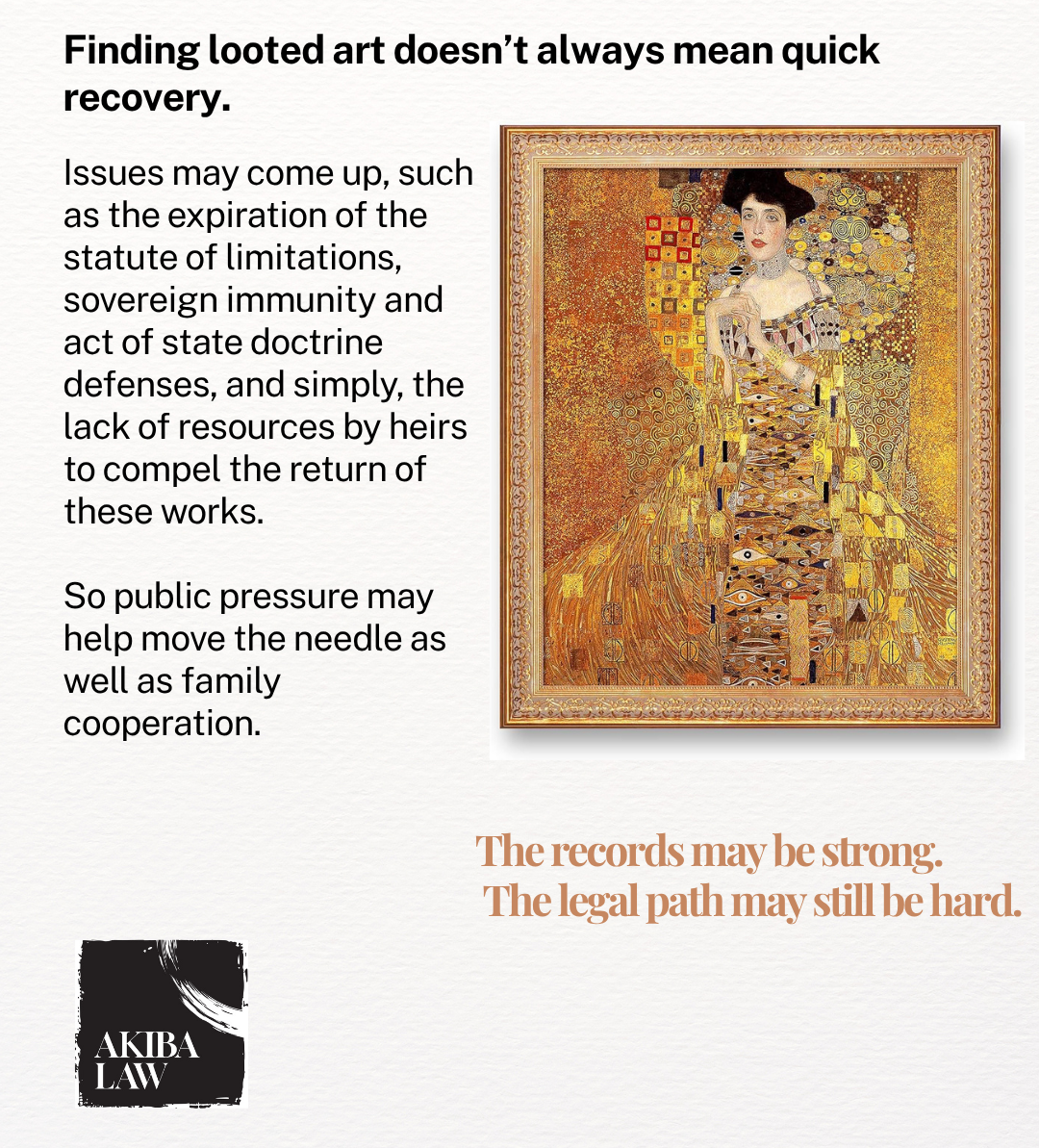
Public pressure can also play a role.
So can family cooperation.
The HEAR Act of 2025
The Holocaust Expropriated Art Recovery Act of 2025 became U.S. law in April 2026.
The law provides that claims to recover Nazi-looted art may be brought within six years after the claimant actually discovers the facts needed to bring the claim, including the artwork’s identity, location, and the claimant’s possessory interest.
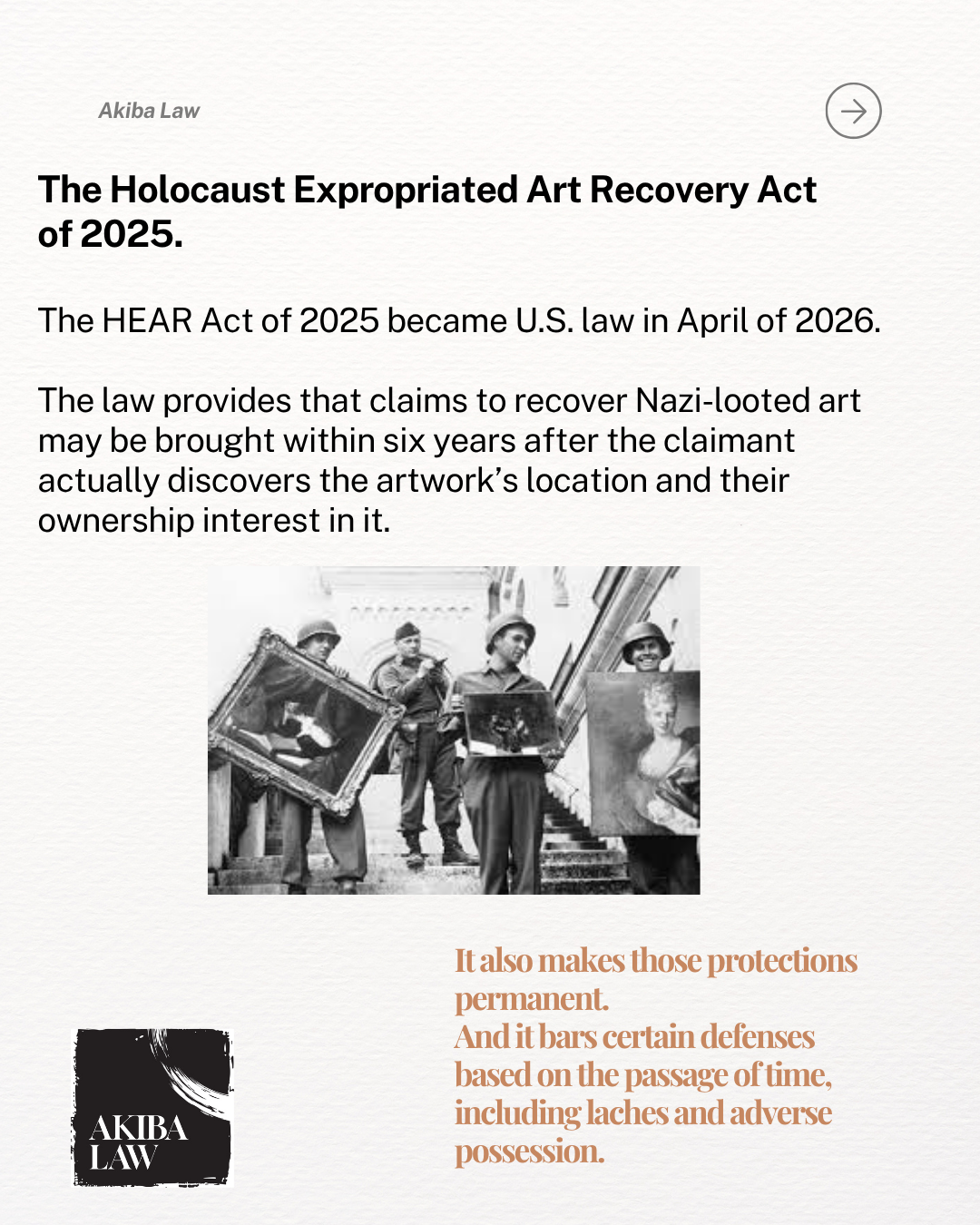
It also makes those protections permanent.
The law limits certain defenses based on the passage of time, including laches and adverse possession.
For U.S. claims, the policy is clear: heirs of Nazi-looted art should have a meaningful chance to present their claims in court.
The court still has to review the facts, the records, and the ownership history. The heirs get a clearer path to be heard.
The Art Market Lesson
Provenance is not optional. Collectors, galleries, auction houses, museums, and advisors need to understand where a work has been.
A clean-looking painting can carry a title problem. A family story can conflict with the records. A work hanging quietly in a home can still be tied to a theft from the 1930s or 1940s.
For any work with gaps during the Nazi era, provenance review should be serious, documented, and handled before a sale, loan, donation, appraisal, or acquisition. The risk is not limited to lawsuits. A work with unresolved provenance can become difficult to sell, insure, donate, exhibit, or finance.
Possession answers one question.
Provenance answers another.
Restitution cannot restore the lives stolen during the Holocaust. It can return a piece of a family’s history. Each recovered work carries a record of ownership, loss, survival, and repair. The Goudstikker discoveries show how long these claims can last. They also show why archives, labels, auction records, and provenance research still matter. A returned painting cannot undo the theft. It can still return something that should never have been taken.
This post is provided for general educational and informational purposes only and does not constitute legal advice.
Akiba Law PLLC is a boutique law firm based in Miami, Florida. The firm represents artists, creators, brands, entrepreneurs, collectors, galleries, and businesses in matters involving art law, intellectual property, trademark protection, copyright, contracts, business disputes, and brand enforcement.
warning Disclaimer
This article is for general educational and informational purposes only and does not constitute legal advice. Reading this article does not create an attorney-client relationship with Akiba Law PLLC or any attorney. Florida law may apply differently depending on the specific facts, legal issues, and parties involved. Individuals and businesses should consult qualified legal counsel about their specific circumstances. For questions, concerns, or additional information, please contact Akiba Law PLLC to speak with a qualified attorney.

Case Update: Solar Drops Second Gang Starr Lawsuit After Judge Questions Prospect of Duplicative Litigation
When I first wrote about the latest chapter in the legal battle surrounding Gang Starr in September 2025, producer John…

Art Law in Florida: A Practitioner’s Handbook
Akiba Law PLLC is a Miami-based law firm advising artists, collectors, galleries, dealers, auction businesses, museums, and creative entrepreneurs on…

2 Live Crew Tried to Take Back Its Copyrights. A Decades-Old Bankruptcy Got in the Way.
Copyright ownership can last for decades, and the Copyright Act gives many creators an unusual second chance to revisit deals…
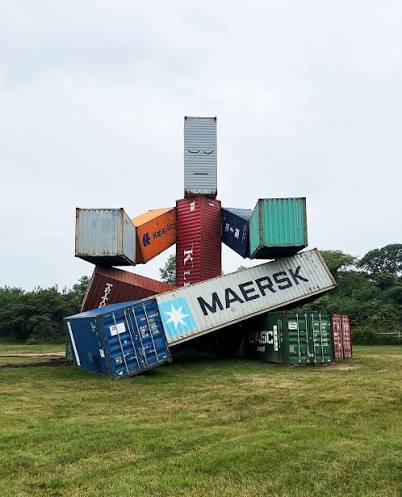
When Does a Sculpture Become a Building? East Hampton’s Lawsuit Over Matt Johnson’s Meditating Figure
Large-scale public and private art installations can raise issues well beyond copyright, contracts, and exhibition agreements. Once an artwork reaches…
Eden Gallery Sues Collector Over Alleged $822,390 Unpaid Balance: Lessons for Art Sales on Credit
High-value art transactions are often built on relationships. A collector may purchase repeatedly from the same gallery, payments may be…
MoMA v. MOMACHA: Trademark Strength, Brand Similarity, and Consumer Confusion
A trademark dispute does not always begin with two businesses offering the same product. Confusion can arise when a newer…

When a $2.5 Million Art Loan Ends in Litigation: Lessons for Galleries, Curators, and Property Owners
Long-term art placements can benefit everyone involved. Galleries gain access to potential collectors, property owners enhance their spaces, and residents…
When a Gallery Sells Consigned Art but Does Not Pay the Artist: The Hole Lawsuit and New York’s Trust-Fund Rules
An artwork consignment is not simply an informal arrangement in which a gallery agrees to sell a work and pay…
Your Logo Is on the Shirt. Does That Count as Trademark Use?
Launching a clothing brand involves more than creating a name, designing a logo, and placing it on a garment. How…
45 Antiquities Seized from the Metropolitan Museum of Art: Provenance, Repatriation, and the Importance of Due Diligence
On July 8, 2026, the Manhattan District Attorney’s Office announced the return of 59 antiquities, collectively valued at more than…

Florida Interior Designers and Decorators: Are You Regulated? Do You Need a License?
Interior designers and decorators in Florida often face a practical question: am I subject to Florida regulation, and do I…
Van Gogh’s “Sunflowers” Returns to Federal Court: Why Personal Jurisdiction May Bar the Claims Again
The Facts. The heirs of German-Jewish banker and art collector Paul von Mendelssohn-Bartholdy have filed a new lawsuit in the…