Van Gogh’s “Sunflowers” Returns to Federal Court: Why Personal Jurisdiction May Bar the Claims Again
The Facts.
The heirs of German-Jewish banker and art collector Paul von Mendelssohn-Bartholdy have filed a new lawsuit in the United States District Court for the District of New Jersey seeking the return of Vincent van Gogh’s Sunflowers, or, alternatively, damages and disgorgement tied to Sompo allegedly “exploiting Sunflowers as conscious wrongdoers since they recklessly acquired the Painting at Christie’s auction in London in 1987. . . .”
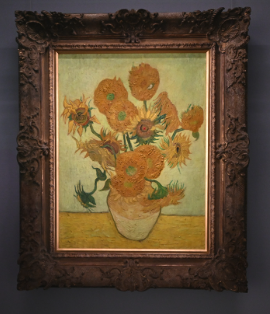
The complaint alleges that Mendelssohn-Bartholdy owned the painting in Berlin before and during the early Nazi period. According to the heirs, he relinquished Sunflowers in 1934 because Nazi policies and economic coercion targeted Jewish bankers, collectors, and business owners.
“Mendelssohn-Bartholdy relinquished the Painting in Berlin in 1934 as one of many grave consequences of the racially exclusionary Nazi policies and concomitant coercion calculated to evict Jews from the economy and society of Germany.”
The painting later passed through art dealer Paul Rosenberg and, decades later, was sold at Christie’s in London.
Sompo’s predecessor, Yasuda Fire and Marine Insurance Company, purchased the painting at Christie’s in 1987 for nearly $40 million, then a record-setting price. The heirs allege that Christie’s published provenance placed Mendelssohn-Bartholdy in the chain of title in Berlin in 1934, which should have raised obvious questions about whether the transfer was tied to Nazi persecution. The complaint claims Yasuda either knew, or recklessly avoided knowing, that the painting was Nazi-tainted.
The allegations do not stop at acquisition. The heirs claim Sompo and its affiliates turned Sunflowers into a corporate symbol. They allege that the painting became central to Sompo’s public identity, marketing, brand reputation, and corporate goodwill. The complaint points to statements allegedly tying Sompo’s image to Sunflowers, including allegations that customers came to view Sompo and the painting as “synonymous.”
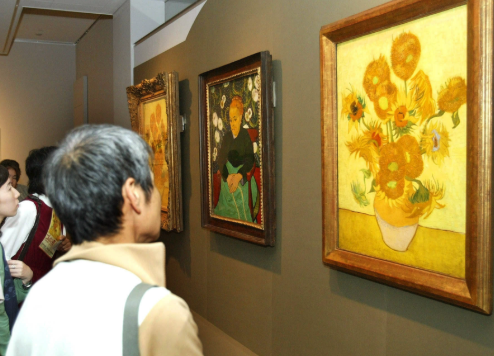
A key factual allegation concerns the painting’s 2001 exhibition at the Art Institute of Chicago. The complaint alleges that Yasuda expressed internal concern that a “Nazi confiscation problem” could arise if the painting were displayed in the United States or Europe. The heirs further allege that Yasuda admitted it was “not 100% sure” about the provenance and had not meaningfully investigated the issue beyond Christie’s auction materials. Despite those concerns, the painting was exhibited in Chicago and then returned to Japan, where it remains on display.
The complaint asserts claims under New Jersey law, including replevin, conversion, trover, constructive trust, unjust enrichment, breach of duties relating to possession and commercial exploitation of the painting, and slander of title. It also asserts federal common-law and constitutional equitable theories seeking restitution and disgorgement.
Prior Dismissal on Jurisdictional Grounds.
This is not the first time the heirs have sued Sompo. The prior action was filed in the Northern District of Illinois and was dismissed for lack of personal jurisdiction. The Illinois court held that the painting’s temporary exhibition in Chicago, Sompo’s websites, alleged national marketing, and insurance-related business activity were not enough to connect Illinois to the core dispute over ownership of a painting acquired in London and displayed in Japan. The Seventh Circuit affirmed, emphasizing that the defendants’ Illinois contacts did not give them fair warning that they could be sued in Illinois over ownership of Sunflowers. The heirs then petitioned for a Writ of Certiorari with the United States Supreme Court, which was denied.
The Attempt To Cure Jurisdictional Deficiencies and the HEAR Act Amendments.
That prior dismissal explains the strategy behind the new complaint. The New Jersey complaint attempts to solve the personal-jurisdiction problem in two ways.
First, it alleges more New Jersey-specific contacts. The complaint claims that Sompo International identifies offices in Morristown and Jersey City, New Jersey, and that related Sompo entities operate under the “Sompo” or “Sompo International” name in the United States. It also names additional U.S.-based entities, including Endurance and Lexon entities, and alleges that the corporate family operates as a unified “One Sompo” enterprise.
Second, and more importantly, the complaint relies on the 2025 amendments to the Holocaust Expropriated Art Recovery (HEAR) Act. Those amendments added a nationwide-service-of-process provision for covered Nazi-looted art recovery actions. The heirs will likely argue that this changes the jurisdictional analysis from a state-by-state inquiry into a national-contacts inquiry. In other words, rather than asking only whether Sompo’s contacts with New Jersey are enough, the court may be asked to consider Sompo’s contacts with the United States as a whole.
A motion to dismiss for lack of personal jurisdiction is still likely. Sompo can be expected to argue that the prior Illinois ruling remains persuasive because the alleged injury still centers on events outside New Jersey: the 1934 transfer in Europe, the 1987 auction purchase in London, and the painting’s current display in Japan. Sompo may also argue that websites, branding, and insurance business in New Jersey do not “arise out of or relate to” the heirs’ ownership claims.
But the new HEAR Act amendments make the personal-jurisdiction issue more difficult for Sompo than it was in Illinois. If the New Jersey court concludes that the nationwide-service provision applies, the heirs have a stronger argument that Sompo’s U.S. contacts are enough. The more vulnerable defendants may be foreign parent or affiliate entities with less direct U.S. activity, unless the plaintiffs can successfully impute U.S. subsidiary contacts through agency, alter ego, or “One Sompo” theories.
So, expect another strong motion to dismiss. The personal-jurisdiction argument remains a serious threshold issue, but the 2025 HEAR Act amendments and the New Jersey-specific allegations give the heirs a stronger procedural foothold than they had in Illinois.
Akiba Law PLLC is a boutique law firm based in Miami, Florida. The firm represents artists, creators, brands, entrepreneurs, collectors, galleries, and businesses in matters involving art law, intellectual property, trademark protection, copyright, contracts, business disputes, and brand enforcement.
warning Disclaimer
This article is for general educational and informational purposes only and does not constitute legal advice. Reading this article does not create an attorney-client relationship with Akiba Law PLLC or any attorney. Florida law may apply differently depending on the specific facts, legal issues, and parties involved. Individuals and businesses should consult qualified legal counsel about their specific circumstances. For questions, concerns, or additional information, please contact Akiba Law PLLC to speak with a qualified attorney.
Case Update: Solar Drops Second Gang Starr Lawsuit After Judge Questions Prospect of Duplicative Litigation
When I first wrote about the latest chapter in the legal battle surrounding Gang Starr in September 2025, producer John…
Art Law in Florida: A Practitioner’s Handbook
Akiba Law PLLC is a Miami-based law firm advising artists, collectors, galleries, dealers, auction businesses, museums, and creative entrepreneurs on…

2 Live Crew Tried to Take Back Its Copyrights. A Decades-Old Bankruptcy Got in the Way.
Copyright ownership can last for decades, and the Copyright Act gives many creators an unusual second chance to revisit deals…
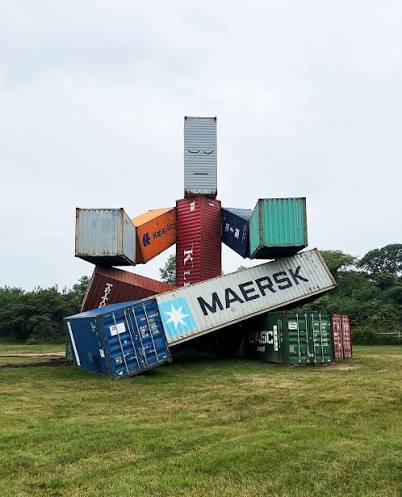
When Does a Sculpture Become a Building? East Hampton’s Lawsuit Over Matt Johnson’s Meditating Figure
Large-scale public and private art installations can raise issues well beyond copyright, contracts, and exhibition agreements. Once an artwork reaches…
Eden Gallery Sues Collector Over Alleged $822,390 Unpaid Balance: Lessons for Art Sales on Credit
High-value art transactions are often built on relationships. A collector may purchase repeatedly from the same gallery, payments may be…
MoMA v. MOMACHA: Trademark Strength, Brand Similarity, and Consumer Confusion
A trademark dispute does not always begin with two businesses offering the same product. Confusion can arise when a newer…
When a $2.5 Million Art Loan Ends in Litigation: Lessons for Galleries, Curators, and Property Owners
Long-term art placements can benefit everyone involved. Galleries gain access to potential collectors, property owners enhance their spaces, and residents…
When a Gallery Sells Consigned Art but Does Not Pay the Artist: The Hole Lawsuit and New York’s Trust-Fund Rules
An artwork consignment is not simply an informal arrangement in which a gallery agrees to sell a work and pay…
Your Logo Is on the Shirt. Does That Count as Trademark Use?
Launching a clothing brand involves more than creating a name, designing a logo, and placing it on a garment. How…
45 Antiquities Seized from the Metropolitan Museum of Art: Provenance, Repatriation, and the Importance of Due Diligence
On July 8, 2026, the Manhattan District Attorney’s Office announced the return of 59 antiquities, collectively valued at more than…

Florida Interior Designers and Decorators: Are You Regulated? Do You Need a License?
Interior designers and decorators in Florida often face a practical question: am I subject to Florida regulation, and do I…
Jacques Goudstikker’s Stolen Collection Is Still Being Found and Returned
Restitution can’t undo the Holocaust but it can return what was taken and every returned work matters. A Nazi-looted painting…