Florida’s Right of Publicity Law: When Commercial Use of a Person’s Image Requires Consent
Florida’s right of publicity statute protects against the unauthorized commercial use of a person’s identity. In practical terms, that means a business generally cannot use someone’s name, portrait, photograph, or likeness for trade, advertising, or other commercial purposes without consent.
That issue can arise in more places than people expect: advertisements, merchandise, websites, social media campaigns, packaging, promotional materials, and other public-facing uses. The question is not always whether the person is visible. The better question is whether their identity is being used commercially.
Section 540.08 protects a person’s name, portrait, photograph, and other likeness from unauthorized public use for purposes of trade, advertising, or other commercial purposes. The statute applies to the identity of a natural person, which means it is not limited only to celebrities or public figures.

For businesses, brands, creators, galleries, agencies, and others using public-facing content, this statute matters because identity can carry legal significance. A person’s image being available online does not automatically make it free to use in a commercial context.
The basic rule is straightforward: consent is generally required before using another person’s identity commercially. The issue is not merely showing the person. The issue is using that person’s identity to promote, advertise, sell, or support a commercial purpose.
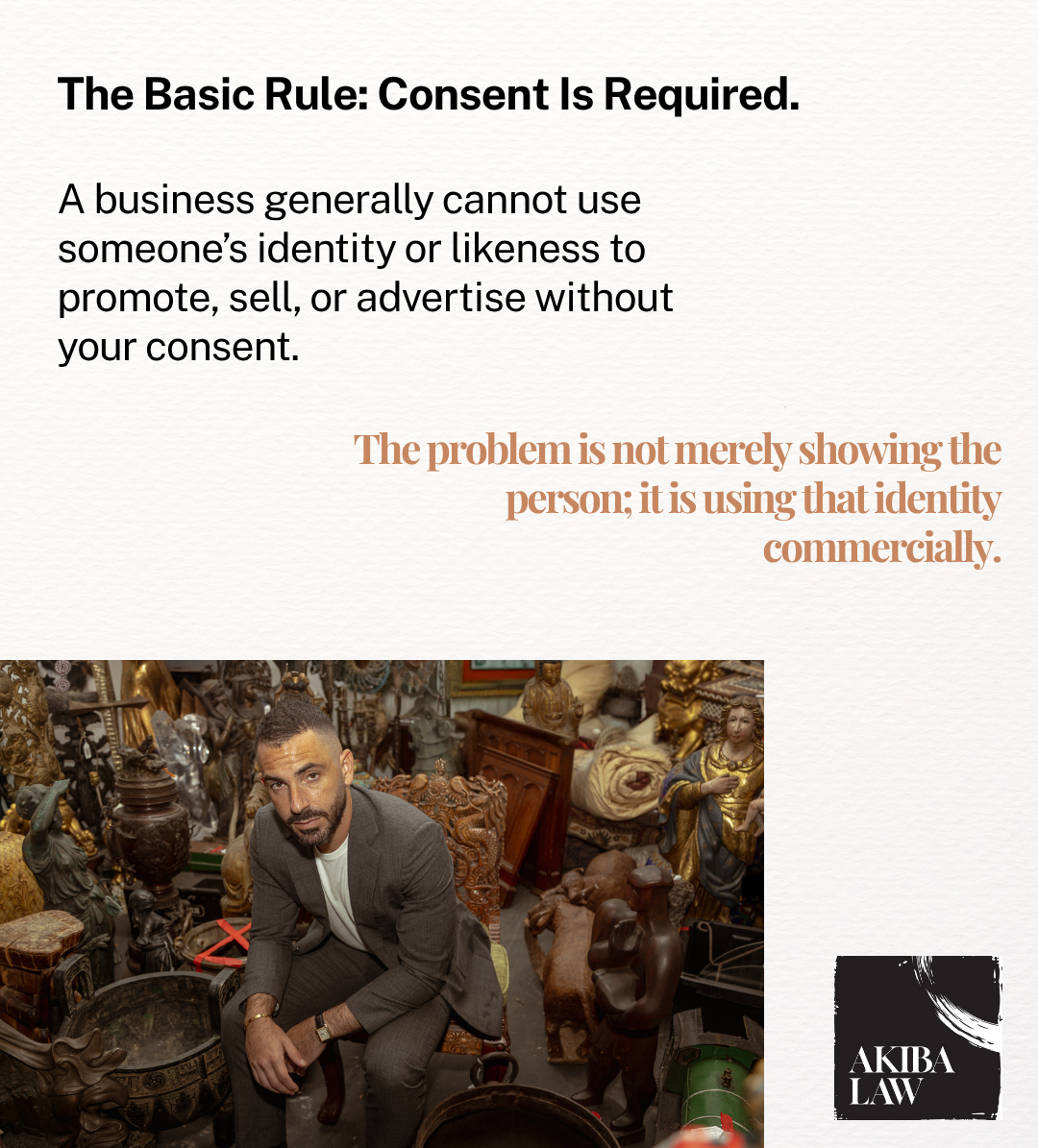
That is why context matters. The same photograph may raise different legal issues depending on whether it appears in a news article, on merchandise, in an advertisement, or on a company’s website promoting goods or services.
Consent can come directly from the person whose identity is being used. It can also come from a person, firm, or corporation authorized in writing to license the commercial use of that person’s name or likeness. If the person is deceased, the statute identifies who may be able to provide consent.
From a practical standpoint, permission should be documented clearly. If a business plans to use someone’s name, image, or likeness commercially, it should confirm who has authority to approve that use and what the approval actually covers.
Right of publicity issues can arise across a wide range of business and creative settings. Ads, merchandise, packaging, websites, social media campaigns, catalogs, exhibitions, and promotional materials can all raise questions under the statute depending on how the identity is used.
A use that may be acceptable in an editorial or informational context may create legal risk when repurposed to promote a product, service, event, or brand. Commercial context can change the analysis quickly.
The statute provides several potential remedies when consent is required but not obtained. These include an injunction to stop the unauthorized use, damages for loss or injury, an amount that would have been a reasonable royalty, and, in appropriate cases, punitive or exemplary damages.

In other words, the issue is not always limited to taking down the image. If the unauthorized use created value, caused harm, or was especially problematic, the exposure can extend beyond removal.
Section 540.08 also includes important exceptions. For example, the statute does not apply to bona fide news reports, presentations, or publications involving a current and legitimate public interest, so long as the person’s identity is not used for advertising purposes.
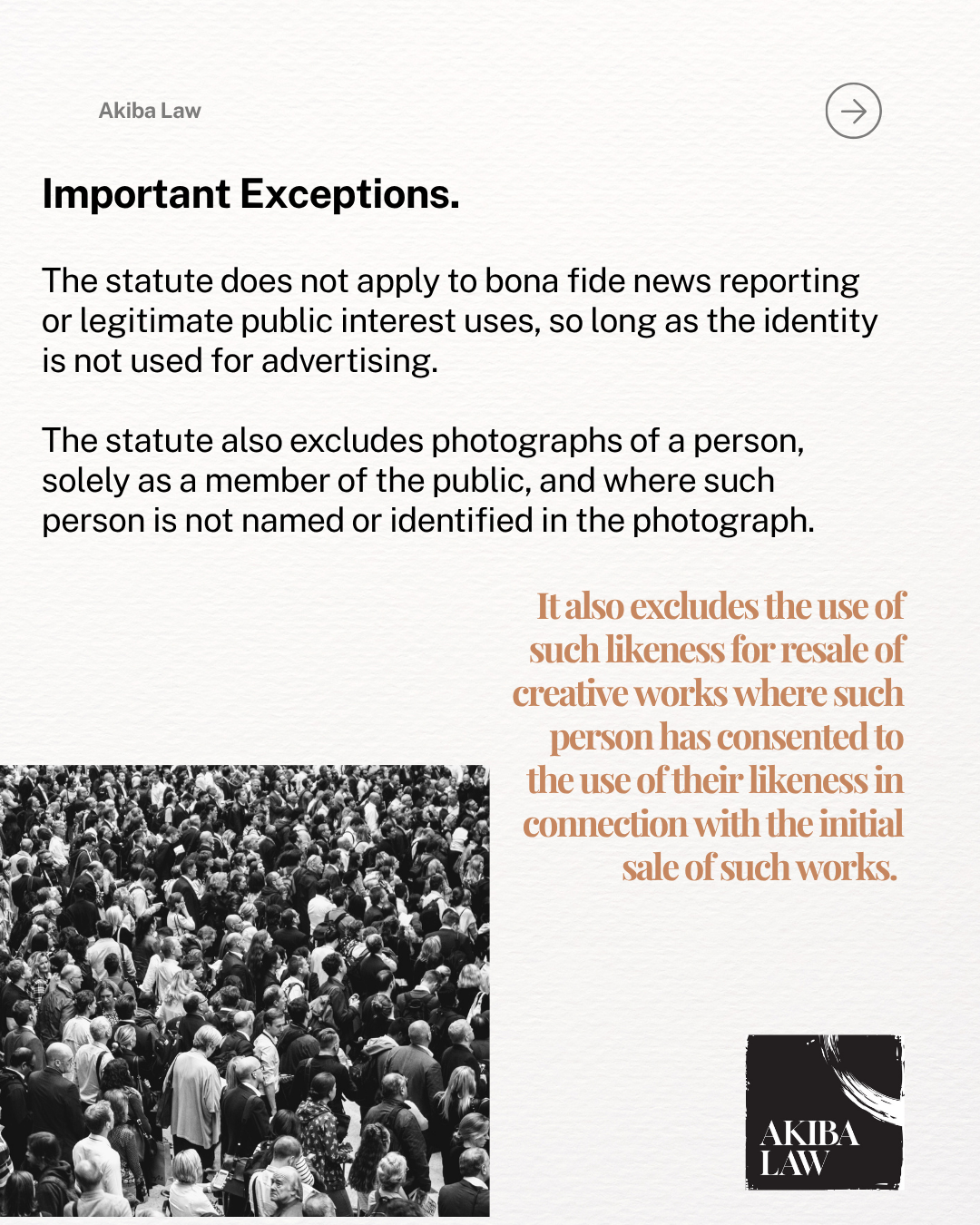
The statute also contains exceptions for certain crowd-type photographs where a person appears solely as a member of the public and is not named or otherwise identified, as well as certain resale or further distribution uses involving works where the person consented to the initial use.
Florida law also recognizes certain post-death publicity rights. But those rights are not unlimited. Under Section 540.08, no action may be brought for uses occurring more than 40 years after the person’s death.
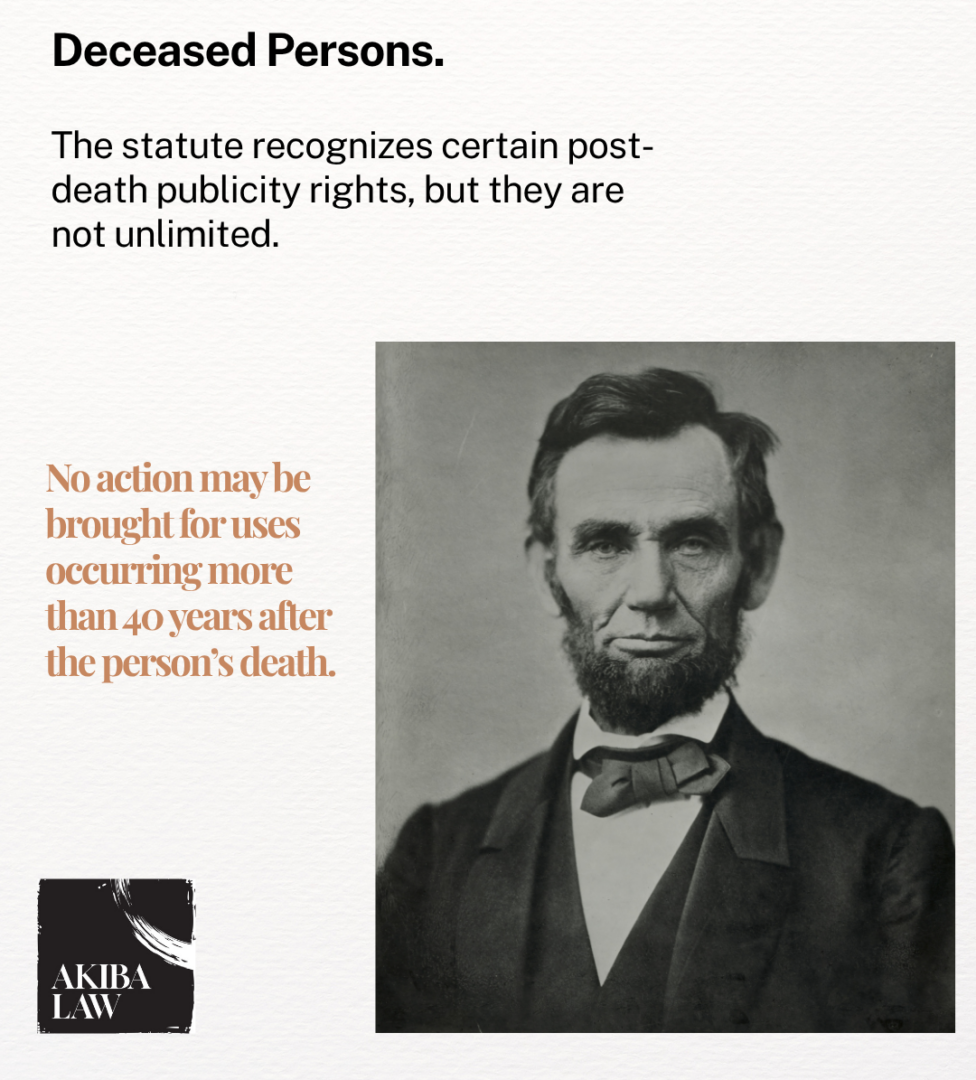
For estates, licensors, brands, and content users, this makes timing and authorization important. The fact that someone is deceased does not automatically mean their likeness is free to use commercially.
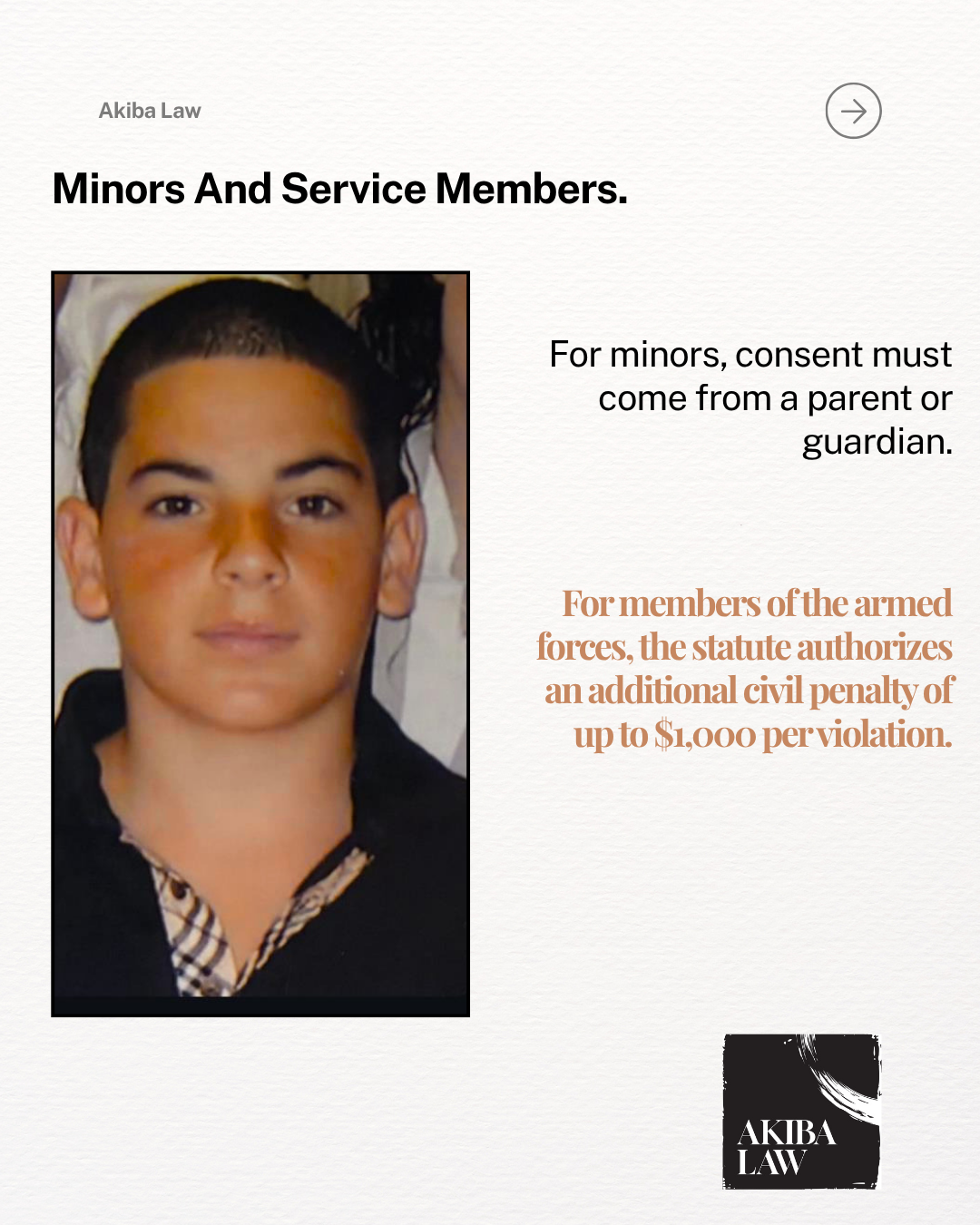
The statute has specific rules for minors and members of the armed forces. For minors, consent must come from a parent or guardian. For members of the armed forces, the statute authorizes an additional civil penalty of up to $1,000 per violation in certain unauthorized-use situations.
The practical takeaway is simple: before using someone’s identity in a commercial context, confirm consent or identify a clear statutory exception.
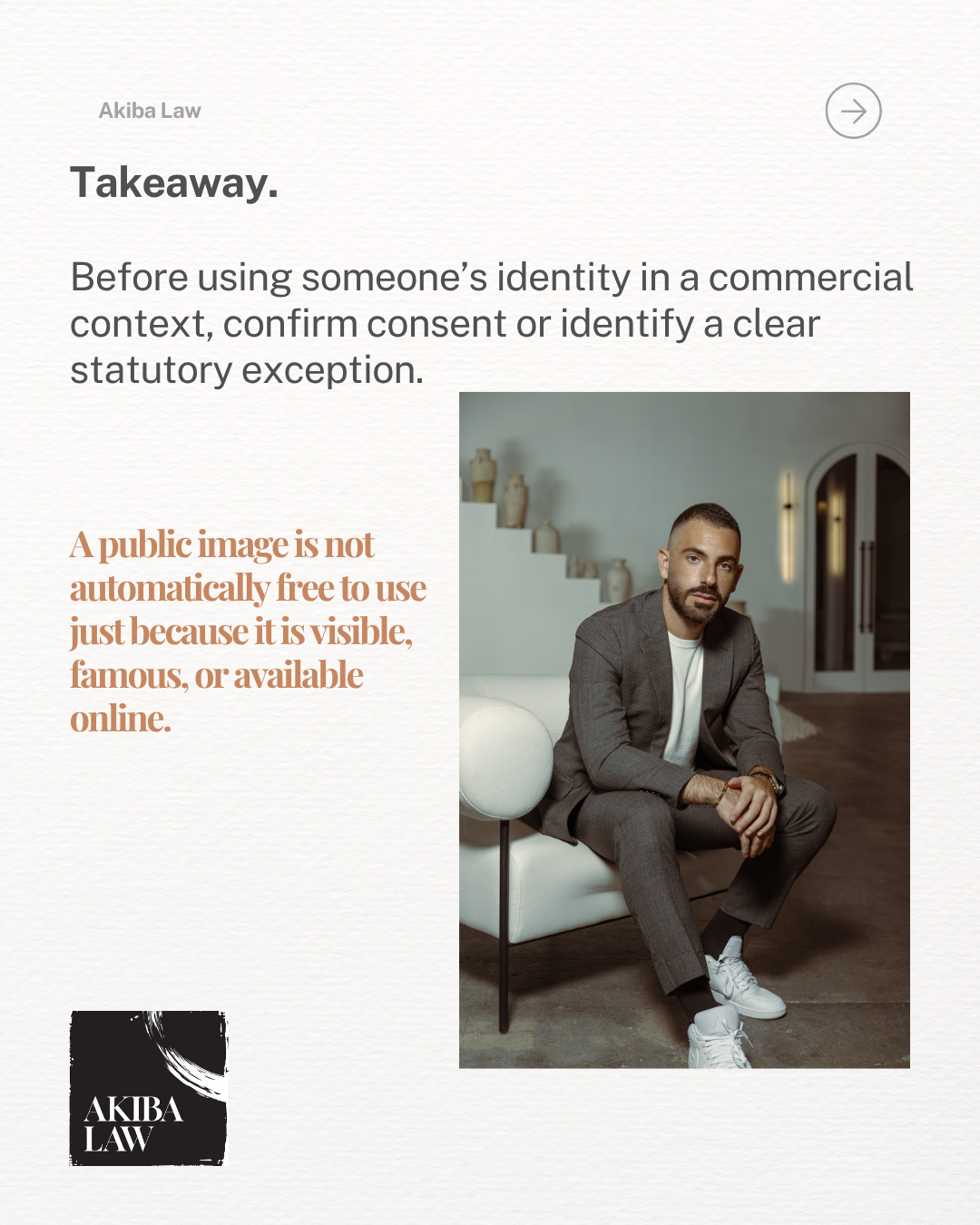
A public image is not automatically free to use just because it is visible, famous, or available online. Under Florida law, commercial use of a person’s name, portrait, photograph, or likeness requires a closer look.
Florida’s right of publicity statute is ultimately about control over commercial use. It gives people a legal basis to object when their identity is used publicly for trade, advertising, or other commercial purposes without the required consent.
For businesses and creators, the safer approach is to pause before using someone’s identity in ads, merchandise, packaging, social media, websites, or other promotional materials. Ask whether the use is commercial, whether consent has been obtained, and whether a specific exception clearly applies.
When the answer is uncertain, the use should be reviewed before publication. In this area, the difference between public visibility and commercial use can matter.
This article is for general educational and informational purposes only and does not constitute legal advice.
Akiba Law PLLC is a boutique law firm based in Miami, Florida. The firm represents artists, creators, brands, entrepreneurs, collectors, galleries, and businesses in matters involving art law, intellectual property, trademark protection, copyright, contracts, business disputes, and brand enforcement.
warning Disclaimer
This article is for general educational and informational purposes only and does not constitute legal advice. Reading this article does not create an attorney-client relationship with Akiba Law PLLC or any attorney. Florida law may apply differently depending on the specific facts, legal issues, and parties involved. Individuals and businesses should consult qualified legal counsel about their specific circumstances. For questions, concerns, or additional information, please contact Akiba Law PLLC to speak with a qualified attorney.

From a Real Estate Listing to Restitution: Argentina Orders Return of Nazi-Looted Old Master to Sole Remaining Heir of Jacques Goudstikker
More than eighty years after an Old Master painting disappeared during the Nazi era, an Argentine court has ordered its…

Case Update: Solar Drops Second Gang Starr Lawsuit After Judge Questions Prospect of Duplicative Litigation
When I first wrote about the latest chapter in the legal battle surrounding Gang Starr in September 2025, producer John…

Art Law in Florida: A Practitioner’s Handbook
Akiba Law PLLC is a Miami-based law firm advising artists, collectors, galleries, dealers, auction businesses, museums, and creative entrepreneurs on…

2 Live Crew Tried to Take Back Its Copyrights. A Decades-Old Bankruptcy Got in the Way.
Copyright ownership can last for decades, and the Copyright Act gives many creators an unusual second chance to revisit deals…

When Does a Sculpture Become a Building? East Hampton’s Lawsuit Over Matt Johnson’s Meditating Figure
Large-scale public and private art installations can raise issues well beyond copyright, contracts, and exhibition agreements. Once an artwork reaches…
Eden Gallery Sues Collector Over Alleged $822,390 Unpaid Balance: Lessons for Art Sales on Credit
High-value art transactions are often built on relationships. A collector may purchase repeatedly from the same gallery, payments may be…
MoMA v. MOMACHA: Trademark Strength, Brand Similarity, and Consumer Confusion
A trademark dispute does not always begin with two businesses offering the same product. Confusion can arise when a newer…

When a $2.5 Million Art Loan Ends in Litigation: Lessons for Galleries, Curators, and Property Owners
Long-term art placements can benefit everyone involved. Galleries gain access to potential collectors, property owners enhance their spaces, and residents…

When a Gallery Sells Consigned Art but Does Not Pay the Artist: The Hole Lawsuit and New York’s Trust-Fund Rules
An artwork consignment is not simply an informal arrangement in which a gallery agrees to sell a work and pay…

Your Logo Is on the Shirt. Does That Count as Trademark Use?
Launching a clothing brand involves more than creating a name, designing a logo, and placing it on a garment. How…

45 Antiquities Seized from the Metropolitan Museum of Art: Provenance, Repatriation, and the Importance of Due Diligence
On July 8, 2026, the Manhattan District Attorney’s Office announced the return of 59 antiquities, collectively valued at more than…

Florida Interior Designers and Decorators: Are You Regulated? Do You Need a License?
Interior designers and decorators in Florida often face a practical question: am I subject to Florida regulation, and do I…