Can a Property Owner Erase a Mural? Wyland’s VARA Lawsuit Against FIFA, Building Owner, and Property Manager
Marine artist Wyland has filed a federal lawsuit after his downtown Dallas mural, Ocean Life, also known as Whaling Wall 82, was painted over ahead of the 2026 FIFA World Cup. The lawsuit raises important questions at the intersection of public art, real estate, and copyright law: Can a property owner erase a mural simply because it owns the wall? Can a person who is not the owner of a building on which a mural is painted be found liable for a VARA violation?
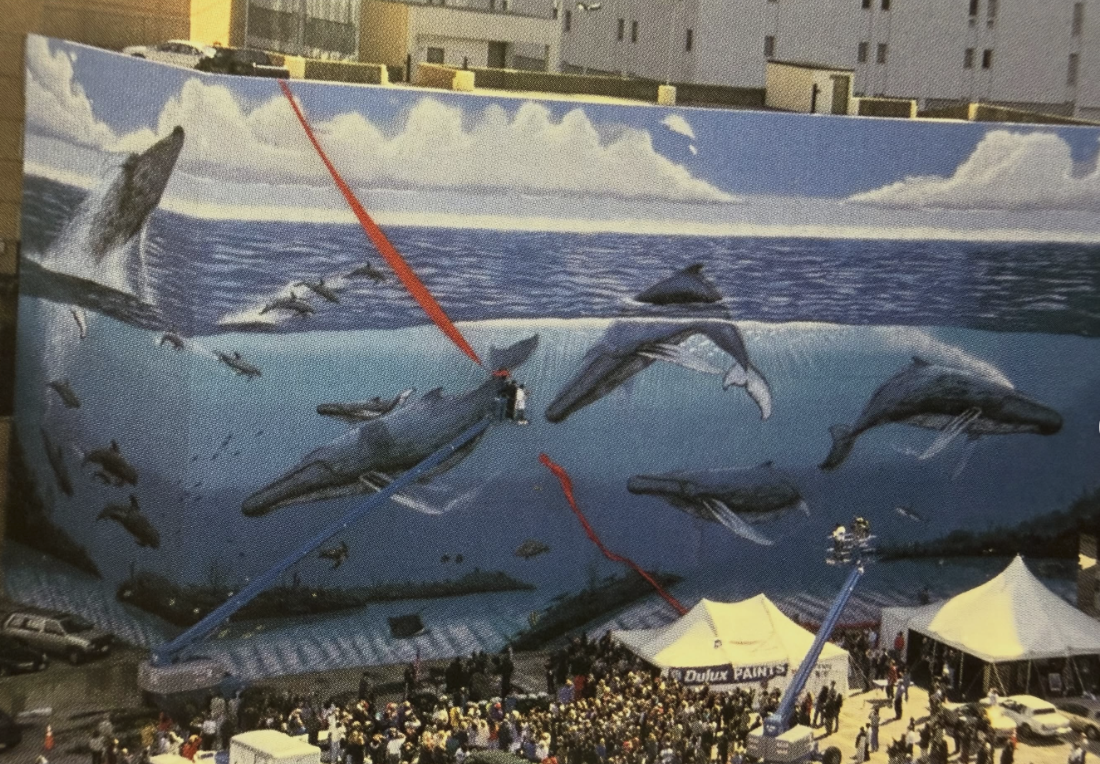
According to Wyland’s complaint, the answer may depend on the Visual Artists Rights Act of 1990, commonly known as VARA.
The Facts Alleged
Wyland alleges that he painted Ocean Life in 1999 on a building located in downtown Dallas. The mural depicted life-size whales, dolphins, and other marine life. According to the complaint, it covered approximately 17,000 square feet across two exterior walls and remained part of the Dallas skyline for nearly three decades.
In May 2026, crews allegedly began covering the mural with blue paint. Wyland claims the work was destroyed to make room for a new World Cup-related installation.
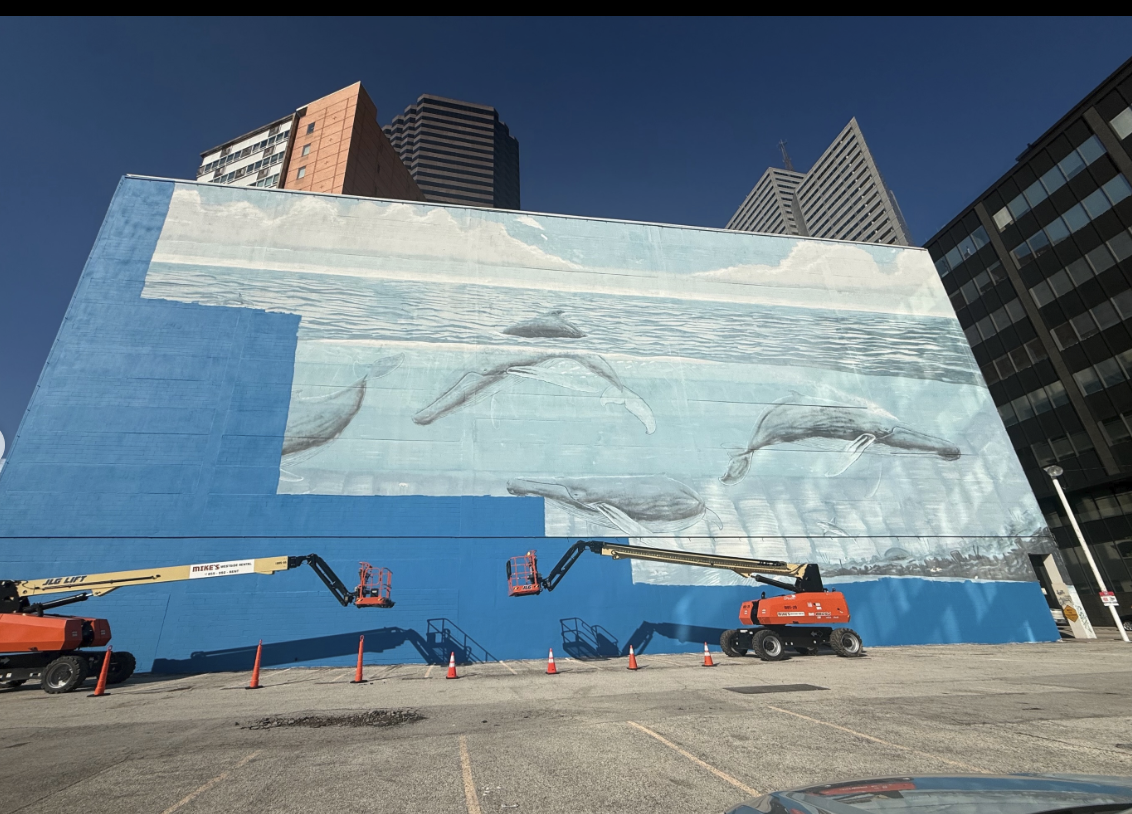
The lawsuit names FIFA, FIFA (Americas), Inc., FWC2026 US, Inc., 3PZ Property Company, LLC, and Slate Asset Management. Wyland alleges that FIFA authorized, promoted, and benefited from the replacement of the mural. The complaint further alleges that FIFA, through the North Texas FWC Organizing Committee, stated that the Dallas Whaling Wall Mural was being replaced with a new work that would “celebrate and build excitement for the upcoming World Cup 2026.” FIFA has reportedly denied involvement and directed questions to the local organizing committee.
The VARA Claim
Wyland’s claim is based on 17 U.S.C. § 106A, titled the Visual Artists Rights Act (“VARA”), a federal statute that gives certain rights to authors of qualifying works of visual art. These rights are often called “moral rights.”
Moral rights are different from ordinary copyright rights. They are also different from ownership of the physical object or property where the artwork appears. In practical terms, a building owner may own the wall while the artist may still retain certain federal rights in the artwork painted on that wall.
To summarize:
Not every artist has copyright to their work, not every artist has ownership to their work. All visual artists of qualifying works have moral rights under VARA. Not all copyright holders have moral rights to the visual works they have copyright in. Not all owners of a work have copyright to their work and will never have moral rights unless the owner is the artist themselves.
The Right of Integrity
The moral right at issue in Wyland’s lawsuit is the right of integrity.
Under VARA, the author of a qualifying work of visual art has the right to prevent an intentional distortion, mutilation, or modification of that work if the change would prejudice the artist’s honor or reputation.
VARA also protects works of “recognized stature” from destruction. If a work meets that standard, the artist may prevent its intentional or grossly negligent destruction.
Wyland alleges both theories. He claims that painting over the mural unlawfully modified the work in a way that prejudiced his honor and reputation. He also claims that the mural was a work of recognized stature and that destroying it violated his rights under VARA.
That “recognized stature” issue may become one of the central disputes in the case. The mural’s size, visibility, age, public recognition, and connection to Wyland’s larger body of environmental artwork may all become relevant.
Waiver Under Section 106A
VARA rights cannot be transferred but they can be waived. To waive VARA rights, the statute requires more than informal consent.
Under 17 U.S.C. § 106A(e)(1), the artist must expressly agree to the waiver in a written instrument signed by the artist. The written instrument must specifically identify the artwork and the uses of the artwork to which the waiver applies.
That matters because a general agreement to create a mural may not be enough. A transfer of copyright may not be enough. A transfer of the physical artwork may not be enough. Ownership of the building may not be enough.
The complaint alleges that Wyland never signed a valid waiver of his VARA rights.
The Building-Specific Rule Under Section 113(d)(1)
VARA also contains a specific rule for artwork incorporated into buildings.
Section 113(d)(1) addresses works of visual art that are incorporated into a building in a way that means removing the artwork would cause its destruction, distortion, mutilation, or other modification.
In that situation, the artist’s VARA rights do not apply to removal-related damage if certain conditions are met.
For artwork installed before VARA took effect, the artist’s consent to the installation may be enough.
For artwork installed after VARA took effect, the statute requires a written agreement signed by both the building owner and the artist. That agreement must specifically state that installing the artwork in the building may subject it to destruction, distortion, mutilation, or other modification because of its removal.
This is important for murals. A mural painted directly onto a wall may be impossible to remove without damaging or destroying the work. Section 113(d)(1) addresses that exact problem. Wyland’s mural was allegedly painted in 1999, after VARA took effect. The complaint alleges that no written agreement exists under Section 113(d)(1).
Damages: Actual Damages Versus Statutory Damages
Wyland is seeking at least $25 million in actual damages.
That number is significant, but it should be understood carefully. VARA does not automatically award $25 million whenever a mural is destroyed.
VARA claims rely on the Copyright Act’s remedial framework. A plaintiff may generally elect between actual damages and profits or statutory damages.
Actual damages require proof. Wyland would need evidence supporting the value of the destroyed mural and the harm caused by its destruction. He may also seek profits attributable to the violation, if any can be proven and tied to the alleged conduct.
Statutory damages work differently. They do not require the same showing of actual market loss. But they are capped by statute. Statutory damages generally range from $750 to $30,000 per work. If the violation is willful, the award may increase to as much as $150,000 per work.
A $25 million recovery would likely depend on proving actual damages, not merely electing statutory damages, which, at most, appears to be capped at $150,000.
The Questions to Watch
This case raises several questions worth following:
Was Ocean Life a work of recognized stature?
Did the original installation documents include a valid VARA waiver?
Was there a building-specific written agreement under Section 113(d)(1)?
Who actually authorized the decision to paint over the mural?
Can that decision be attributed to FIFA?
And how do you value a civic landmark that may never have been intended for sale?
Why This Case Matters
The broader lesson is that public art can carry legal rights that remain with the artist, even when the artwork appears on someone else’s property.
For artists, muralists, developers, landlords, brands, and event organizers, the takeaway is straightforward: if artwork is being installed on a building, the paperwork matters.
The agreement should address ownership, copyright, VARA rights, waiver language, future removal, alteration, destruction, restoration, maintenance, and notice procedures.
Owning the wall is not always the same thing as owning the unrestricted right to erase the art.
This article is for informational purposes only and does not constitute legal advice.
Akiba Law PLLC is a boutique law firm based in Miami, Florida. The firm represents artists, creators, brands, entrepreneurs, collectors, galleries, and businesses in matters involving art law, intellectual property, trademark protection, copyright, contracts, business disputes, and brand enforcement.
warning Disclaimer
This article is for general educational and informational purposes only and does not constitute legal advice. Reading this article does not create an attorney-client relationship with Akiba Law PLLC or any attorney. Florida law may apply differently depending on the specific facts, legal issues, and parties involved. Individuals and businesses should consult qualified legal counsel about their specific circumstances. For questions, concerns, or additional information, please contact Akiba Law PLLC to speak with a qualified attorney.
From a Real Estate Listing to Restitution: Argentina Orders Return of Nazi-Looted Old Master to Sole Remaining Heir of Jacques Goudstikker
More than eighty years after an Old Master painting disappeared during the Nazi era, an Argentine court has ordered its…

Case Update: Solar Drops Second Gang Starr Lawsuit After Judge Questions Prospect of Duplicative Litigation
When I first wrote about the latest chapter in the legal battle surrounding Gang Starr in September 2025, producer John…

Art Law in Florida: A Practitioner’s Handbook
Akiba Law PLLC is a Miami-based law firm advising artists, collectors, galleries, dealers, auction businesses, museums, and creative entrepreneurs on…

2 Live Crew Tried to Take Back Its Copyrights. A Decades-Old Bankruptcy Got in the Way.
Copyright ownership can last for decades, and the Copyright Act gives many creators an unusual second chance to revisit deals…
When Does a Sculpture Become a Building? East Hampton’s Lawsuit Over Matt Johnson’s Meditating Figure
Large-scale public and private art installations can raise issues well beyond copyright, contracts, and exhibition agreements. Once an artwork reaches…
Eden Gallery Sues Collector Over Alleged $822,390 Unpaid Balance: Lessons for Art Sales on Credit
High-value art transactions are often built on relationships. A collector may purchase repeatedly from the same gallery, payments may be…
MoMA v. MOMACHA: Trademark Strength, Brand Similarity, and Consumer Confusion
A trademark dispute does not always begin with two businesses offering the same product. Confusion can arise when a newer…

When a $2.5 Million Art Loan Ends in Litigation: Lessons for Galleries, Curators, and Property Owners
Long-term art placements can benefit everyone involved. Galleries gain access to potential collectors, property owners enhance their spaces, and residents…

When a Gallery Sells Consigned Art but Does Not Pay the Artist: The Hole Lawsuit and New York’s Trust-Fund Rules
An artwork consignment is not simply an informal arrangement in which a gallery agrees to sell a work and pay…

Your Logo Is on the Shirt. Does That Count as Trademark Use?
Launching a clothing brand involves more than creating a name, designing a logo, and placing it on a garment. How…
45 Antiquities Seized from the Metropolitan Museum of Art: Provenance, Repatriation, and the Importance of Due Diligence
On July 8, 2026, the Manhattan District Attorney’s Office announced the return of 59 antiquities, collectively valued at more than…

Florida Interior Designers and Decorators: Are You Regulated? Do You Need a License?
Interior designers and decorators in Florida often face a practical question: am I subject to Florida regulation, and do I…