From a Real Estate Listing to Restitution: Argentina Orders Return of Nazi-Looted Old Master to Sole Remaining Heir of Jacques Goudstikker
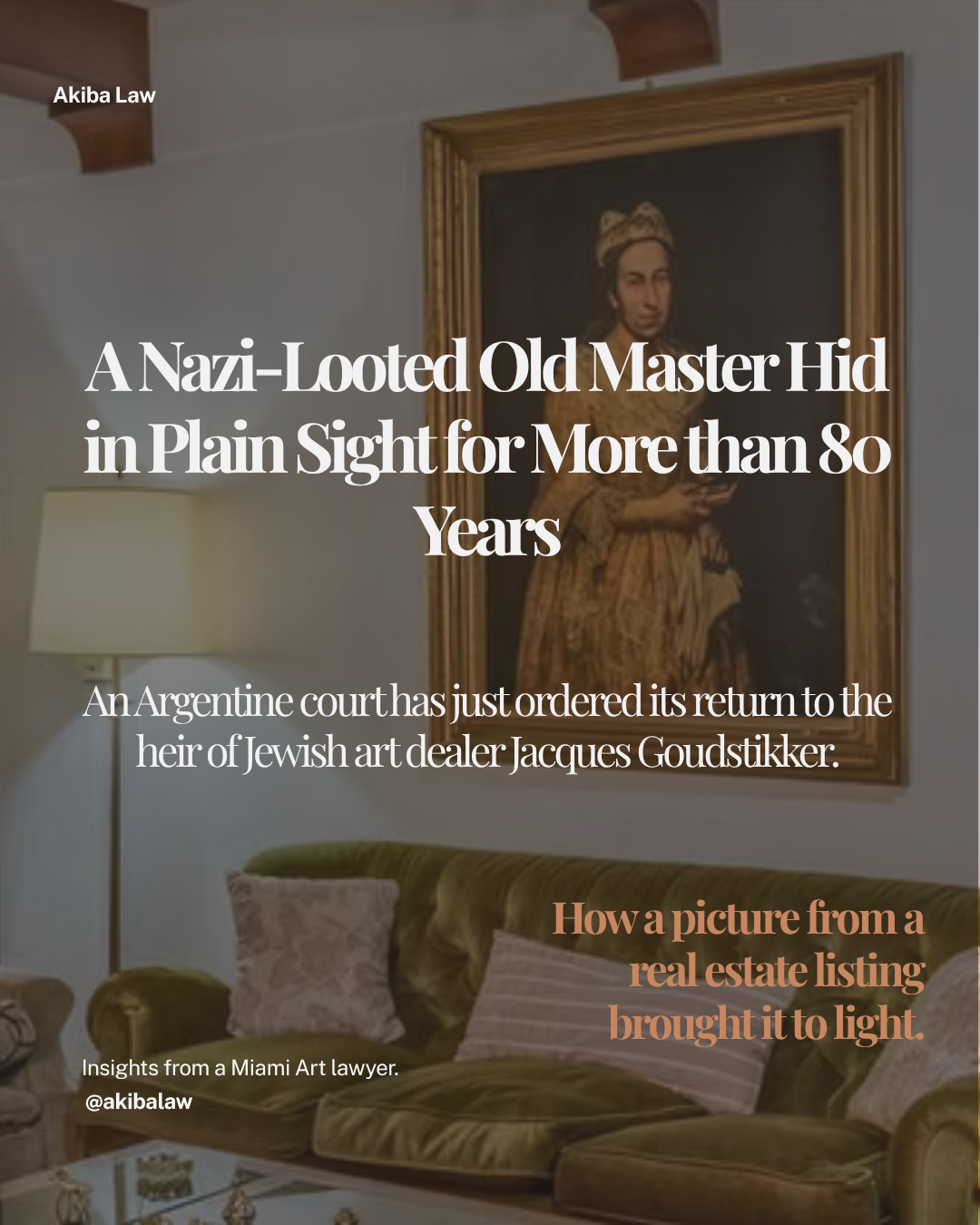
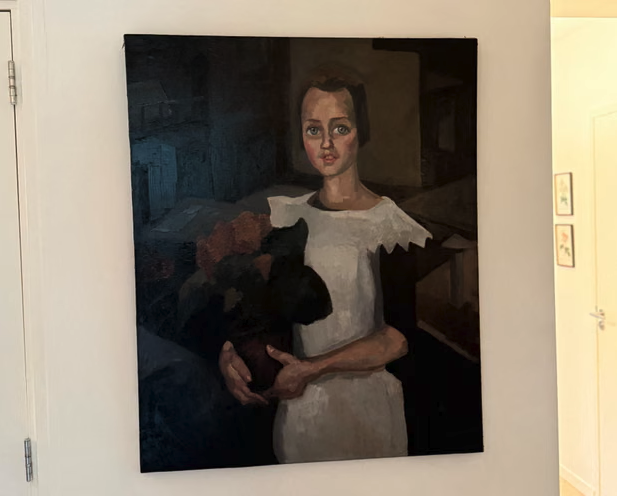
More than eighty years after an Old Master painting disappeared during the Nazi era, an Argentine court has ordered its restitution to the heir of Dutch-Jewish art dealer Jacques Goudstikker. What makes the case particularly remarkable is not only the length of time the work remained missing, but how it resurfaced: hanging on the wall of an Argentine home in photographs accompanying an online real estate listing.
The September 2026 decision offers another striking example of the enduring legal consequences of gaps in provenance. It is also unusual because the restitution of the privately held work was achieved through criminal proceedings in Argentina rather than through a negotiated museum restitution, government claims process, or conventional civil ownership dispute. Lawyers representing the Goudstikker heir have characterized the result as virtually unprecedented.
A Painting Missing for Decades
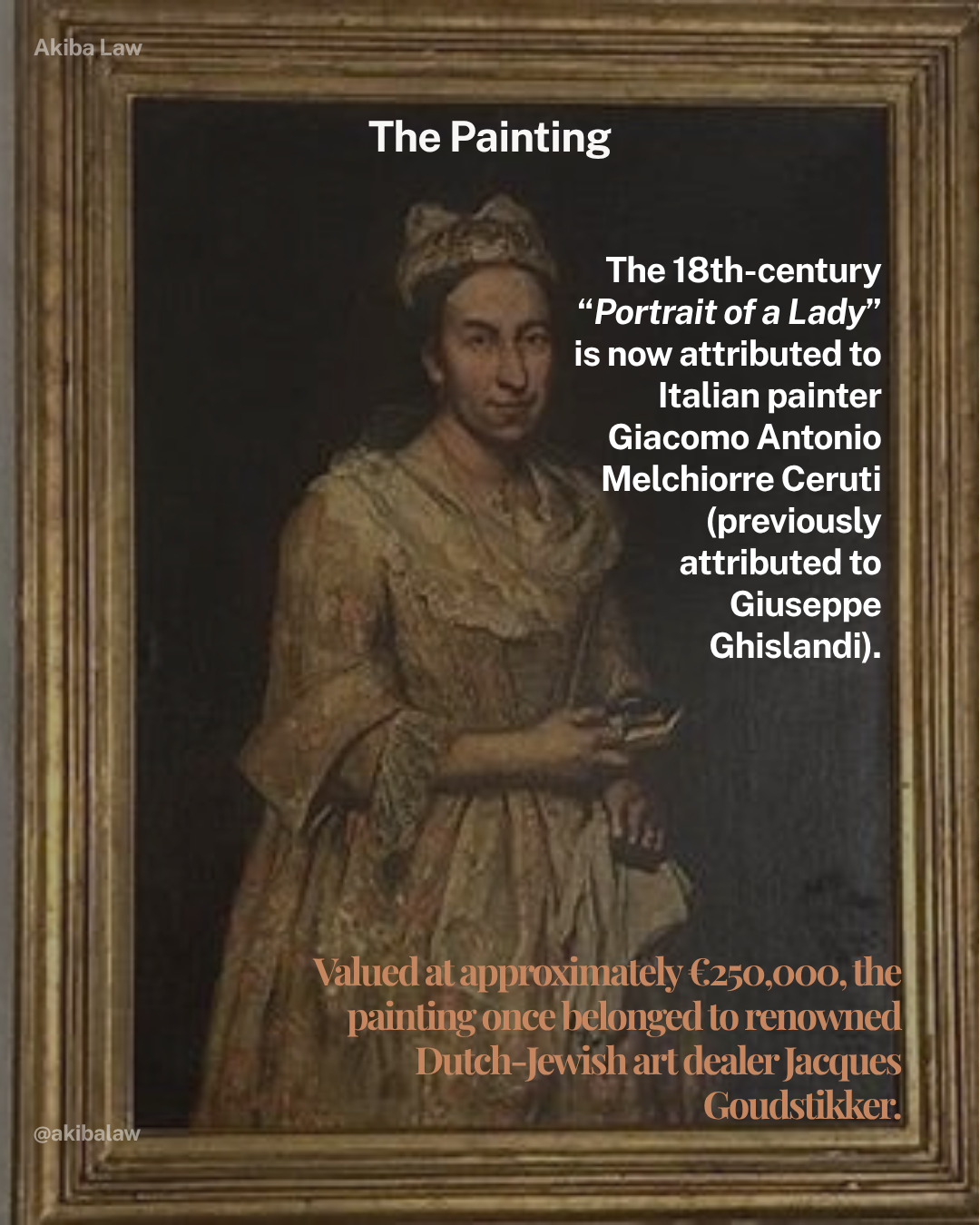
The work, Portrait of a Lady, is an eighteenth-century portrait now attributed to Italian painter Giacomo Antonio Melchiorre Ceruti, also known as Il Pitocchetto. It was previously attributed to Giuseppe Ghislandi.
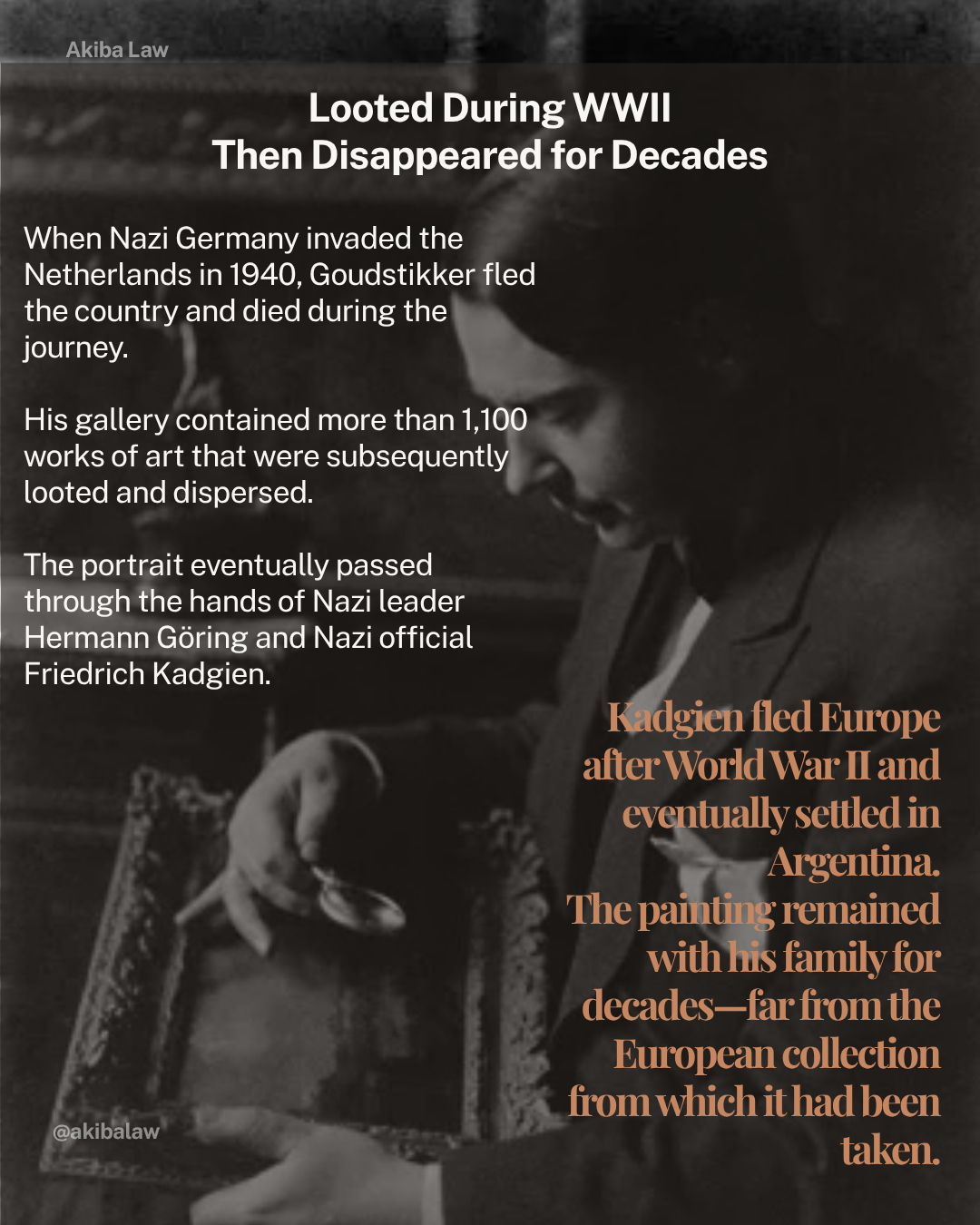
Before World War II, the painting formed part of the collection of Jacques Goudstikker, one of the Netherlands’ most prominent art dealers. His Amsterdam gallery held more than 1,100 works, including significant Old Master paintings.
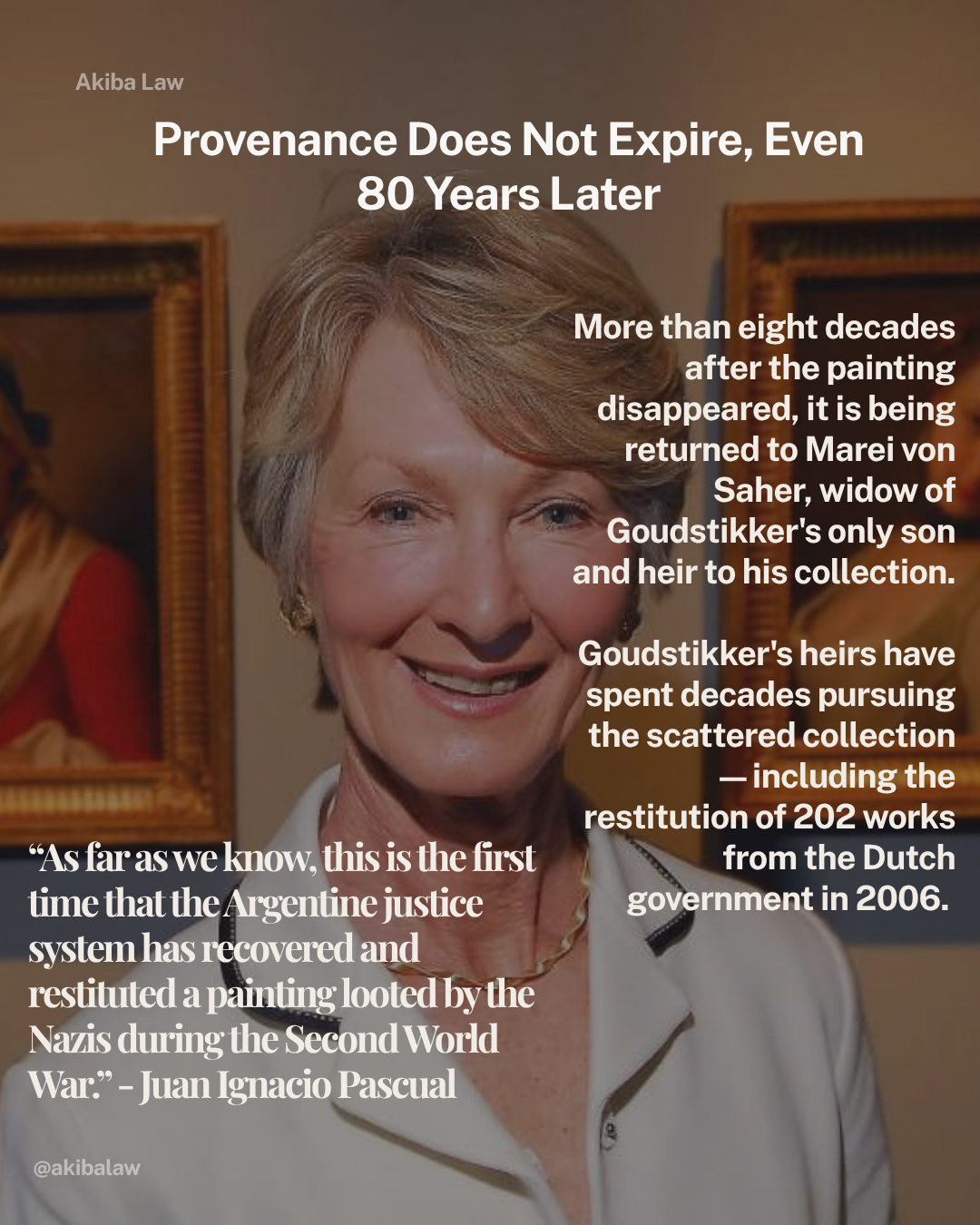
Following Germany’s invasion of the Netherlands in May 1940, Goudstikker fled the country with his family but died during the journey. His collection was subsequently subjected to forced transactions and Nazi looting, with hundreds of works passing into the possession of senior Nazi officials, including Hermann Göring. Goudstikker’s heirs have spent decades attempting to recover works dispersed from the collection. In 2006, the Dutch government restituted 202 paintings to the family.
Portrait of a Lady ultimately came into the possession of the family of Friedrich Kadgien, a Nazi financial official who worked within Göring’s economic apparatus and later fled Europe. Kadgien eventually settled in Argentina, where he died in 1978.
Precisely how the painting passed from Nazi-controlled hands to Kadgien remains unclear. What is clear is that the work remained with his family for decades after the war.
The Painting Reappears—in a Real Estate Listing
The breakthrough came in August 2025.
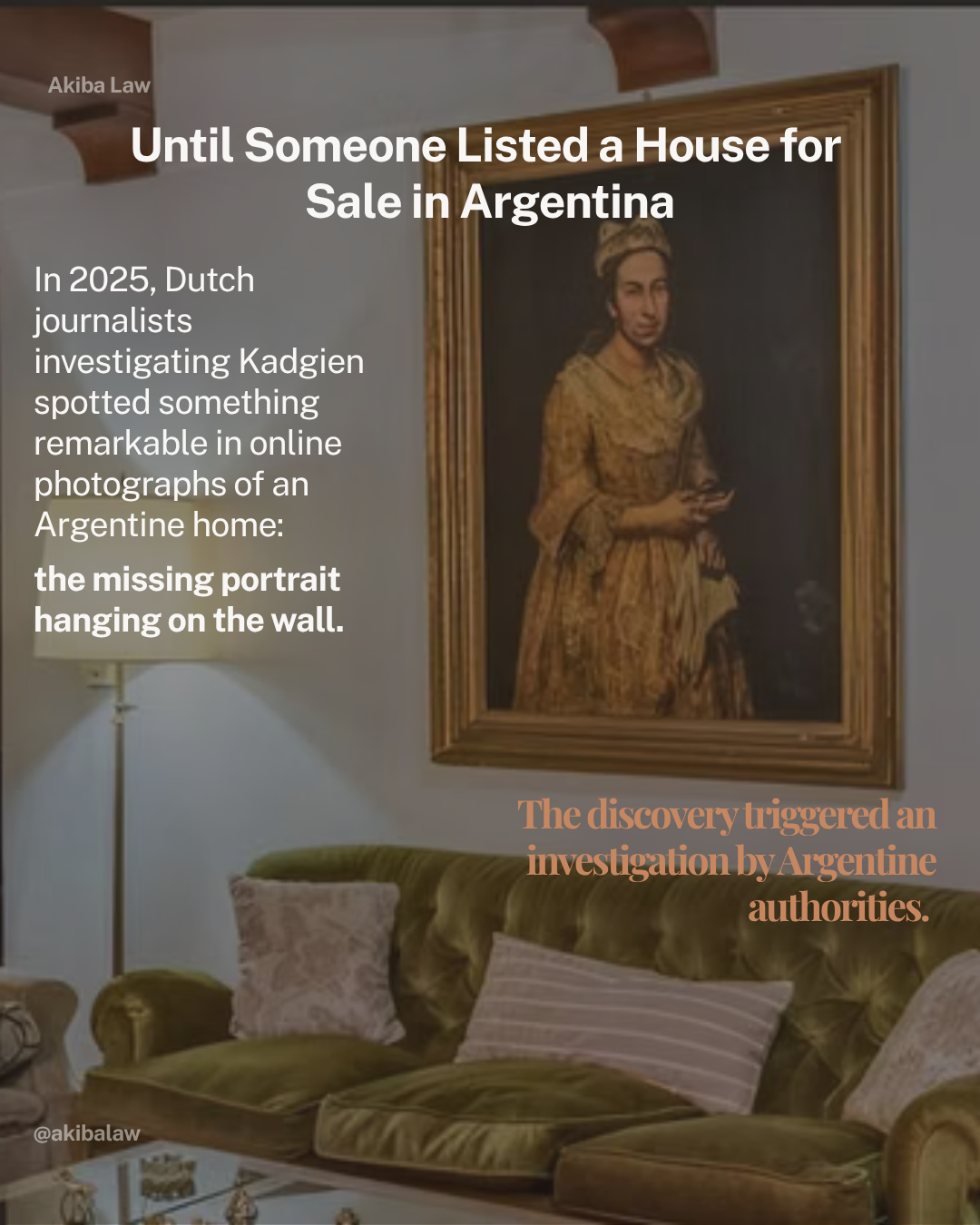
Dutch journalists investigating Kadgien’s history discovered an online real estate listing for a house in Mar del Plata, Argentina. Among the photographs advertising the property was an image of the home’s interior.
Hanging above a couch was a portrait that appeared to match the long-missing Goudstikker painting.
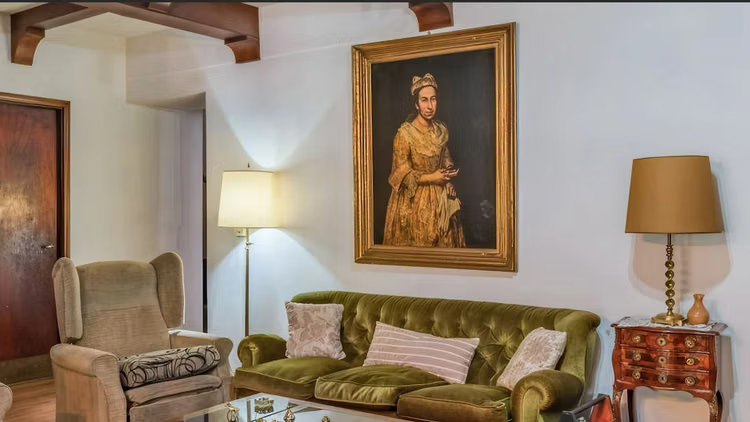
The discovery prompted scrutiny from journalists and authorities. The real estate listing soon disappeared, and Argentine law enforcement began efforts to locate the painting. Police initially searched the property without finding it. More than a week later, an attorney for Patricia Kadgien—Friedrich Kadgien’s daughter—turned the painting over to authorities.
The case illustrates an increasingly important reality for the art market: information that once might have remained hidden within private collections can now surface through entirely unrelated digital sources. Auction databases and catalogues are no longer the only places where previously missing works may reappear. Social media posts, online sales platforms, digitized archives—and, in this instance, real estate photographs—can all expose an artwork’s location and ownership history.
Authentication and Provenance Become Central
After taking custody of the painting, Argentine authorities undertook an investigation into its authenticity, attribution, and provenance.
For decades, Portrait of a Lady had been attributed to another Italian painter, Giuseppe Vittore Ghislandi. That attribution appeared in Goudstikker’s own collection records and accompanied the work before the war.
Experts from Argentina’s National Academy of Fine Arts ultimately concluded that the portrait was instead an authentic work by Ceruti. The investigation also connected the physical painting found in Argentina with the work formerly held in Goudstikker’s collection. Its value has been estimated at approximately €250,000.
That distinction is significant. In restitution disputes, identifying a work stylistically is only one part of the analysis. Establishing that a particular object is the same object appearing in historical inventories, photographs, catalogues, dealer records, wartime documentation, or restitution databases can be essential to establishing the chain of ownership.
An Unusual Route to Restitution
The case then took an unusual legal turn.
Patricia Kadgien and her husband, Juan Carlos Cortegoso, were charged in Argentina with aggravated concealment arising from their alleged conduct concerning the painting.
On September 4, 2026, Federal Judge Santiago Inchausti approved an agreement suspending the criminal proceedings. As part of the resolution, the couple expressly and irrevocably relinquished any present or future rights or claims to Portrait of a Lady and agreed not to challenge its restitution.
The agreement also placed them under court-imposed conditions for 24 months and required a financial contribution to a hospital in Mar del Plata. The painting can now be delivered to Marei von Saher, Goudstikker’s daughter-in-law and sole heir.
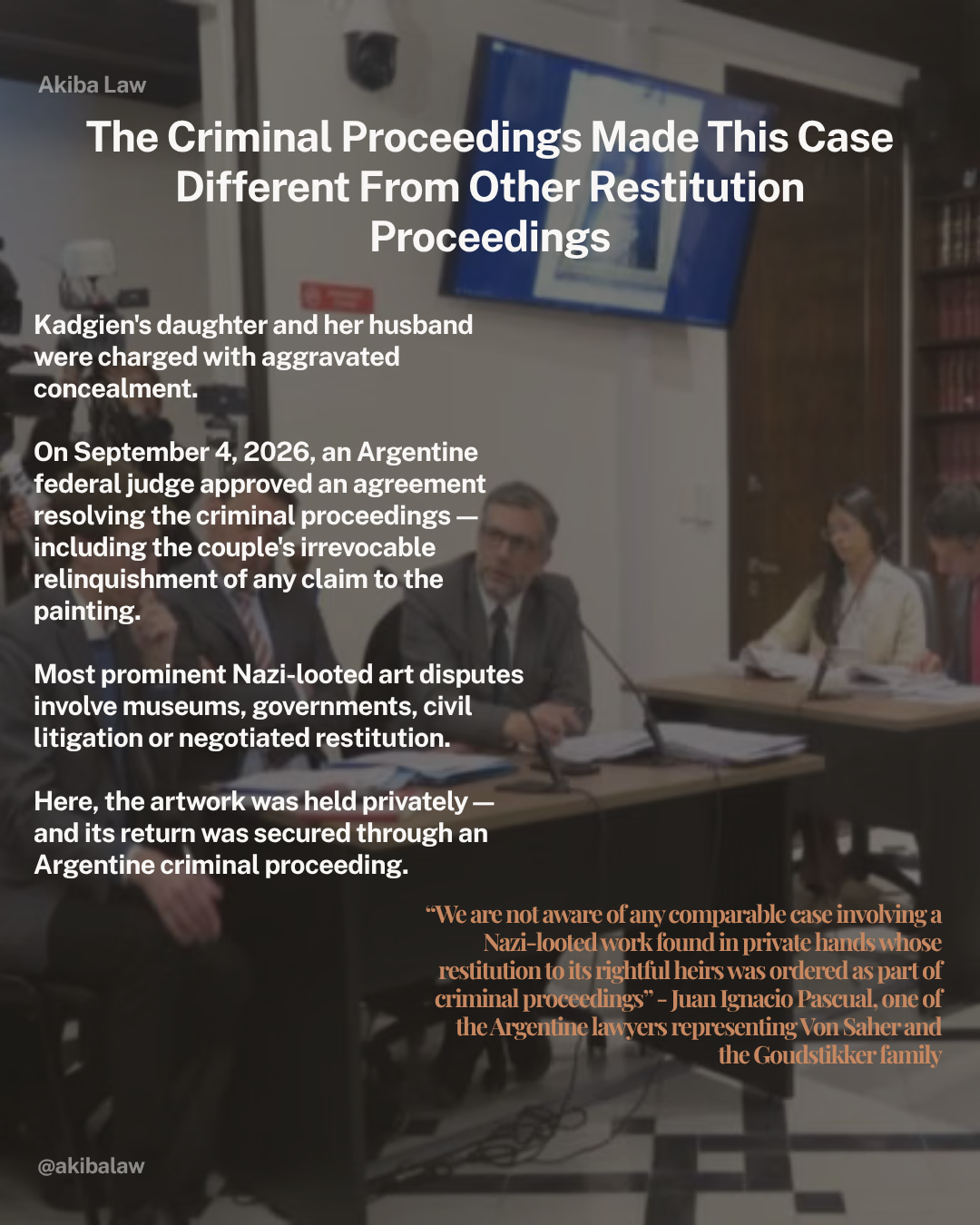
The procedural posture distinguishes the dispute from many well-known Nazi-looted-art cases.
Restitution disputes frequently arise through claims against museums and governmental institutions, negotiations with current possessors, civil actions concerning ownership and title, or specialized restitution commissions. Here, however, the work was held by private individuals, and its restitution emerged from the resolution of a criminal case.
One of the Argentine attorneys representing von Saher told The Art Newspaper that they were unaware of another comparable case in which a Nazi-looted artwork found in private hands was restituted to its rightful heirs as part of criminal proceedings.
“And this is what is most exceptional, the restitution did not take place through an agreement with a state or a museum, as has happened in many international cases involving Nazi-looted art.”
The Broader Lesson: Provenance Can Be a Legal Issue, Not Merely an Art-Historical One
The extraordinary circumstances surrounding Portrait of a Lady reinforce a fundamental principle of art transactions: provenance matters.
Provenance is often discussed in the context of scholarship, attribution, and value. But an artwork’s ownership history can have significant legal consequences as well.
A problematic gap in provenance—particularly one spanning Europe between 1933 and 1945—may create questions concerning whether a seller possesses good title, whether an artwork may be subject to a restitution claim, whether the work can be freely resold, and how museums, auction houses, insurers, lenders, and future purchasers will treat it.
And the passage of time alone does not necessarily resolve those issues.
The Goudstikker family has pursued restitution claims for decades. More than eighty years after the events giving rise to the loss, a painting that had apparently remained within one family in Argentina became the subject of an international provenance investigation and judicial proceedings.
For collectors and art-market professionals, the practical lesson is straightforward: provenance diligence should occur before a transaction, not only after a claim appears.
Depending on the work, that diligence may include reviewing prior ownership records; examining auction, dealer, exhibition, and catalogue history; researching wartime-era gaps; consulting stolen-art and restitution databases; confirming export or import history where relevant; reviewing representations and warranties concerning title; and allocating risk contractually among buyers, sellers, dealers, and intermediaries.
The level of diligence should, of course, be proportional to the circumstances. But an artwork with an incomplete ownership history—particularly one touching the Nazi era—should not be treated as presenting merely an academic mystery.
It may present a title problem.
More Than Eighty Years Later
Von Saher has indicated that she would like Portrait of a Lady to remain temporarily in Argentina for public exhibition before it is returned to the family, in part to raise awareness about the cultural property looted during the Nazi era. Argentine authorities reported that the painting remained under judicial custody in Buenos Aires while arrangements for its ultimate disposition were made.
The case began with a painting hanging quietly on the wall of a private home.
A photograph placed online to sell that home brought the painting back into public view.
More than eight decades after it disappeared, its provenance ultimately followed it.
For the art market, that may be the most important lesson of all.
Akiba Law PLLC advises artists, collectors, galleries, dealers, creative businesses, and other art-market participants on matters involving art transactions, ownership and title disputes, provenance, authenticity, intellectual property, and related art-law issues.
Sources: The Art Newspaper, “Argentina court orders return of Nazi-looted Old Master portrait to Jewish dealer’s heir” (Sept. 7, 2026); Presidency of Argentina, “La Justicia Federal de Mar del Plata ordenó la restitución de una obra de arte expoliada durante el régimen nazi” (Sept. 4, 2026); Associated Press, “Argentine court clears return of Nazi-looted portrait to Jewish dealer’s heir” (Sept. 4, 2026).
warning Disclaimer
This article is for general educational and informational purposes only and does not constitute legal advice. Reading this article does not create an attorney-client relationship with Akiba Law PLLC or any attorney. Florida law may apply differently depending on the specific facts, legal issues, and parties involved. Individuals and businesses should consult qualified legal counsel about their specific circumstances. For questions, concerns, or additional information, please contact Akiba Law PLLC to speak with a qualified attorney.

Case Update: Solar Drops Second Gang Starr Lawsuit After Judge Questions Prospect of Duplicative Litigation
When I first wrote about the latest chapter in the legal battle surrounding Gang Starr in September 2025, producer John…

Art Law in Florida: A Practitioner’s Handbook
Akiba Law PLLC is a Miami-based law firm advising artists, collectors, galleries, dealers, auction businesses, museums, and creative entrepreneurs on…

2 Live Crew Tried to Take Back Its Copyrights. A Decades-Old Bankruptcy Got in the Way.
Copyright ownership can last for decades, and the Copyright Act gives many creators an unusual second chance to revisit deals…
When Does a Sculpture Become a Building? East Hampton’s Lawsuit Over Matt Johnson’s Meditating Figure
Large-scale public and private art installations can raise issues well beyond copyright, contracts, and exhibition agreements. Once an artwork reaches…
Eden Gallery Sues Collector Over Alleged $822,390 Unpaid Balance: Lessons for Art Sales on Credit
High-value art transactions are often built on relationships. A collector may purchase repeatedly from the same gallery, payments may be…
MoMA v. MOMACHA: Trademark Strength, Brand Similarity, and Consumer Confusion
A trademark dispute does not always begin with two businesses offering the same product. Confusion can arise when a newer…
When a $2.5 Million Art Loan Ends in Litigation: Lessons for Galleries, Curators, and Property Owners
Long-term art placements can benefit everyone involved. Galleries gain access to potential collectors, property owners enhance their spaces, and residents…
When a Gallery Sells Consigned Art but Does Not Pay the Artist: The Hole Lawsuit and New York’s Trust-Fund Rules
An artwork consignment is not simply an informal arrangement in which a gallery agrees to sell a work and pay…
Your Logo Is on the Shirt. Does That Count as Trademark Use?
Launching a clothing brand involves more than creating a name, designing a logo, and placing it on a garment. How…
45 Antiquities Seized from the Metropolitan Museum of Art: Provenance, Repatriation, and the Importance of Due Diligence
On July 8, 2026, the Manhattan District Attorney’s Office announced the return of 59 antiquities, collectively valued at more than…

Florida Interior Designers and Decorators: Are You Regulated? Do You Need a License?
Interior designers and decorators in Florida often face a practical question: am I subject to Florida regulation, and do I…
Jacques Goudstikker’s Stolen Collection Is Still Being Found and Returned
Restitution can’t undo the Holocaust but it can return what was taken and every returned work matters. A Nazi-looted painting…