AI Can Create But Under U.S. Copyright Law, It Still Cannot Be the Author
Artificial intelligence keeps forcing copyright law into harder and harder questions.
But at least for now, one rule remains firmly in place.
In Thaler v. Perlmutter, the Supreme Court declined to review a lower court decision holding that a copyrightable work must have a human author. That does not mean every AI-assisted work is unprotectable. It does mean that under the current U.S. framework, copyright still begins with human authorship.
This case is important because it helps clarify where the line currently sits. If a work is generated entirely by AI without sufficient human authorship, it is not entitled to copyright protection. If a human meaningfully contributes protectable expression, that is a different analysis.
That distinction is going to matter more and more.
The biggest takeaway from Thaler v. Perlmutter is simple: the Supreme Court declined to disturb the existing rule that copyright protection requires a human author.
That does not mean the Supreme Court issued a merits opinion on AI authorship. It means the Court denied certiorari, leaving the lower court ruling in place.
Practically speaking, though, the message is clear. Under current U.S. copyright law, works that lack human authorship remain outside the protection of copyright.
That is a major development for artists, creators, startups, and anyone building with generative AI tools.
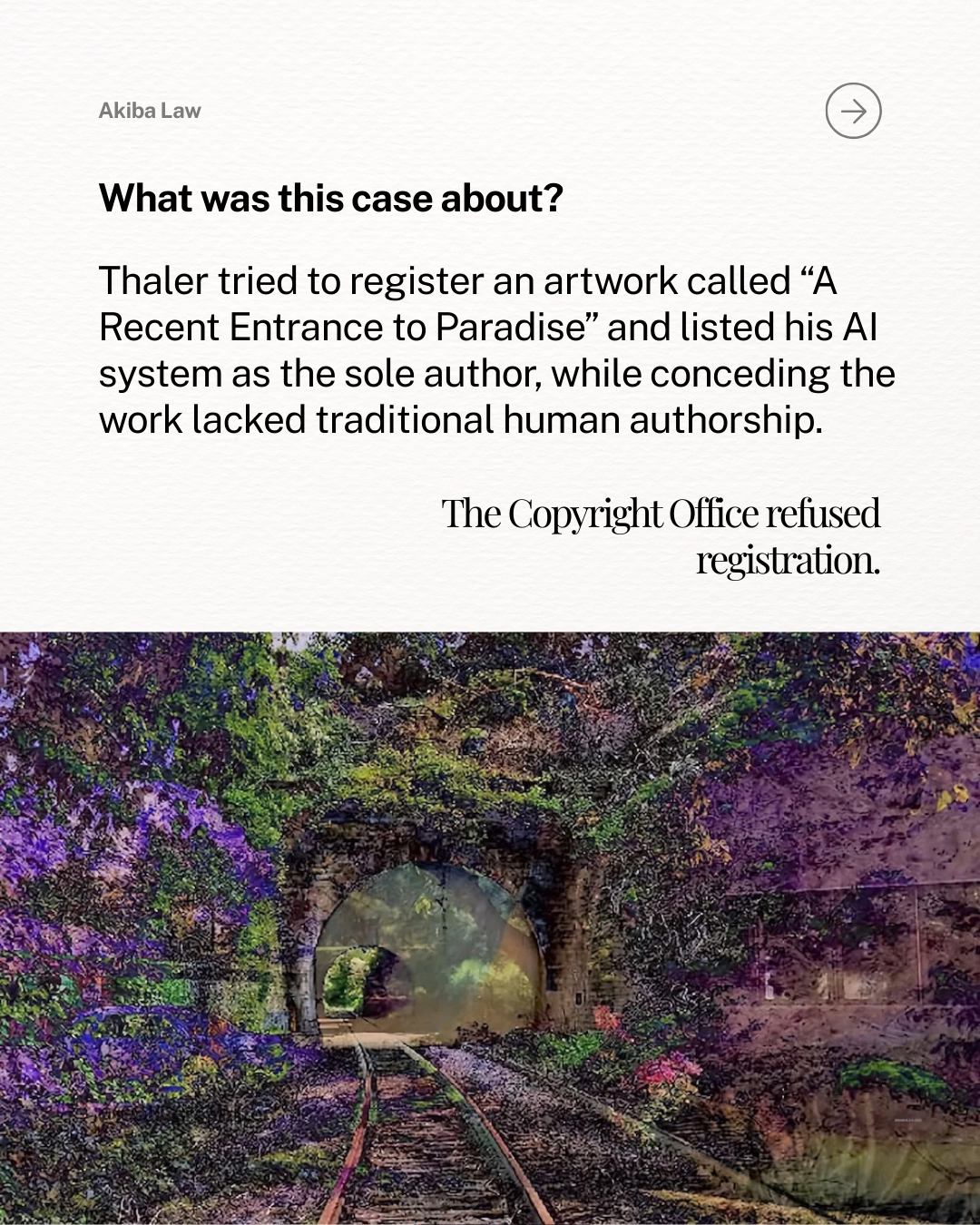
Stephen Thaler tried to register an artwork called “A Recent Entrance to Paradise” and identified his AI system, the Creativity Machine, as the sole author.
That framing mattered.
This was not a case where a human claimed to have used AI as a tool in the creative process. Instead, Thaler expressly took the position that the work lacked traditional human authorship and was generated autonomously by the machine.
The Copyright Office refused registration on that basis, and the courts agreed.
So the case became a clean vehicle for a narrow but important question: can a non-human machine be the author of a copyrightable work under current U.S. law?
The answer, at least for now, is no.
He lost because the courts treated human authorship as the baseline requirement for copyright protection.
The D.C. Circuit said the word “author” in the Copyright Act refers to a human being. That is why the court rejected the idea that an AI system itself could qualify as the author of the work.
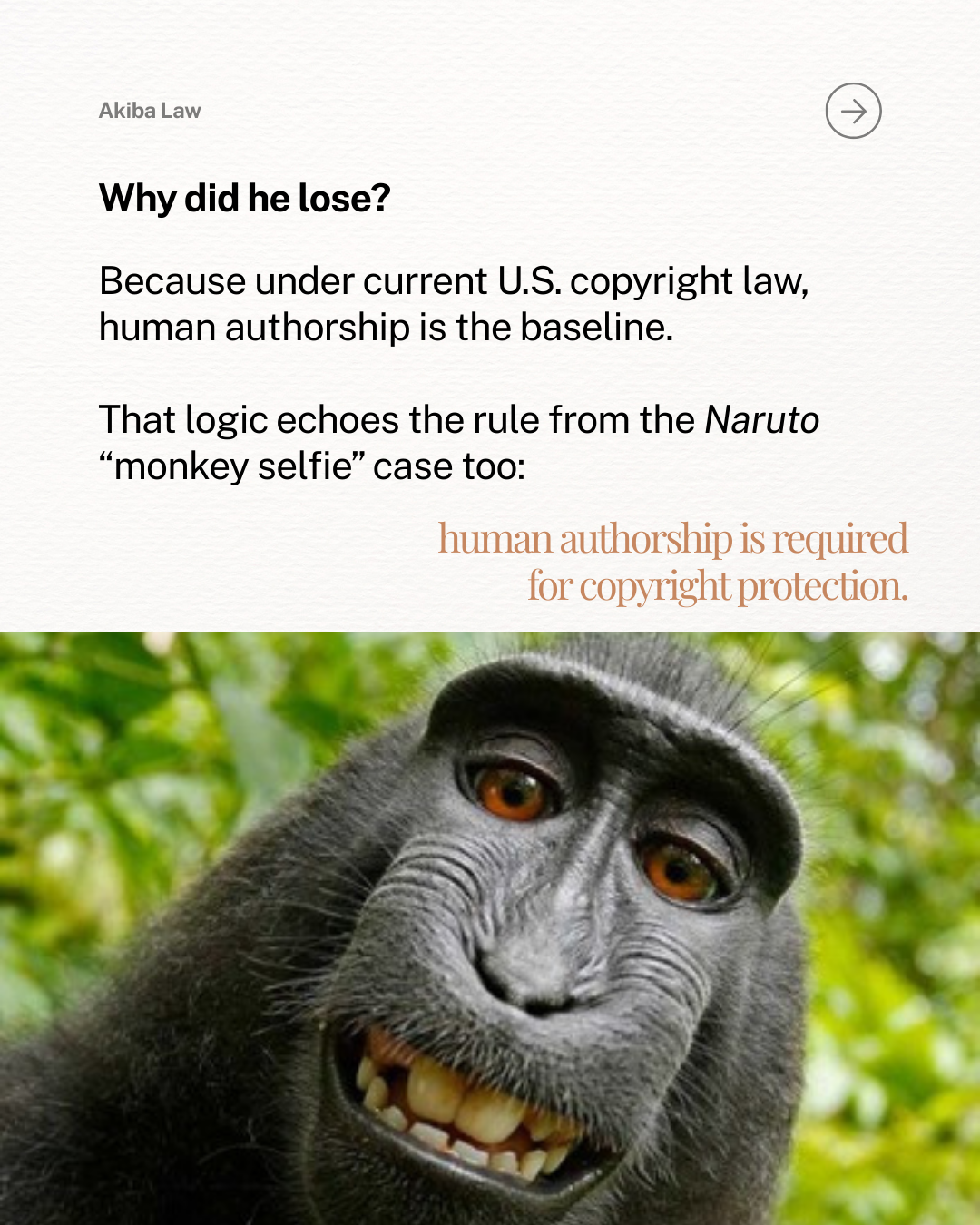
The Naruto “monkey selfie” case is helpful as an analogy, even though the posture was different. That case is often cited for the broader idea that copyright law does not recognize non-human authorship. In Thaler, the D.C. Circuit pointed to that line of authority as support for the rule that authorship must be human.
So the doctrinal thread is consistent: no human author, no copyright.
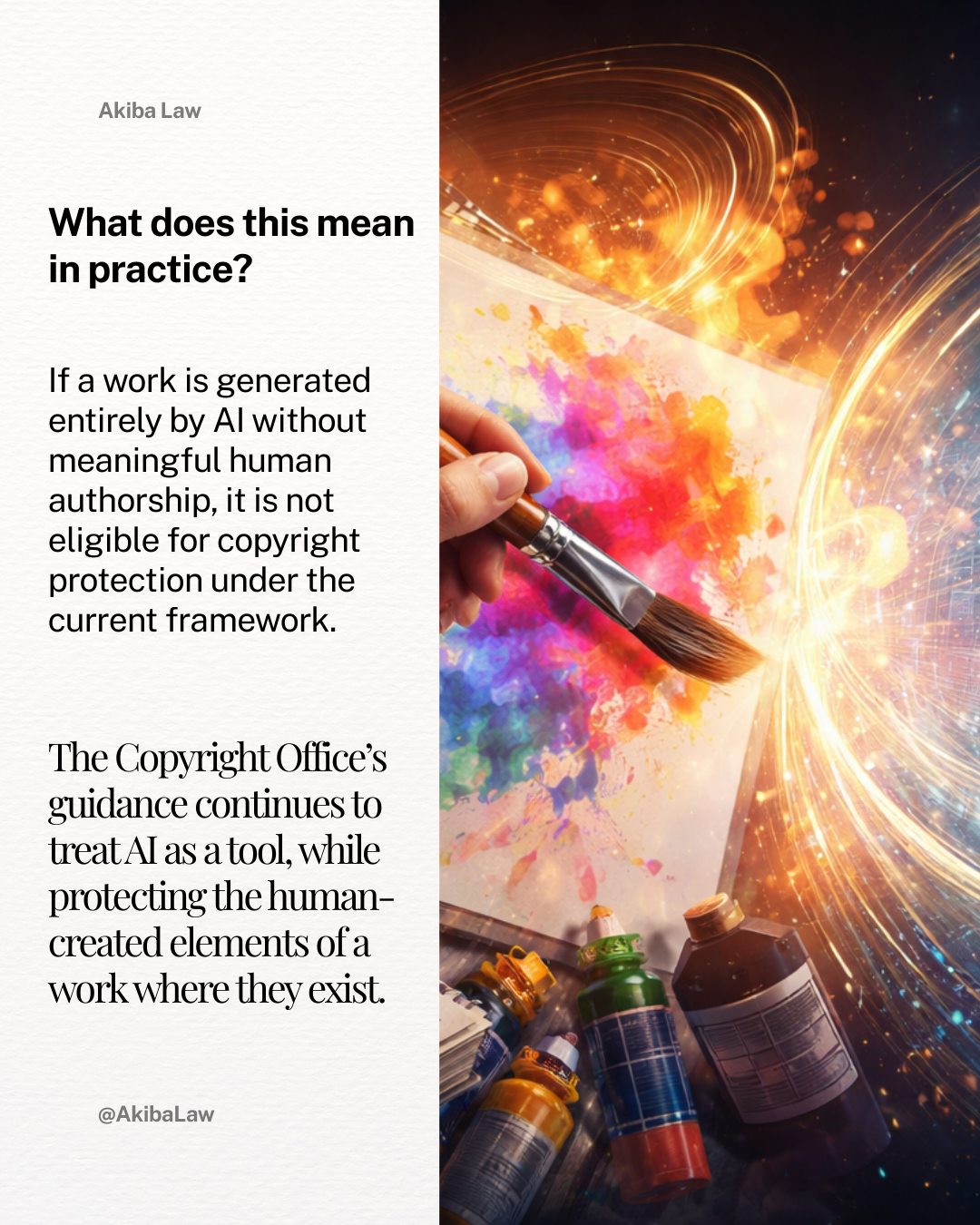
The decision does not mean that every work involving AI is uncopyrightable.
What it means is that a work generated entirely by AI, without sufficient human authorship, is not eligible for copyright protection under the current framework.
That is also consistent with the Copyright Office’s guidance. The Office continues to treat AI as a tool, not as an author. Where a human contributes copyrightable expression, creative selection, arrangement, or meaningful modification, those human-created aspects may still be protected. But where the output is simply produced by the system without enough human authorship, protection falls away.
That is the real practical takeaway.
The question is no longer just, “Was AI involved?”
The better question is, “Where is the human authorship in this work?”
For now, U.S. copyright law is holding the line.
A copyrightable work must begin with human authorship. That is the rule the Copyright Office applied, the D.C. Circuit affirmed, and the Supreme Court has now left undisturbed.
At the same time, this is not a blanket rejection of AI-assisted creativity.
People will keep using AI in the creative process, and the legal analysis will keep turning on the same core issue: whether the human contribution is sufficient to qualify as authorship of protectable expression.
That means the real legal work is now in the gray area.
Not every AI-assisted work is excluded.
Not every human contribution is enough.
And prompting alone, at least under current guidance, is usually not the end of the analysis.
For creators, companies, and counsel, the practical lesson is straightforward:
If you want copyright protection, be prepared to identify the human-authored expressive elements of the work.
Because under current U.S. law, that is still where copyright starts.
This article is for general educational and informational purposes only and does not constitute legal advice.
Akiba Law PLLC is a boutique law firm based in Miami, Florida. The firm represents artists, creators, brands, entrepreneurs, collectors, galleries, and businesses in matters involving art law, intellectual property, trademark protection, copyright, contracts, business disputes, and brand enforcement.
warning Disclaimer
This article is for general educational and informational purposes only and does not constitute legal advice. Reading this article does not create an attorney-client relationship with Akiba Law PLLC or any attorney. Florida law may apply differently depending on the specific facts, legal issues, and parties involved. Individuals and businesses should consult qualified legal counsel about their specific circumstances. For questions, concerns, or additional information, please contact Akiba Law PLLC to speak with a qualified attorney.
Case Update: Solar Drops Second Gang Starr Lawsuit After Judge Questions Prospect of Duplicative Litigation
When I first wrote about the latest chapter in the legal battle surrounding Gang Starr in September 2025, producer John…
Art Law in Florida: A Practitioner’s Handbook
Akiba Law PLLC is a Miami-based law firm advising artists, collectors, galleries, dealers, auction businesses, museums, and creative entrepreneurs on…
2 Live Crew Tried to Take Back Its Copyrights. A Decades-Old Bankruptcy Got in the Way.
Copyright ownership can last for decades, and the Copyright Act gives many creators an unusual second chance to revisit deals…
When Does a Sculpture Become a Building? East Hampton’s Lawsuit Over Matt Johnson’s Meditating Figure
Large-scale public and private art installations can raise issues well beyond copyright, contracts, and exhibition agreements. Once an artwork reaches…
Eden Gallery Sues Collector Over Alleged $822,390 Unpaid Balance: Lessons for Art Sales on Credit
High-value art transactions are often built on relationships. A collector may purchase repeatedly from the same gallery, payments may be…
MoMA v. MOMACHA: Trademark Strength, Brand Similarity, and Consumer Confusion
A trademark dispute does not always begin with two businesses offering the same product. Confusion can arise when a newer…

When a $2.5 Million Art Loan Ends in Litigation: Lessons for Galleries, Curators, and Property Owners
Long-term art placements can benefit everyone involved. Galleries gain access to potential collectors, property owners enhance their spaces, and residents…
When a Gallery Sells Consigned Art but Does Not Pay the Artist: The Hole Lawsuit and New York’s Trust-Fund Rules
An artwork consignment is not simply an informal arrangement in which a gallery agrees to sell a work and pay…
Your Logo Is on the Shirt. Does That Count as Trademark Use?
Launching a clothing brand involves more than creating a name, designing a logo, and placing it on a garment. How…
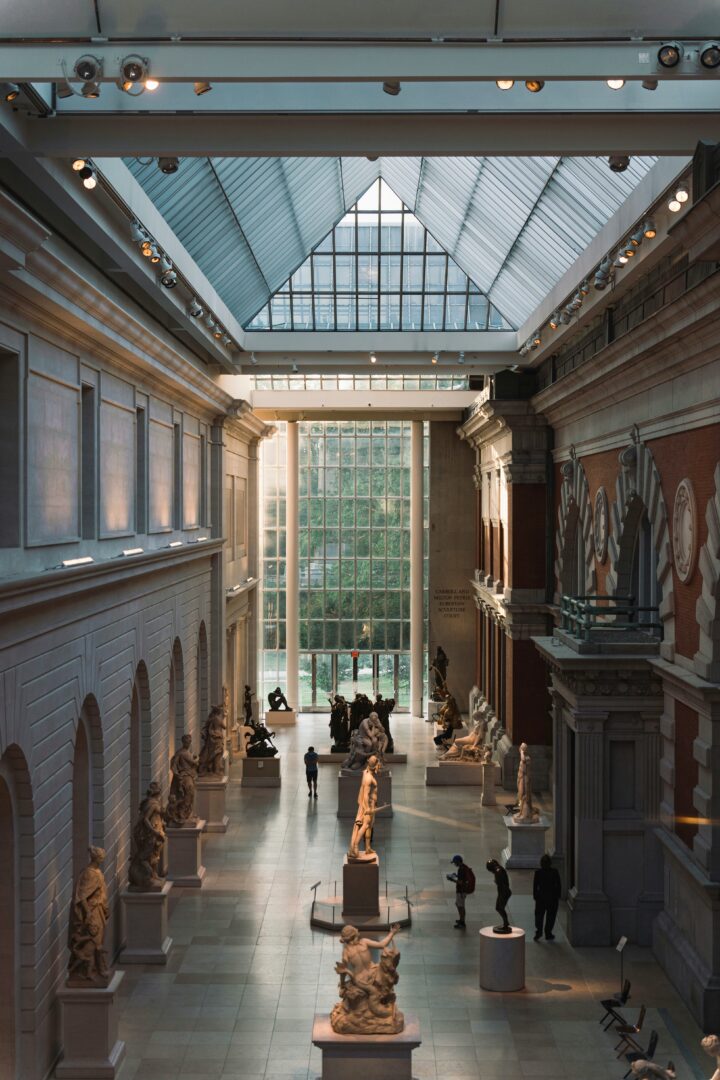
45 Antiquities Seized from the Metropolitan Museum of Art: Provenance, Repatriation, and the Importance of Due Diligence
On July 8, 2026, the Manhattan District Attorney’s Office announced the return of 59 antiquities, collectively valued at more than…

Florida Interior Designers and Decorators: Are You Regulated? Do You Need a License?
Interior designers and decorators in Florida often face a practical question: am I subject to Florida regulation, and do I…
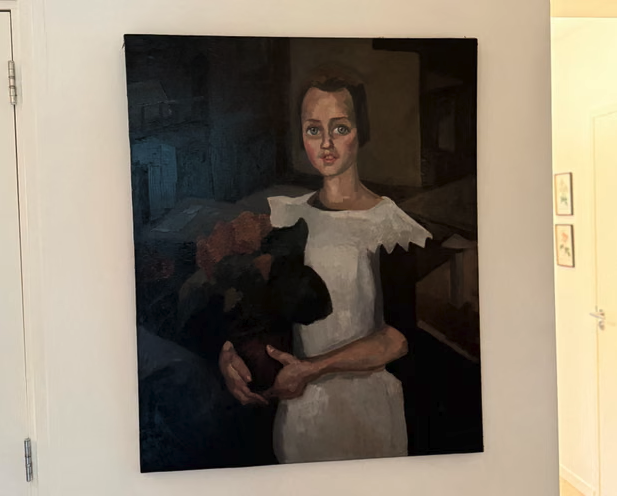
Jacques Goudstikker’s Stolen Collection Is Still Being Found and Returned
Restitution can’t undo the Holocaust but it can return what was taken and every returned work matters. A Nazi-looted painting…